
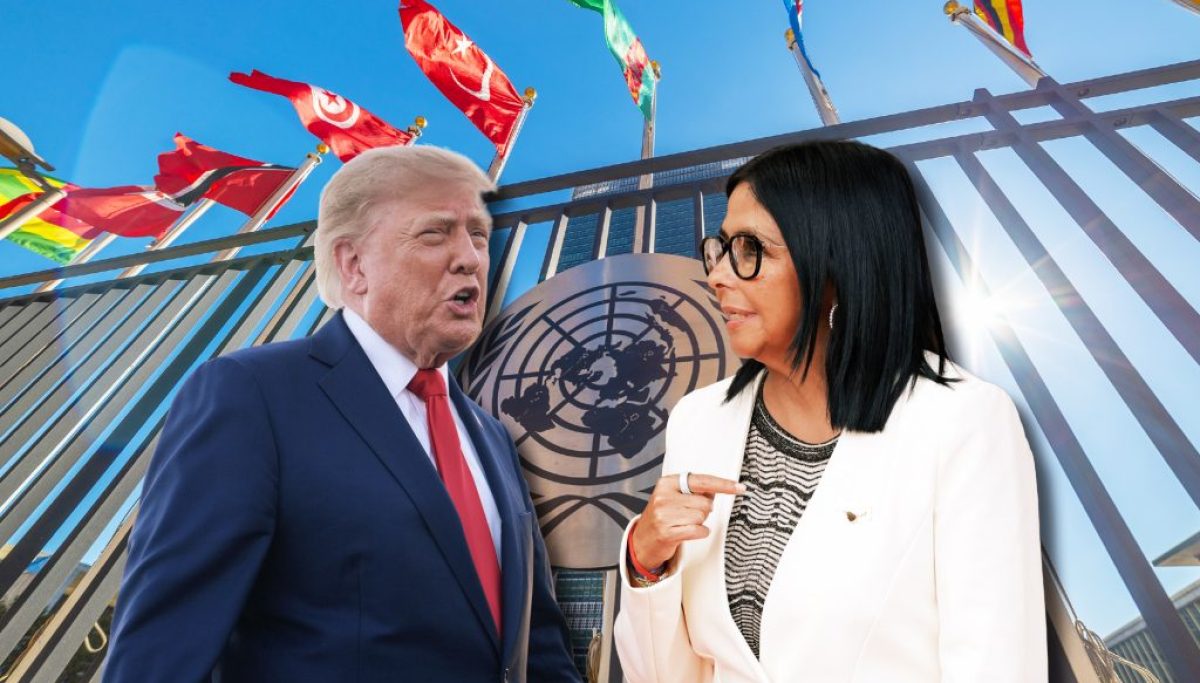
Delcy Rodríguez arrived in New York on Monday for the U.N. General Assembly. On Tuesday, she is expected to meet President Donald Trump. It will be the first meeting between a U.S. president and a Venezuelan leader in more than a decade.For Rodríguez, the timing could hardly be more consequential. She is appearing in New York alongside other world leaders and preparing for a meeting with the U.S. president. The White House has described Tuesday’s encounter as an informal “pull-aside” rather than a formal bilateral meeting. But the label matters less than the fact that Trump has chosen to engage with her publicly.For a government whose legitimacy remains contested, that access carries enormous symbolic and political value. A meeting with Trump sends a signal to foreign actors and investors about where Washington’s relationship with Caracas is heading. Nine months ago, few would have imagined Rodríguez standing in New York preparing for such a meeting. After U.S. forces captured Nicolas Maduro on Jan. 3, Washington faced a difficult choice. It could have attempted to transfer political authority to an opposition movement that had won the 2024 presidential election but lacked control over the state. Or it could work with the power structures that remained in Caracas, particularly the military and security apparatus.President Donald Trump and Venezuelan acting President Delcy Rodríguez. (AP photos, Getty Images) Washington chose the latter, and Rodríguez quickly emerged as its principal interlocutor.That strategy has produced tangible results for the Trump administration. The most consequential development came last week, when Washington and Caracas finalized a major oil agreement that effectively anchors the new relationship. By granting U.S.-linked firms expanded access to Venezuela’s energy sector and establishing mechanisms for revenue oversight, the deal signaled a level of cooperation unimaginable under Maduro.The Trump administration also removed Venezuela from the U.S. government’s list of countries deemed to have “failed demonstrably” to meet their counternarcotics commitments, citing improved coordination under Rodríguez. The two governments have since deepened engagement across economic and security domains, with the oil deal now functioning as the structural centerpiece of this emerging partnership.The direction of U.S. policy is increasingly clear: Washington is working with Rodríguez because it sees cooperation with her government as useful to its security and economic objectives. But that creates a central dilemma.The more useful Rodríguez becomes to Washington, the more difficult it may become for Washington to press her government toward a genuine political transition. This is the problem with a stability-first strategy. Stability can reinforce the political structures that provide it. Every new agreement, concession, or channel of cooperation can increase the value of the existing government as Washington’s partner. Over time, that can reduce Caracas’ incentives to move quickly toward an electoral transition.Rodríguez has spoken about elections, but no date has been announced. Meanwhile, much of the state apparatus inherited from the Maduro era remains in place. A recent U.N.-mandated fact-finding mission found that Venezuela’s core security and intelligence structures remain largely unreformed and that senior officials associated with past abuses continue to hold power, despite some limited changes under Rodríguez.The Venezuelan opposition has proposed July 24, 2027, as an election date. The broader issue, however, is not simply the date. It is a matter of whether Venezuelans, both inside and outside the country, will be able to participate in a credible electoral process. Millions of Venezuelans have left the country over the past decade, creating a large diaspora whose political participation would be an important question in any future election.This is where Tuesday’s meeting should matter most. The United States currently has substantial leverage over Caracas through sanctions policy, oil arrangements, and its security relationship with the interim government. Washington has already used that leverage to obtain cooperation on oil and security. It can also use it to establish political conditions for the next stage of Venezuela’s transition.Those conditions could include a clear electoral timetable, credible electoral institutions, international observation, guarantees for opposition figures, and a meaningful mechanism for Venezuelans abroad to vote.The challenge is that leverage is rarely permanent. As Rodríguez consolidates her position and Washington becomes more economically invested in Venezuela, the incentives to disrupt an arrangement that delivers cooperation and access to resources may diminish.No outside power can manufacture democratic legitimacy in Venezuela. Washington can create incentives, impose costs, and negotiate political conditions. But legitimacy ultimately has to come from Venezuelans themselves, through institutions and an electoral process they regard as credible. That is the paradox of the Trump-Rodríguez relationship. The more Washington helps Rodríguez consolidate stability, the more important it becomes to preserve a clear path toward political legitimacy.HEGSETH THINKS TO SOLUTION IS TO ‘SEND HIMSELF’Rodríguez may leave New York looking increasingly like Venezuela’s accepted interlocutor in Washington. The question is what comes with that recognition.If Trump is willing to meet Rodríguez, Washington should also make clear that deeper engagement comes with political expectations. Otherwise, what begins as a temporary arrangement for stability could become the foundation of a new status quo.
Delcy Rodriguez meets Trump: What comes next for Venezuela?
Full Article
Original Source
Read the full article at Washingtonexaminer →KhanList aggregates and links to publicly available news content. We do not host full articles from third-party sources. Always verify important information with original sources.