
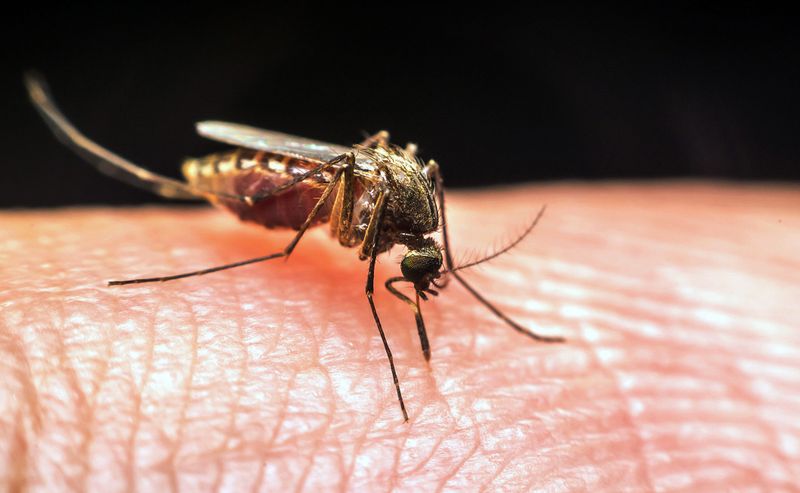
The vast majority of recent malaria cases reported in Gauteng were not transmitted by mosquito bites within the province, but were “imported” by residents who had visited other countries and provinces where the disease is endemic and exacerbated by severe floods earlier this year.In a public webinar on October 21 entitled “What caused the 2026 spike in malaria cases in Gauteng?”, senior University of Pretoria malaria expert Professor Tiaan de Jager said the high number of malaria cases reported in Johannesburg and Pretoria earlier this year came as a shock in a province where the disease was not endemic. The regions of South Africa where there is an increased risk of malaria (Map: National Department of Health) Many of the infected people had complained of flu-like symptoms, not realising until much later that they were suffering from malaria.De Jager, the founding director the university’s Institute for Sustainable Malaria Control, noted that the 414 malaria cases recorded in Gauteng, in just the first quarter of 2026, represented an 80% increase compared with the total number of cases the entire previous year.University of Pretoria malaria expert Professor Tiaan de Jager (Photo: University of Pretoria) The number of cases in Mpumalanga also rose by 355%, by 68% in Namibia and by more than 50% in Mozambique over the same period.The underlying cause of this increase was due to heavy rain in December 2025, followed by floods in January 2026 in the northern parts of South Africa, including Kruger National Park and neighbouring Mozambique that left behind pools of water that created increased breeding habitat for mosquitoes.This led to more mosquitoes and more parasite transmission in malaria endemic regions.An analysis of recent malaria cases in Gauteng (Source: Tiaan de Jager) An analysis of recent malaria cases in Mpumalanga. (Source: Tiaan de Jager) Four to six weeks after being bitten while visiting these regions, more than 400 people in Gauteng began noticing symptoms that were often mistaken for flu, with diagnosis and treatment for malaria coming too late for at least 11 people who died from the infection.Further imported cases were likely to appear in Gauteng among people travelling to endemic areas, he said, urging residents to seek medical advice if they developed symptoms such as fever, nausea, headaches, diarrhoea, muscle weakness or lethargy.Some of the symptoms to watch out for. (Graphic: National Institute for Communicable Diseases) De Jager also suggests that it is not correct to attribute the Gauteng cases generally to climate change or to the re-emergence of malaria within Gauteng.In response to follow-up questions by Daily Maverick, De Jager said that the available surveillance data indicated that “most” malaria cases diagnosed in Gauteng during the first quarter of 2026 were imported, following travel to malaria-endemic areas in South Africa or neighbouring countries, particularly Mozambique.On whether it was possible that a limited number of cases were transmitted within Gauteng, he said: “The National Institute for Communicable Diseases (NICD) has confirmed that there is no established local transmission. The publicly available reports do not provide any information on locally acquired cases among the 414 cases recorded during January to March.“It would therefore be premature to speculate about such a number without confirmation from the provincial surveillance data. Although rare cases can occur when infected mosquitoes are transported into non-endemic areas, this should not be confused with sustained local malaria transmission,” he said.“We should also distinguish between the role of climate change in influencing malaria risk across southern Africa and the specific causes of the increase in malaria cases diagnosed in Gauteng. The severe rainfall and flooding experienced in Mozambique, Limpopo and Mpumalanga created favourable conditions for mosquito breeding and increased malaria transmission in established malaria-endemic areas.“A World Weather Attribution study published in January 2026 also found evidence that human-induced climate change intensified the extreme rainfall associated with the regional floods, alongside the influence of La Niña.‘Not malaria-endemic’“Gauteng’s higher altitude and cooler winter conditions are less favourable for sustained malaria transmission, and the province is not considered malaria-endemic. Nevertheless, occasional cases can occur when infected mosquitoes are transported into non-endemic areas. These exceptional cases are different from established local transmission.“My point is therefore not that climate change is irrelevant to malaria. Rather, we need to distinguish between climate-related increases in transmission in endemic areas, the subsequent movement of infected people into Gauteng, and the separate question of whether local environmental conditions could support transmission within Gauteng.“Climate change may increase malaria risk across southern Africa, but the increase in malaria cases diagnosed in Gauteng should not automatically be attributed to climate change or local transmission. The regional floods, increased transmission in endemic areas, travel patterns and the possibility of occasional mosquito transport all need to be considered separately. In my opinion, climate change will most definitely increase malaria risk.” DMLast year, the number of malaria cases in South Africa was the lowest in 21 years – but cases have spiked in some provinces this year following regional floods. (Source: Tiaan de Jager)MALARIA RISKSThe National Institute for Communicable Diseases warns that, if left untreated, infection generally progresses to severe malaria, which is often fatal as it is associated with central nervous system shutdown and major organ failure.Without treatment, the clinical picture may deteriorate rapidly. Severe malaria carries a 10-40% case fatality rate in spite of treatment.It is recommended that anyone with a “flu-like” illness be tested for malaria after visiting a malaria risk area (irrespective of malaria season, transmission intensity or chemoprophylaxis use).Malaria is caused by blood parasites of the genus Plasmodium, which are transmitted via the bites of infected mosquitoes. In the human body, the parasites first multiply in the liver, and then infect the red blood cells. While malaria is preventable and curable, it is still one of the six major causes of deaths from communicable diseases.Roughly 90% of the world’s approximately 440,000 annual malaria deaths occur in Africa – with one child under five dying every minute from malaria at a global level. – NICD
DELAYED DIAGNOSIS: Gauteng malaria spike was due to travel in flood regions, experts conclude
Full Article
Original Source
Read the full article at Dailymaverick →KhanList aggregates and links to publicly available news content. We do not host full articles from third-party sources. Always verify important information with original sources.