
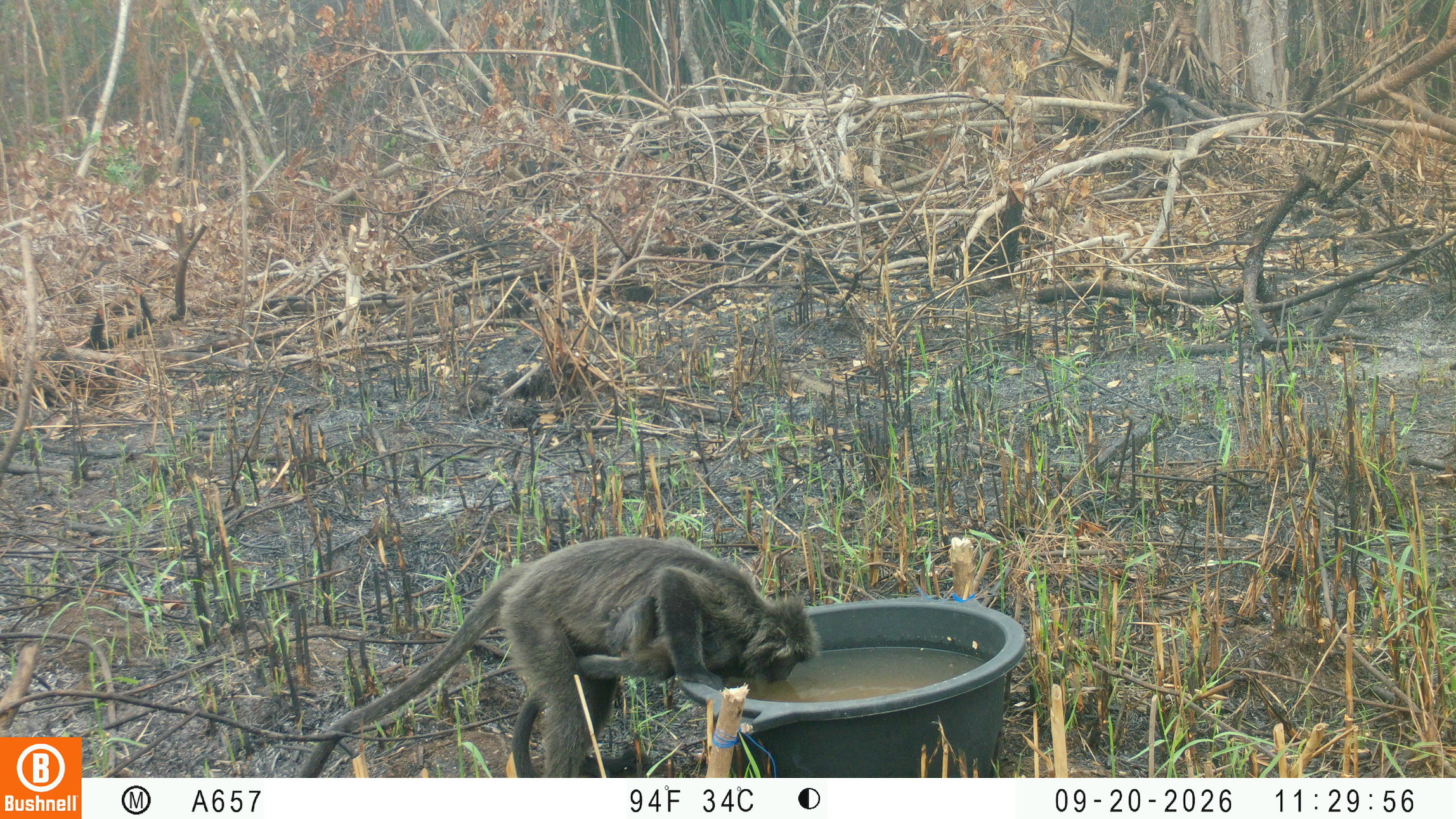
Wildfires in West Kalimantan are leaving wildlife struggling to find fresh water as forest pools dry up and ponds turn brackish, pushing animals toward villages and coastal areas.Residents and conservation groups have begun providing water and rescuing animals affected by the fires, as prolonged dry conditions put further pressure on wildlife and freshwater supplies.Conservationists warn the crisis is also affecting coastal communities, with rising salinity threatening access to fresh water and potentially putting food production at risk.Warning: This story contains disturbing images of animals. Wildfires in West Kalimantan, Indonesia, are leaving wildlife without fresh water as ponds turn brackish and forest pools dry up, driving animals into villages and toward the coast. Residents and conservation groups are responding by providing water, rescuing affected animals and treating them as smoke and fires continue to affect their habitat. Preliminary findings by NGO Yayasan Planet Indonesia recorded at least 16 dead animals, including silvered langurs (Trachypithecus cristatus), long-tailed macaques (Macaca fascicularis) and proboscis monkeys (Nasalis larvatus, an endangered primate found only on Borneo), from early August through late September amid an intense fire season in coastal Kubu Raya, a district in West Kalimantan. That compares to 13 dead non-fish animals recorded during nearly six years of SMART patrols — a system for monitoring wildlife and threats in the forest — in the area, from September 2020 through June 2026, with most deaths attributed to natural causes or left unexplained. As freshwater pools dried up and village ponds turned brackish, Planet Indonesia found dehydrated wildlife moving closer to homes and the coast in search of water. “We have never had findings like this before,” said Adam Miller, co-founder of Planet Indonesia, in a statement sent to Mongabay. The NGO has worked alongside the village institutions in Kubu Raya since 2017. “When the mangroves lose their fresh water, the animals die,” Miller said. A long-tailed macaque found dead on Sept. 14 by SMART patrol team. Image courtesy of Yayasan Planet Indonesia. On Sept. 20, a patrol found a silvered langur dead, clinging to a tree trunk. The body had no visible bite marks or open wounds and was estimated to have died less than a day earlier. Image courtesy of Yayasan Planet Indonesia. The Indonesian primate conservation group YIARI said it had rescued 43 orangutans from fire-affected areas of Ketapang and North Kayong since August, many suffering from burns, dehydration or malnutrition. Karmele Llano Sanchez of YIARI said the group had also received reports of other wildlife, including snakes, turtles and pangolins, affected by fires. Sanchez said YIARI last saw a similarly large surge in wildlife rescues during the 2015 El Niño, when the group rescued more than 80 orangutans as fires devastated forests in West Kalimantan. “It really is a serious crisis, a very serious one, because this problem will not get better if climate change isn’t given attention,” Sanchez told Mongabay in an interview. Indonesia’s Meteorology, Climatology and Geophysics Agency, or BMKG, says the country is experiencing a very strong El Niño, with conditions expected to persist into early 2027. In September, BMKG rainfall of less than 50 millimeters (2 inches) per 10-day period across much of Kalimantan. Data from the Nusantara Atlas FireWatch platform show that 895,657 hectares (2.2 million acres) burned nationwide between January and August 2026. That was already more than the area burned in any full year except 2019 and 2023, according to the platform. West Kalimantan recorded about 79,391 hectares (196,000 acres) of burned land during the same period, making it the country’s third-most affected province by burned area, according to Nusantara Atlas data. About 53,893 hectares (133,000 acres) of that total burned in August alone. An orangutan found in North Kayong on Sept. 12 with burns on both legs, causing the skin to peel. Image courtesy of YIARI. A rescue of an orangutan and her baby on Sept. 16. Image courtesy of YIARI. Freshwater crisis The prolonged dry conditions are also affecting freshwater supplies along the coast. In a normal dry season, rainfall and freshwater flows help keep coastal wetlands supplied and limit the inland movement of seawater. This year, saltwater intrusion has affected raw-water sources in West Kalimantan, and the effects are already being felt in Pontianak, the provincial capital. Saltwater intrusion has raised salinity in the Kapuas River and other raw-water sources used by the city’s water utility, forcing authorities to bring in freshwater from outside the city. On Sept. 19, the city government received 5 million liters (1.3 million gallons) of freshwater from Kubu Raya for processing at a water-treatment plant. Miller said Kubu Raya residents began putting out water after seeing dehydrated wildlife move into settlements and toward the coast. Planet Indonesia and village patrol teams established six water stations in the forest, some using buckets and others shallow pools, and fitted each with camera traps. Within an hour of the first two stations being installed on Sept. 18, animals were already drinking from them, including large groups of silvered langurs and proboscis monkey mothers carrying their young. “Many primates rarely come to the ground, so the stations had to work for animals in the canopy as well as on the forest floor,” he said. “And any place where thirsty animals gather is also a place hunters can find them, so every station would go on the patrol route and someone would be responsible for refilling it.” YIARI has also been working with residents, firefighters and authorities to rescue wildlife affected by the fires, treating animals for burns, dehydration and malnutrition and releasing some, including pangolins, in safer areas. “For animals that are found burned, it is certain that their condition was caused by the fire,” Sanchez said. “We also once treated an orangutan that had contracted an acute respiratory infection, or ISPA, and we were able to conclude that it contributed to the orangutan’s death.” The loss of freshwater poses risks beyond wildlife, particularly for coastal communities already facing rising salinity, Sanchez said. Rising sea levels, dwindling freshwater supplies and the degradation of coastal peatlands are allowing brackish water to push farther inland, she said. As salinity increases, crops grown near the coast, including rice and other food crops, could be damaged or destroyed, threatening the livelihoods of communities that depend on them. “So this is also a food security crisis,” Sanchez said. A proboscis monkey appears to come down and drink from a water station set by locals to help dehydrated wildlife. Image courtesy of Yayasan Planet Indonesia. Silvered langurs also appear to be drinking from water spots set by residents in Kubu Raya. Image courtesy of Yayasan Planet Indonesia. The experts say the response needs to go beyond rescuing wildlife once fires have started, with stronger preparedness and resources for communities facing extreme dry conditions. Miller emphasized the need to sustain patrols and provide water for wildlife. Sanchez said the severity of the El Niño had been anticipated months in advance and argued that companies should have prepared for heightened fire risks. She said stronger preparation, including adequate firefighting personnel, equipment and budgets, was needed alongside longer-term improvements in peatland management. “Because in my personal view, among the local governments and local authorities, perhaps not every area with peatland has an understanding of how peatlands should be properly managed,” Sanchez said, adding that peat-draining canals and oil palm plantations on peatlands can fuel fires in subsequent dry seasons. “So if that isn’t handled properly, starting with policies and regulations that are also properly implemented, then every time we have a long dry season like this, we will return to the same problems,” she said. Basten Gokkon is a senior staff writer for Indonesia at Mongabay. See related story: As fires spread in Indonesia, Bornean orangutans run out of forest to flee FEEDBACK: Use this form to send a message to the author of this post. If you want to post a public comment, you can do that at the bottom of the page. Credits Topics
Deadly wildfires leave Borneo wildlife scrambling for fresh water
Full Article
Original Source
Read the full article at News →KhanList aggregates and links to publicly available news content. We do not host full articles from third-party sources. Always verify important information with original sources.