
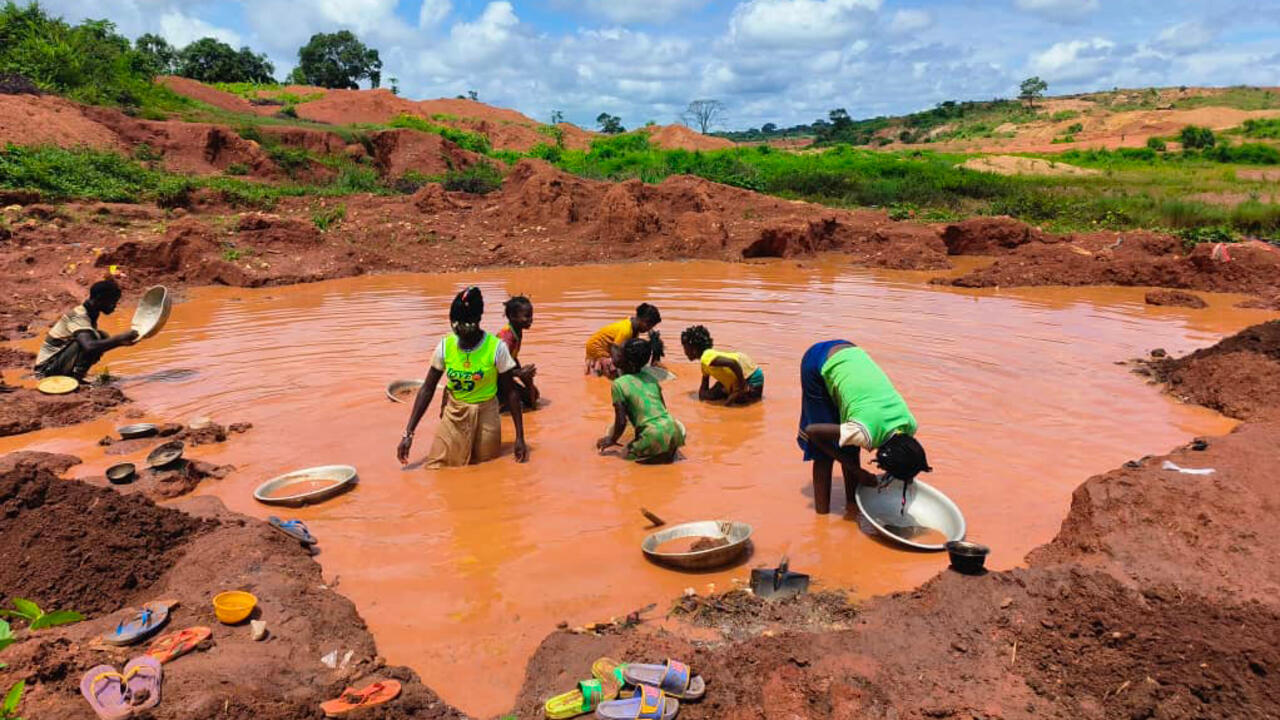
A deadly landslide at a gold mine on the Cameroon-Central African Republic border has triggered calls for greater oversight of mining operations, after dozens of people were killed and many more were reported missing. Issued on: 20/08/2026 - 21:47 3 min Reading time The accident happened on Tuesday at the Zamboye mining site, about 50 kilometres from the Central African town of Baboua, near the border with Cameroon. Local residents said nearly 500 people were working at the open-pit mine, which is known to be particularly dangerous. Such accidents are not unusual during the rainy season, but the scale of the disaster is unprecedented, Samuel Nguiffo, director of the Centre for Environment and Development and a specialist in mining issues in Cameroon, told RFI. Many young people had gone to the site to earn money ahead of the new school year, making it busier than usual, he said. Pressure for change "This accident was a wakeup call not only for the authorities but also the companies that buy the gold," Nguiffo warned. "They will be obliged to invest to improve the working conditions." People operating the mines have so far focused on making money quickly and have not invested in infrastructure or equipment, he added. According to the Central African authorities at least 49 people lost their lives, including Cameroonians and Chadians. The government has ordered the temporary closure of the mining site until further notice and the prosecutor in Baboua has opened an investigation. However, the death toll is disputed by witnesses and the victims' relatives, who report around a hundred deaths. Mines Minister Rufin Benam-Beltoungou visited the site on Wednesday and held a meeting with some of the artisanal miners who acknowledged instances of indiscipline among their fellow miners. "The Central African Armed Forces (FACA) asked them to get out of the pit because the soil was very loose; it had been raining here for practically 72 hours. Unfortunately, these compatriots did not comply – as they themselves admitted. They kept digging, and eventually, the ground gave way and collapsed on top of them," he told RFI's Bangui correspondent Rolf Steve Domia-Leu. The Cameroonian government confirmed the deaths of at least four of its citizens and reported other injuries. Gregoire Mvongo, governor of the eastern Cameroonian region, said on public CRTV radio that they were "working in close collaboration with our Central African colleagues to deal with the aftermath of this tragedy". Spotlight on Africa: the race for Africa's critical minerals Calls for accountability The collapse has also renewed debate over the management of artisanal gold mines in both countries. Martin Ziguélé, a leading opposition figure and president of the Movement for the Liberation of the Central African People, called for a parliamentary inquiry, saying "the government bears direct responsibility for the occurrence of these tragedies". He told RFI: "The Zamboye tragedy is not an isolated incident. There have been other disasters in several regions where landslides resulted in significant loss of life. This recurring pattern points to a failure to properly manage gold mining operations, which have now become a source of mass fatalities." Cameroonian opposition leader Maurice Kamto, who finished second to President Paul Biya in the 2018 election, said the accident revealed "the inhumanity of those who grow rich from the illegal exploitation of minerals". He added: "They show absolutely no concern for the conditions in which compatriots, driven by destitution, work at unregulated mining sites, without the slightest safety measures." Zimbabwe’s gold rush adds fuel to a deadly surge in malaria Regulation efforts Roger Justin Noah, secretary-general of the Cameroon Renaissance Movement, said tackling illegal mining nneded to become a priority in Cameroon. "We condemn the current mismanagement of gold mining in our country. It is a ruthless mafia operation, and the people are the ones who suffer. The financial consequences to date are enormous – we are talking about more than 4,000 billion CFA francs (€6 million)," he was quoted as saying in local media. "And I would remind you that a single billion CFA francs is enough to build 20 health centers in our country." Cameroon is seeking to develop its economy through mineral resources including iron, diamonds, gold, bauxite and cobalt. The country adopted a new mining code in 2023. Earlier this week, the Ministry of Mines said measures had been introduced to better regulate mining operators and sites, improve production oversight and enforce tax and environmental rules. Last month, the government announced tighter controls on the gold sector after discovering a large gap between export figures declared by customs authorities and import figures reported by importing countries, particularly the United Arab Emirates. The government says more than 200 companies are carrying out mining activities in Cameroon without a permit or authorisation.
Deadly border mine collapse exposes risks behind Central Africa's gold rush
Full Article
Original Source
Read the full article at Rfi →KhanList aggregates and links to publicly available news content. We do not host full articles from third-party sources. Always verify important information with original sources.