
Summary Collider's Steve Weintraub talks with DC's Peter Safran about Clayface. Safran discusses working with Mike Flanagan and James Watkins on the Batman supervillain's on-screen origin story. He also discusses casting Tom Rhys Harries, introducing the DCU's live-action Gotham City, and his 10-year plan with James Gunn. In 2023, DC Studios chairmen James Gunn and Peter Safran announced their first slate of projects to introduce audiences to the newly mapped-out DC Universe. Since then, we’ve gotten Creature Commandos, David Corenswet in Superman, and more recently Supergirl and Lanterns. Now, with the standalone body horror Clayface, fans take “the first step into the world of Gotham,” Safran tells Collider’s Steve Weintraub, as the duo continues to work with filmmakers and creators to flesh out this behemoth universe on screen. Originally written by Mike Flanagan, Clayface is the origin story of Matt Hagen (Tom Rhys Harries), a.k.a. Batman's tragic titular adversary. From Flanagan’s script, director James Watkins (Speak No Evil) and writing partner Hossein Amini (Drive) explore the twisted story of how one of Hollywood’s leading men transformed into the infamous supervillain. During their conversation, Safran explains the casting process behind his 10-year plan with Gunn and discusses how Clayface moved from Flanagan’s hands to Watkins’ and how that ultimately changed the final film. He talks about the movie’s love story, casting a relatively unknown Harries, pushing the boundaries of violence and gore, and releasing a lower-budget horror under the DCU umbrella. Safran also discusses the future possibilities for the universe, including genres they hope to explore, revealing that “nothing’s off the table,” as well as discussing how Clayface introduces fans to the new Gotham City. Finally, he reveals Batman is already operating somewhere in Gotham City during the events of Clayface. Check out the full conversation in the transcript provided below. Why Mike Flanagan's 'Clayface' Pitch Won DC Over "He had such tremendous passion for it." Image via TheNews2/Cover Images COLLIDER: When Mike Flanagan first pitched Clayface, what was the moment that convinced you and James this movie needed to happen? PETER SAFRAN: He had such tremendous passion for it that originated with his obsession with “Feat of Clay,” from the Batman animated series. He just had such passion for it, and he attacked it from a truly character perspective. He had a great story about this character, exploring the idea of how one bad decision can change everything for you, Then, he delivered a first draft that fully delivered on the promise of the pitch. One of the things I think that the movie has going for it, which a lot of people might not realize, is there’s a compelling love story, like Gothic horror, if you will. Can you talk about that aspect of the film? SAFRAN: It's always important to us. It's a character-driven piece. The body horror is great, but without the characters that you care about, it really doesn't mean a lot. And the fact that there's that deep relationship that is ultimately quite twisted between Tom and Naomi [Ackie]'s characters is an important part of it. I think the best horror movies, if you strip out the horror elements, are still good dramas, and this one has that element. You are following Tom falling in love with his doctor. 100%. How 'Clayface' Landed Its New Director Safran discusses how James Watkins changed Matt Hagen’s original character. Image via Warner Bros. Pictures So Mike delivers a script, and I know that Hossein Amini did a pass on the script. SAFRAN: Mike delivered… I think he might have done two drafts on it, and it was really good, and we obviously really wanted him to direct the movie. That was always the intent but as a very highly sought-after filmmaker in both film and television, he had other obligations. We hired James Watkins, who had a terrific pitch for it, whose films we loved, as well. And because it's a filmmaker's medium, we wanted to give him the freedom to explore his vision a little bit, as well, and he brought in Hossein Amini to work with him. The film that you saw is a beautiful amalgamation of those two visions. When James Watkins got involved with the project was there any specific plot ideas he brought to the film? SAFRAN: It was always about Matt Hagen and his journey. He wanted to make sure that Matt was a likeable guy at the beginning of the movie, that you felt for Matt when the bad things happened. I think he made Matt a little less culpable at the beginning. Why Tom Rhys Harries Was the Right Choice to Play Matt Hagen "I don't think there's there's a hard and fast rule." Image via Warner Bros. Pictures I definitely want to talk about casting Tom because he does such a great job in this. One of the strengths that Tom brings to this role is that he is an unknown, and you can place the character of Matt on him and believe that he is Matt. SAFRAN: That's right. How much did him being unknown come into casting, and how much was it just that his audition was the best one? SAFRAN: The fact that he's not known is really gravy for us. The truth is he won the role based on his audition and his screen test and his callback. He just was so compelling. We had a number of great actors that were interested. There were a bunch of real contenders, but when he came in for his screen test, there just was no question in any of our minds. Matt Reeves, James Gunn, myself, James Watkins — everybody was just on board that this is the guy. The fact that he's not widely known helps audiences sink deeper into just following the story, because you're not bringing along any of the other stories or characters you've seen him in. You're not bringing that along for the ride. So, I think it's great. That also brings me to something I was curious about. When you're casting iconic DC roles, like you did with Superman and David, how much are you thinking about purposely actually leaning into a lesser-known person, the way Daniel Craig got Bond? Again, I don't know where you're at with Batman; I don't know where you're at with other characters, but I am curious. SAFRAN: I don't think there's a hard and fast rule, but there is, as you said, a benefit to them not being well known because then they can really embody and embrace that character. DC Refused to Compromise on 'Clayface's' Body Horror "Gunn and I were looking at the screen kind of through our fingers." Image via Warner Bros. Pictures I think a lot of people are going to be very surprised by how hard this movie goes, and the violence and the body horror. Did the MPAA push back on anything, or were they pretty cool with this? SAFRAN: They were not pretty cool with this. They were not. But there's nothing that we lost that we felt was detrimental. But I will say that James Watkins, in his directorial pitch to us when he was pitching to get the job, always leaned heavily into the realness of it. He wanted the scarring and the operations. He wanted everything to feel real. He had a lot of imagery that he brought with him for the pitch, and I'm telling you, Gunn and I were looking at the screen kind of through our fingers. It was really hard to look at, but it was exactly right. It felt so grounded. It felt so real. And I think when you're watching the movie, and you're seeing A., his face getting sliced up, and B., the doctors doing some of those early operations, like on the nose and cheek, it's horrific, but it really brings home the horror of what he has endured, and I guess, in many ways, creates even more empathy for the character and the journey that he's on. Deadpool was, I believe, $50 million, give or take, and it took a big R-rated swing and it was a huge success. SAFRAN: That's right. How much are you thinking about more of these kinds of films, and where are you in the development of this level of films? Because I do think that they allow a studio and DC to flex a muscle you cannot flex with the four-quadrant. SAFRAN: Yes. I fully agree. The answer is, we have a number of things in this vein in development that we would be excited to make in the coming years. It's also a great way to introduce characters that maybe audiences are a little less familiar with, but in a way that's no less effective than a big-budget film. Something I'm going to commend you on is that Sony, not to bring them down, but they've tried repeatedly to bring Spider-Man offshoot characters to the screen and failed, like every time. You guys just did Clayface, and you did it. SAFRAN: We did it as a pure play, meaning we knew from the get-go that it was a horror movie, and we leaned into that. We didn't compromise. We didn't try to shave off the edges. It's a horror movie. That's just the path that we went down. When you have a filmmaker, like a James Watkins, who is steeped in that and has clarity of vision in terms of what he wants to bring to it, that's what the movie wanted to be. And we picked the right character to wrap it around, as well. It was the perfect origin story to tell. 'Clayface' Introduces Audiences to DCU's Live-Action Gotham City Safran also confirms Batman is already fighting crime when the movie takes place. Are we supposed to imagine Batman is already operating somewhere in Gotham during the events of Clayface? SAFRAN: Yes. How much did you and James Gunn talk about where Batman is, and what Batman is doing during? SAFRAN: We haven't really talked about what he's doing during the actual events of Clayface. But Batman is there. This is the introduction to the live-action Gotham. We showed a silhouette of Batman in Creature Commandos, so you know he's around, but this is the first step into the world of Gotham for us. That's something else I wanted to talk about, which is the look of Gotham. What's interesting about the film is James did a great job showing Coast City — it's very bright, it's Los Angeles, it's sunny. It's a whole different version than Gotham City, which feels very dirty and grounded and more like the ‘70s and ‘80s. SAFRAN: That’s kind of traditionally how Gotham is dealt with, right? It is no surprise to people that that's the vision of Gotham that we showed. Although you do see the beautiful apartment that he has. You do see some of the high-low that Gotham embraces. You see some of that. Then we always say to our filmmakers and our creators, they don't have to abide by the look that we've necessarily established, but there's a vibe to it that they have to abide by. What do you hope a horror fan who doesn't care about superheroes takes away from this? SAFRAN: I think that if you're just a horror fan and know nothing about the comics, it's just a great origin story of what is ultimately a horrific monster. But it's just that. I think you need to know nothing about the comics. If you are a fan, you get a little more out of it, and you get the nuance, and you get the Easter eggs, and you recognize some of the actual shots and frames that came directly from the comics, but without that, it doesn't impact the story at all. Anybody can watch this and just really enjoy it as a great horror film. How the DCU’s 10-Year Plan Shapes Its Actor Commitments "They know we need more." This movie is a modestly priced film, as compared to, say, Superman or other things. You’ve made films in a lower budget space. Talk a little bit about the freedom that comes from a $40-50 million movie that you couldn't do on a $150 or $200 million film. SAFRAN: There is a freedom that comes with it, no doubt. But it's really part of what we had laid out early on, which is the idea of having a slate that has a broad spectrum to it across film and television and animation, where you do explore different genres, and different genres require and necessitate different budget levels. If you're making a horror movie, there's no reason why you can't make it for a more modest price. That's one of the joys of it - you're able to tell this story in a way that feels like there have been no compromises, you haven't cut any corners, and you've made a great film, and you still are able to make it for a price. As we move forward, you'll continue to see the big summer blockbuster, four-quadrant films, but you'll also see the Dynamic Duos, and you'll see the Clayfaces, and you'll see Lanterns, and you'll see Creature Commandos, and you'll see Mister Miracle. Having a slate that feels fresh and original and different for audiences necessitates different budget levels. Here's a question that I think a lot of people are wondering, and something I really want to know, as well. You guys have talked about a 10-year plan, and how you want everything to be interconnected. How does it actually work with trying to do contracts with people when you are trying to sign them for, say, Tom [Rhys Harries] with Clayface? So he signs on. You might not know what Tom is going to do in the future, but you also need to have him under contract so you're not going to him if it's a big hit and saying, “Hey, we want you to go do this…” You get what I mean. SAFRAN: I do. As I mentioned earlier, we are always looking for volunteers and not recruits, and when people are volunteers, they tend to be open to making deals that are somewhat open-ended. I get what you're saying. SAFRAN: So there's a flexibility to it. They know we need more. It's never, “Just come do this one movie.” I am so curious about a rom-com in a superhero universe. No one's done it, and if it's done well, that could be something. SAFRAN: Put that out there in the universe. I'm saying it in this interview. SAFRAN: That's right. I love it. Clayface is in theaters on October 23. Release Date October 23, 2026 Runtime 108 Minutes Director James Watkins Cast Tom Rhys Harries Matt Hagen / Clayface Naomi Ackie Dr. Caitlin Bates Writers Mike Flanagan, Hossein Amini Producers James Gunn, Lynn Harris, Matt Reeves, Peter Safran Franchise(s) DCU
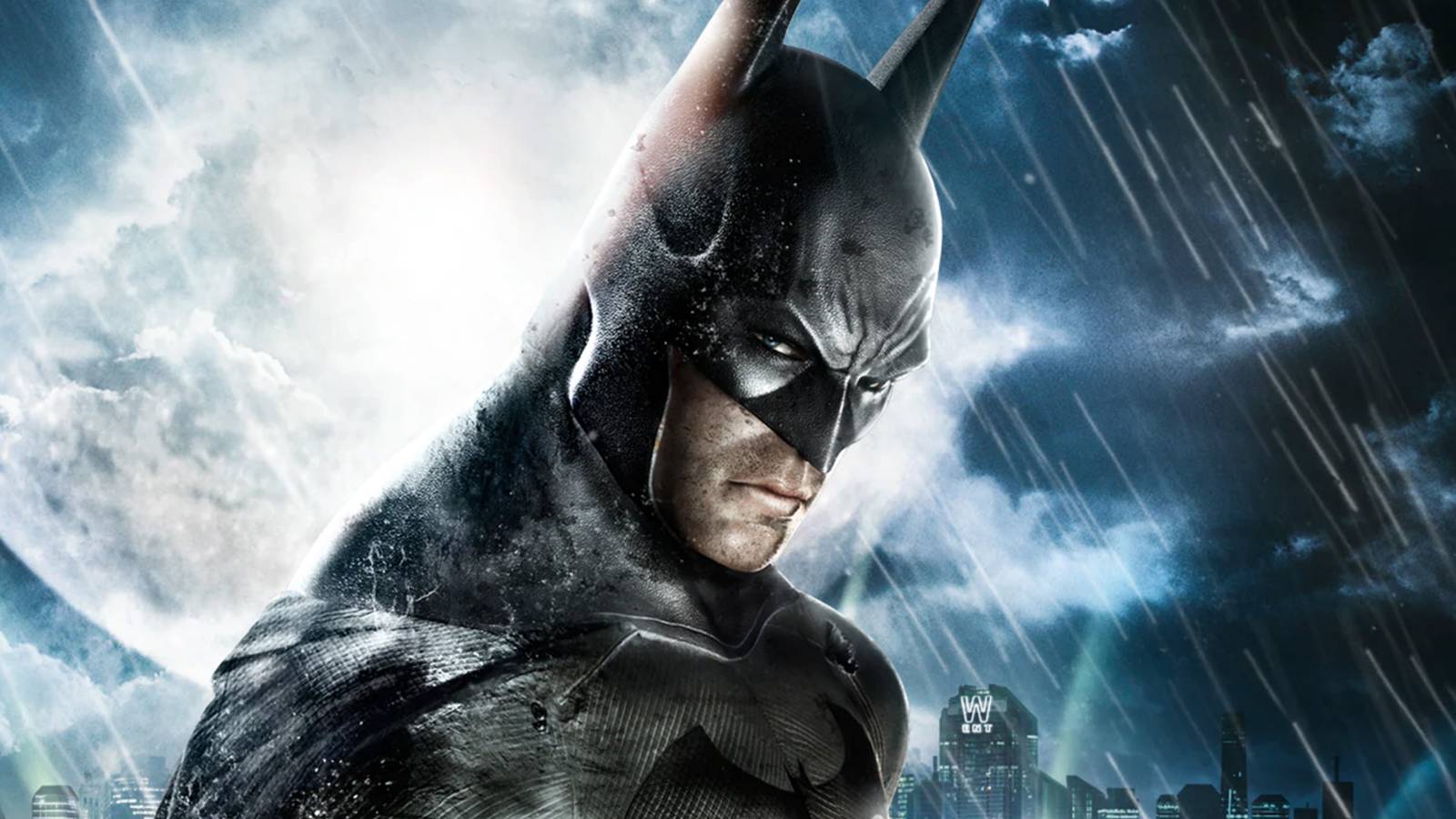
DC Studios Boss Peter Safran Confirms a Major Batman Detail in ‘Clayface’
Full Article
Original Source
Read the full article at Collider →KhanList aggregates and links to publicly available news content. We do not host full articles from third-party sources. Always verify important information with original sources.