
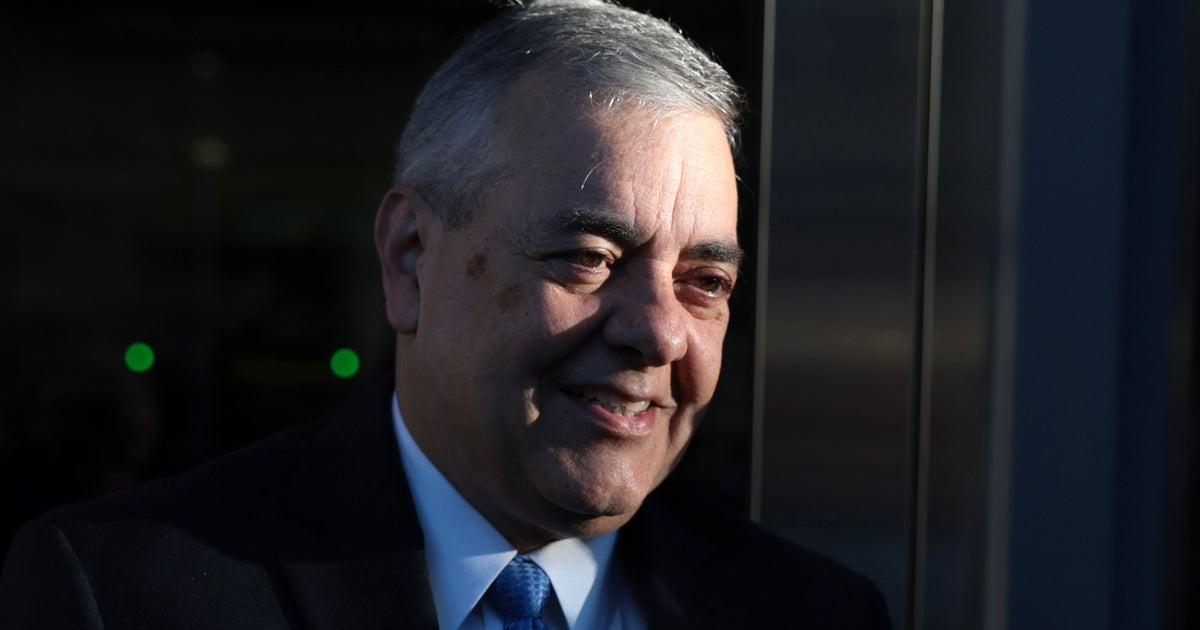
By Sergio Candido Managing Editor, South Sergio Candido is the managing editor for the South region at cbsnews.com, coordinating multiplatform news coverage for CBS Miami, CBS Texas and CBS Atlanta. He previously worked for outlets including Telemundo and The Miami Herald. Read Full Bio Ivan Taylor is a bilingual, award-winning TV journalist who is a seasoned reporter with extensive live and breaking news experience from local and national news outlets. Read Full Bio Updated on: October 2, 2026 / 2:40 PM EDT / CBS Miami Add CBS News on Google Former U.S. Rep. David Rivera was sentenced Friday to 10 years in federal prison for his role in a secret $50 million lobbying campaign on behalf of the Venezuelan government during the first Trump administration.Rivera, a former Florida congressman and longtime friend of U.S. Secretary of State Marco Rubio, was sentenced in federal court in Downtown Miami after a jury convicted him in May on all counts following a seven-week trial.Rivera had remained in federal custody without bond since the jury returned the guilty verdict on May 1. His sentencing was initially scheduled for July 20 before being moved to Oct. 2.Rivera had faced a maximum possible statutory sentence of up to 60 years in federal prison and a potential $20 million asset forfeiture judgment.Jurors convicted Rivera on all federal counts, including failing to register as a foreign agent with the Justice Department and conspiracy to commit money laundering. Political consultant Esther Nuhfer, who was tried alongside Rivera, was also found guilty on all counts.Prosecutors said Rivera and Nuhfer secretly worked on behalf of the government of Nicolás Maduro from 2017 to 2018 through a multimillion-dollar contract signed with Rivera's company.After Rivera was convicted, the jury also determined that properties he owned in Doral and the Florida Keys would be forfeited to the government. Prosecutors said Rivera secretly worked to influence U.S. policy toward VenezuelaRivera was charged in an 11-count indictment unsealed in 2022. Prosecutors alleged that then-Venezuelan Foreign Minister Delcy Rodríguez recruited Rivera to use Republican connections from his time in Congress to persuade the Trump administration to soften its stance toward Venezuela and ease sanctions.Prosecutors said Rivera and Nuhfer sought to influence prominent political figures, including Rubio and Texas Congressman Pete Sessions, without disclosing that Rivera had a consulting contract with a U.S.-based affiliate of Venezuela's state oil company, PDVSA."As long as the money kept coming in, they didn't care from where," prosecutor Roger Cruz told jurors during closing arguments.Prosecutors argued Rivera and Nuhfer kept the arrangement secret because disclosing it could have damaged Rivera's political reputation as an anti-Communist. Evidence presented during the trial included messages from an encrypted chat group called "MIA," which prosecutors said Rivera established with Venezuelan media tycoon Raúl Gorrín, his primary conduit to the Maduro government.Members used code words when discussing their activities, according to messages shown to jurors. Maduro was called the "bus driver," Sessions was "Sombrero," Rodríguez was "The Lady in Red" and millions of dollars were referred to as "melons.""It was all about La Luz," Cruz said during closing arguments, referring to the Spanish word for "light," which prosecutors said Rivera and others used when discussing payments from Caracas.Prosecutors also accused Rivera and his associates of attempting to conceal their work once it came under scrutiny, including by backdating documents and creating sham agreements. One agreement, prosecutors said, was used to justify a $3.75 million wire transfer to a South Florida company that maintained Gorrín's luxury yacht.The lobbying effort included arranging meetings for Rodríguez in New York, Caracas, Washington and Dallas. Sessions later attempted to arrange a meeting between Rodríguez and the CEO of ExxonMobil and agreed to deliver a letter from Maduro to President Donald Trump after a secret meeting in Caracas.Rivera's defense argued he was trying to oust MaduroRivera's attorneys maintained during the trial that he acted in good faith and believed his work did not have to be disclosed under the Foreign Agents Registration Act.The defense argued the three-month, $50 million contract with Rivera's consulting firm involved efforts to bring ExxonMobil back to Venezuela and constituted commercial work generally exempt from foreign-agent registration requirements. Rivera's lawyers also argued that his meetings with Rubio and Sessions took place after the consulting agreement ended and were aimed at replacing Maduro with Venezuelan leadership friendlier to the United States."He was working every possible angle to get Nicolás Maduro out," defense attorney Ed Shohat said during closing arguments. "There was not a word in the chats about normalizing relations."The trial featured testimony from Rubio, Sessions and a prominent Washington lobbyist, all of whom testified that they learned only later about Rivera's consulting contract with the PDVSA affiliate.Rivera served one term in Congress after being elected in 2010 and previously held a senior position in the Florida Legislature. He and Rubio shared a Tallahassee home when both served in state government and Rubio later became speaker of the Florida House. Jacob Rosen, Steven Yablonski and Marybel Rodriguez contributed to this report. In: Nicolas Maduro Venezuela South Florida Marco Rubio Donald Trump Politics Indictment Rex Tillerson Miami Florida Trial
David Rivera sentenced to 10 years in Venezuela lobbying case
Full Article
Original Source
Read the full article at Cbsnews →KhanList aggregates and links to publicly available news content. We do not host full articles from third-party sources. Always verify important information with original sources.