
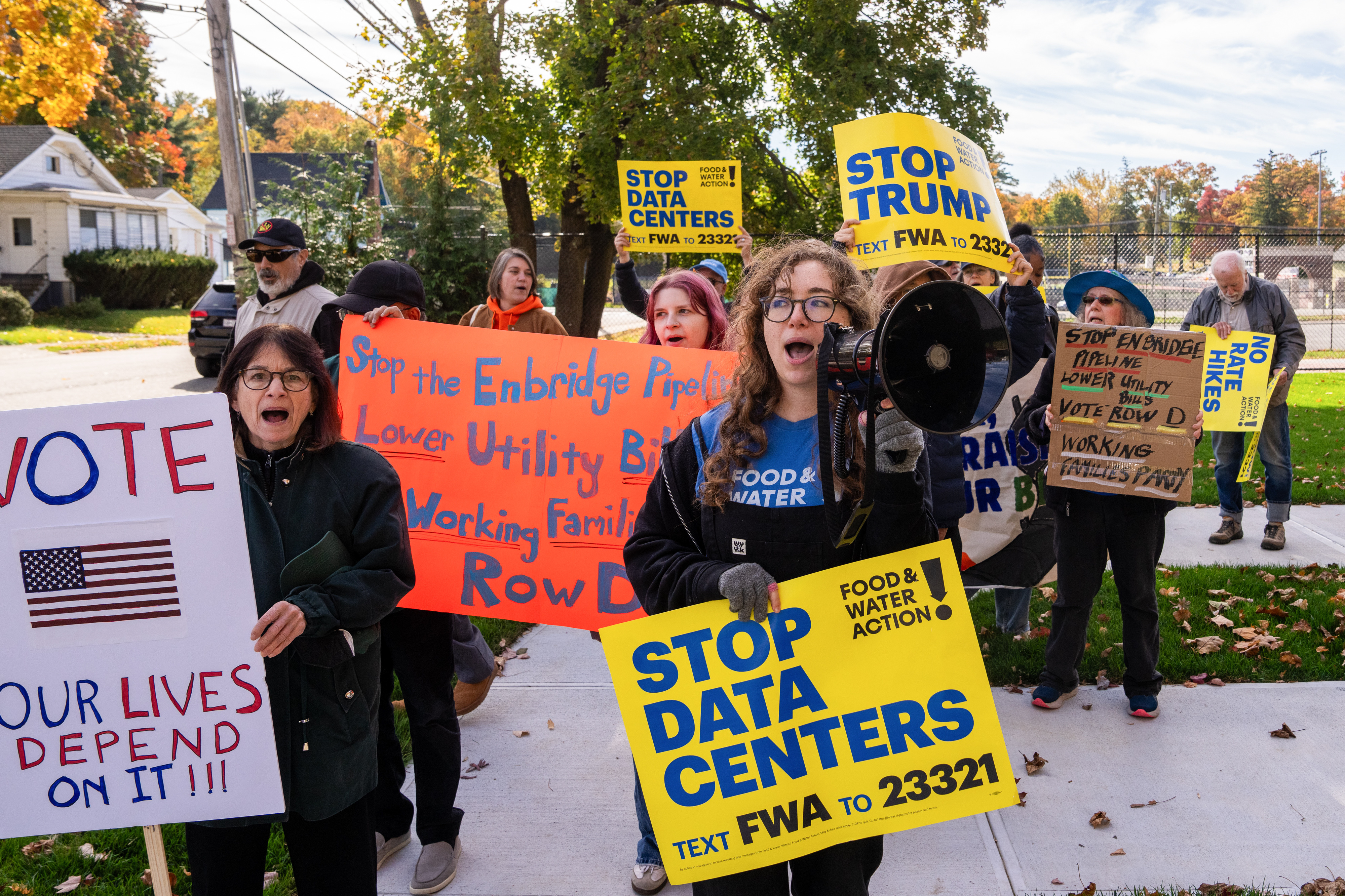
The 2026 midterm election blue wave, which shifted the balance of power in Congress and across state races toward Democrats, can be seen as a repudiation of AI and the controversial data centers that provide its computing power. Data center proponents have heavily backed President Donald Trump and Republican candidates, underscored by xAI CEO Elon Musk investing hundreds of millions of dollars into Texas midterm campaigns to support the industry. But in many parts of the country, voters didn’t need to make their voices on data centers heard through candidates. They had direct initiatives on the ballot this week that would decide whether data center projects would move ahead in their districts. In line with a growing backlash against data centers and AI, voters supported about 40 election-day measures that would restrict the construction of new data centers, with only one result — in Harwood, North Dakota — favoring data center expansion. (Disclosure: Ziff Davis, CNET’s parent company, in 2025 filed a lawsuit against OpenAI, alleging it infringed Ziff Davis copyrights in training and operating its AI systems.) As broken down by the website Data Centers on the Ballot, Ohio had the most number of voting measures: 21, all of which were in favor of restrictions. Maine, Illinois, Kansas, New Jersey, California, Florida, Nevada, North Dakota and Wisconsin were the other states with data center voting. Six elections were held earlier in 2026 in California, Michigan, New Hampshire and Wisconsin, with all of them finding voters opposed to allowing data center builds to continue without new restrictions. Not all the proposed restrictions were the same. In some elections, voters decided whether to impose a megawatt cap on data center energy use, while other measures addressed specific zoning issues or whether data center projects should require voter approval. Some proposed an outright ban on new data centers, and six of those were successful. Polls by groups including Pew Research have found Americans have soured on data centers due to high electricity bills, water use and environmental concerns, among other reasons. It’s also hard to separate concerns about data centers from concerns about AI affecting jobs. AI has also become a divisive enough issue to affect midterm voting. More bad news for data centers and their supporters The election results were so bad for the industry that Politico declared data centers to be “the midterms’ other big loser” next to Republicans. Not only did voters enact additional restrictions on builds across the country, but data centers were mentioned in Democratic victory speeches. “I do not work for data centers. I do not work for Wall Street. I work for you, I work for Ohio,” Senator-elect Sherrod Brown said in his victory speech Tuesday night. USA Today reported that two mayors, one in Oklahoma and one in Ohio, were recalled after public backlash over proposed data centers. What’s next for data centers The midterms might have longer-term effects for tech companies and data center firms. It’s likely that with Democratic control of Congress, there’ll be more scrutiny. “Public policy is going to reflect public opinion, and there’s been a very substantial change in public opinion just over the last year,” Darrell West, a senior fellow at the Brookings Institution, told Politico. Political headwinds from the midterms could lead local officials across the country to gain public favor by delaying or canceling data center projects or putting pressure on the companies behind them to offer more attractive deals to communities. The days of huge tax breaks and incentives for data centers could be coming to a close. “Now, (communities) are pushing data centers to pay taxes, create their own power plants, pay for their use of electricity and water and contribute to local community resources like education funds,” The New York Times reported. Omar Gallaga has covered technology, digital culture and other topics for outlets including CNET, NPR, Wired, Texas Monthly, MSNBC, Consumer Reports, The Washington Post, the Los Angeles Times, The Atlantic and the Austin American-Statesman, where he was a longtime tech reporter, editor and podcaster. He lives in the Texas Hill Country. See full bio The Latest from Omar Data Center Backers Suffer Near-Total Midterm Defeats Across the Country Microsoft Teams Hack Report Shows Old-School Attacks Are Still a Thing Anthropic Addresses Video Game Cloning With Minor Claude Update
Data Center Backers Suffer Near-Total Midterm Defeats Across the Country
Full Article
Original Source
Read the full article at Cnet →KhanList aggregates and links to publicly available news content. We do not host full articles from third-party sources. Always verify important information with original sources.