
TAIPEI – “We are Taiwanese first, then we are fans”, said one social media post on Threads, after news broke that Chinese idol Zhang Linghe had been denied entry to Taiwan.While Taiwan authorities have refused entry to mainland stars before, Zhang’s immense popularity has led to a greater furore than usual, with Taipei and Beijing officials trading accusations over the matter.The mainland actor became a household name in 2026 after period drama “Pursuit of Jade” became a megahit across the region.On Oct 21, China’s Taiwan Affairs Office (TAO) slammed Taiwan authorities for rejecting Zhang’s application to meet fans and engage in cultural exchange on the island in late October.The TAO spokesperson said the decision “disregarded the wishes of local residents, particularly young people”, The Global Times reported.“We urge the Democratic Progressive Party (DPP) authorities to accede to the wishes of compatriots on both sides of the Strait to strengthen interaction and give up on political manipulation,” said TAO spokesperson Zhang Han.Some fans of Zhang are supportive of interaction, with one saying on Threads: “Isn’t it good to have more entertainment, music and cultural exchanges between the two sides? Setting aside other factors, if we have more interaction, we can increase the tourism revenue, everyone makes more money, isn’t that a good thing?”Still, there are many fans who support the decision of Taiwan’s Mainland Affairs Council (MAC), even though some of them expressed disappointment. Said a post on Threads: “I really like Zhang Linghe, but I support the Mainland Affairs Council.”Cross-Strait relations have seen their ups and downs over the years, and this incident is the latest to show how the tension has continued to spill over to all facets of life, including arts and entertainment.China views Taiwan as part of its territory and has never renounced the use of force to reunify it. Taiwan rejects the claim.There were previous cases that made the news. In 2024, Chinese rapper Wang Yitai was to hold two concerts in Taipei, but the MAC cancelled his concert permit and banned him from entering Taiwan because he used promotional materials that referred to the island’s capital as “Taipei, China”.Taiwanese stars who are pro-China or pro-reunification have also been criticised or censured.Taiwanese actor Nicky Wu, who is married to a mainland actress, is among some Taiwanese stars who have posted congratulatory messages on China’s National Day on Oct 1.He even put up a video of himself waving the Chinese flag at Tiananmen Square this year. The former member of boyband “Little Tigers” was then dropped from making the ceremonial first pitch at a baseball game in Taiwan, although Wu’s poor health was the reason given.Across the Strait, China has punished Taiwanese stars for any hint of supporting Taiwan independence.The latest case being Taiwanese talk show host and writer Kevin Tsai, who suffered a huge backlash in China, after he was spotted attending an event by DPP Taipei mayoral candidate Puma Shen, whom China has labelled a “diehard separatist”.Chinese electric car maker Leapmotor removed content related to Tsai the very evening after he went viral for attending Shen’s campaign office launch on Oct 4.“Jun Zhengping”, a social media account affiliated with the People’s Liberation Army Daily, said, without naming Tsai, that those who profit from the mainland while simultaneously flirting with “Taiwan independence” forces will “pay an unbearable price”.Zhang’s ‘united front’ rhetoricIn the case of Zhang, the MAC said his online posts in the past had belittled Taiwan’s status, and that the actor has repeated “united front” rhetoric.China’s “united front” is a political strategy to influence individuals, organisations and communities to achieve the goals of the Communist Party of China (CPC).MAC deputy minister Liang Wen-chieh highlighted Zhang’s speech at the Straits Forum in the southern Chinese city of Xiamen in June as a key reason to cast doubt on the actor’s intentions. The Straits Forum is seen by Taipei as a tool to win over Taiwanese to Beijing’s views.“I paid special attention to Zhang (at the forum),” Liang said. “He was very practised at using ‘united front’ rhetoric. It seems he is not acting under compulsion but is actively co-operating.”Liang added at a regular press briefing on Oct 22 that Zhang’s application was not just for a fan meeting but included about 20 other people who were part of a media industry forum, and the objective of that event was unclear.Responding to TAO’s accusations of “political manipulation” by Taiwanese authorities, MAC pointed to recent incidents where Taiwanese artistes were harassed and even hurt.Comedian Huang Yi-hao was injured in September when a car was said to have deliberately rammed his scooter near his home. Five men were indicted on Oct 21. Prosecutors said a Chinese individual identified as “K” offered NT$450,000 (S$17,654) to have Huang seriously injured so he will miss a performance.The men were paid NT$250,000 upfront, but “K” refused to pay them the NT$200,000 balance because Huang’s injuries were minor.In a separate incident in May, two men were prosecuted for throwing faeces and paint at a Taipei comedy club on the day Huang was to perform there.Huang is among individuals who have been targeted for surveillance and intimidation in cases that prosecutors have described as “transnational repression” by China.“Who is repressing or even intimidating artists for political ends? We believe the people can judge for themselves,” said MAC.When a reporter asked on Oct 22 if MAC has tightened rules for mainland artistes holding activities in Taiwan, Liang said the government’s position has not changed: “We welcome cross-Strait cultural exchanges, but you cannot turn it into a united front activity.”Greater scrutiny from Taiwan?There has, however, been a broader trend of “tightening scrutiny” towards pro-reunification Chinese nationals, influencers, and Chinese spouses residing in Taiwan based on concerns over CPC infiltration, said Mariah Thornton, who has studied Taiwan’s resistance to China’s united front activities.On Oct 16, a Chinese exchange student studying in Taiwan was deported for posting a forced perspective photo of himself “pinching” President Lai Ching-te’s head, with the caption “Got you, Little Lai Ching-te”.The student had placed his fingers close to the phone, while filming Lai speaking at an event in the distance, to create an optical illusion that he was holding Lai’s head. His post included pro-reunification hashtags.Thornton, a teaching fellow at the Department of International Relations at the London School of Economics and Political Science, raised two other cases from 2025: Influencer Liu Zhenya and China spouse Qian Li, who had their resident permits in Taiwan revoked after putting up social media posts supporting armed reunification.At least three other China spouses have had their residency permits revoked for similar offences, according to a January 2026 report by Taiwan News.These cases show that Taiwanese authorities are more stringent in their vetting of Chinese nationals who express pro-reunification views on social media or who participate in united front activities, said Thornton.“This has caused controversy over whether Lai is prioritising national security at the expense of freedom of speech,” she said.
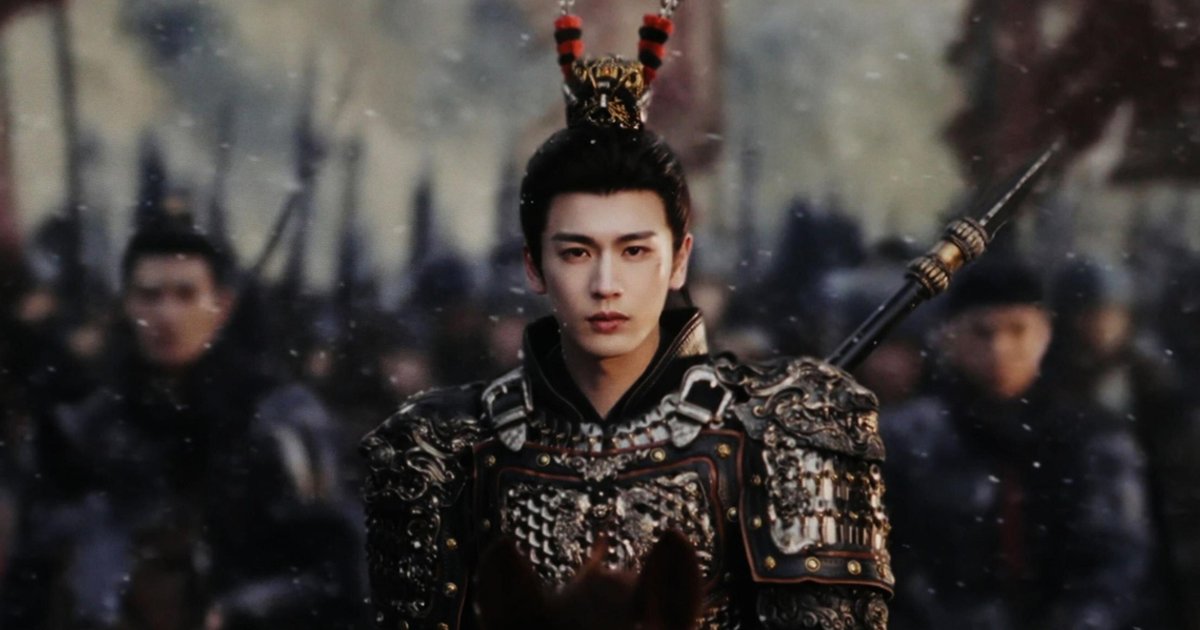
Cultural exchange or ‘united front’? Why Taipei said no to Pursuit of Jade star Zhang Linghe
Full Article
Original Source
Read the full article at Straitstimes →KhanList aggregates and links to publicly available news content. We do not host full articles from third-party sources. Always verify important information with original sources.