
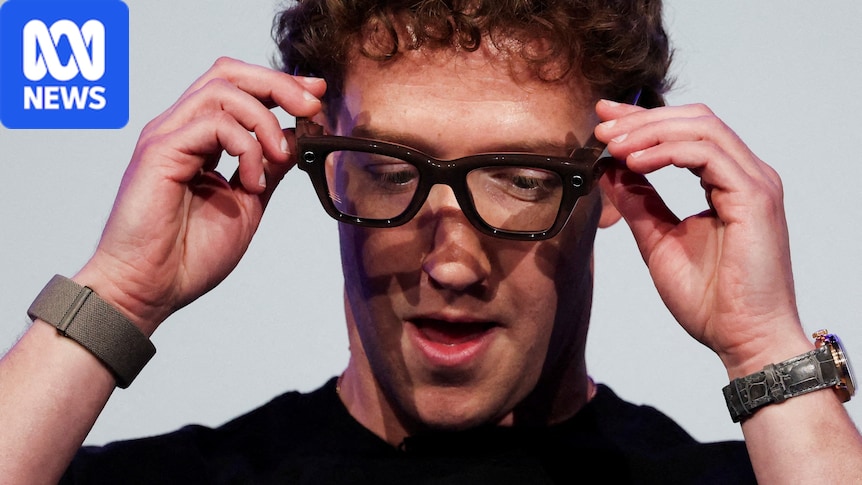
How would you feel about being filmed without consent while teaching your toddler to swim? Or lying on a Gold Coast beach in togs?Wearable eyewear with the ability to film, record, and share video footage, known colloquially as "smart glasses", have taken Australia by storm.But the influx of glasses has set off alarm bells for portions of the public who view the technology — labelled "pervert glasses" by some — as an unreasonable incursion on personal privacy.Public backlash has been steep enough that Brisbane City Council (BCC) last week became the first local council in the country to ban their use at public swimming pools.Section 227A of the Queensland Criminal Code bans recording people without their consent in "circumstances where a reasonable adult would expect to be afforded privacy".That includes people in a private place or engaged in a private act and covers things like recording people in swimming pool change rooms.BCC's change goes a step further and adds a new condition of entry for public pools, banning non-consensual use of all camera-enabled devices, with lifeguards given the power to remove people from the premises.Danger of smart glasses 'not hypothetical'Experts have questioned whether local council regulation is enough to curb misuse of smart glasses.Elizabeth Englezos, a lecturer at Griffith University's school of law, said while BCC's move to leverage conditions of entry to a public place to ban the devices was "kind of a clever idea", broader regulation would need state or federal heft."The problem is that we don't necessarily know when someone's wearing the glasses and therefore when you're being recorded," Dr Englezos said."It's not always easy to tell whether or not they're smart glasses to begin with."Labelled "pervert glasses" by some, smart glasses allow users to film, record and share video footage discreetly. (ABC News: Shaun Kingma)While Brisbane's new ban gives lifeguards the power to evict people using smart glasses without consent, Dr Englezos said that still did not help identify people using them in ways not intended by the manufacturer.In advice to industry published last Monday, the Office of the eSafety Commissioner made several recommendations to manufacturers to help balance the technology's benefits and harms."Looking ahead, we can expect more sophisticated forms of harm as smart glasses are combined with other technologies such as facial recognition, image recognition and generative AI," the statement said."To address current safety concerns, many technology companies place responsibility on user to use the smart glasses safely. However, asking people to use a product responsibly is not an adequate safety policy."The harms linked to covert recording are not hypothetical. They are real and already occurring."The recommendations to smart glasses manufacturers include automatic blurring of faces and clearer visual indicators that a person is recording.Those were recommendations Dr Englezos said would go a long way to curbing the potential harms of smart glasses, if legislated by governments."Blurring people's faces is actually quite a common practice overseas in certain jurisdictions," she said.Use of smart glasses on social media has prompted calls for tightened government regulation. (Screenshot: TikTok)One of the potential functions of the devices that raised concerns for Dr Engelzos was the "really scary" ability for some glasses to retrieve information on people based on a scan of their face.She said the High Court of Australia had made it abundantly clear Australians had "no right to privacy"."The main issue is that there's no real right to privacy that allows us to protect it," she said."As technology develops, it encroaches even more on that right to privacy, which we don't really have."Brisbane is not the only council with its eye on the increasing prevalence of wearable smart devices in public places.Gold Coast city councillor Glenn Tozer said the matter had been raised in council and plans were being laid for new policy."It's intended that we would adopt a very similar model to the Brisbane City Council when it comes to Meta glasses," he said.He added legislation could not always keep up with changing technology."That change in technology is often quite agile and responsive to consumer interest … it probably has caught us a little bit by surprise."Councillor Tozer said the Gold Coast was in the process of appointing a single private provider for operating public pools and any new policy on smart glasses would be built into that contract."I feel very confident that we'll be able to adjust the contract terms with any new single strategic provider to be able to make sure people know that our pools will be safe."On the Sunshine Coast, operators establish and enforce conditions of entry, with a council spokesperson saying that included restrictions on filming without approval."Legislating and enforcing laws around filming in public spaces, including beaches, is a matter for the state government and Queensland Police Service," the spokesperson said.Pause on imports not being consideredThe Greens, with the support of independents, is intending to bring legislation when parliament next sits to pause the import of wearable recording devices, including smart glasses, for at least 12 months, until regulation can catch up with the technology.The bill would amend the Privacy Act to prohibit filming, storing or sharing footage from a "wearable recording device" without a person's express consent.The federal government says a halt on the import of smart glasses isn't on the cards. (ABC News: Shaun Kingma)This week, the federal Labor government rejected the idea, with Attorney-General Michelle Rowland saying the balance had to be right.Ms Rowland said the current consultation on changes to privacy laws did not include import restrictions."However, we are not ruling anything out in terms of other measures that we can take," she said.She signalled the devices could be further restricted by local councils."I would like other councils to consider what kind of public areas they have in their sphere of influence where this could apply," Ms Rowland said.
Council tries regulating smart glasses but experts say it needs a heavier touch
Full Article
Original Source
Read the full article at Abc →KhanList aggregates and links to publicly available news content. We do not host full articles from third-party sources. Always verify important information with original sources.