
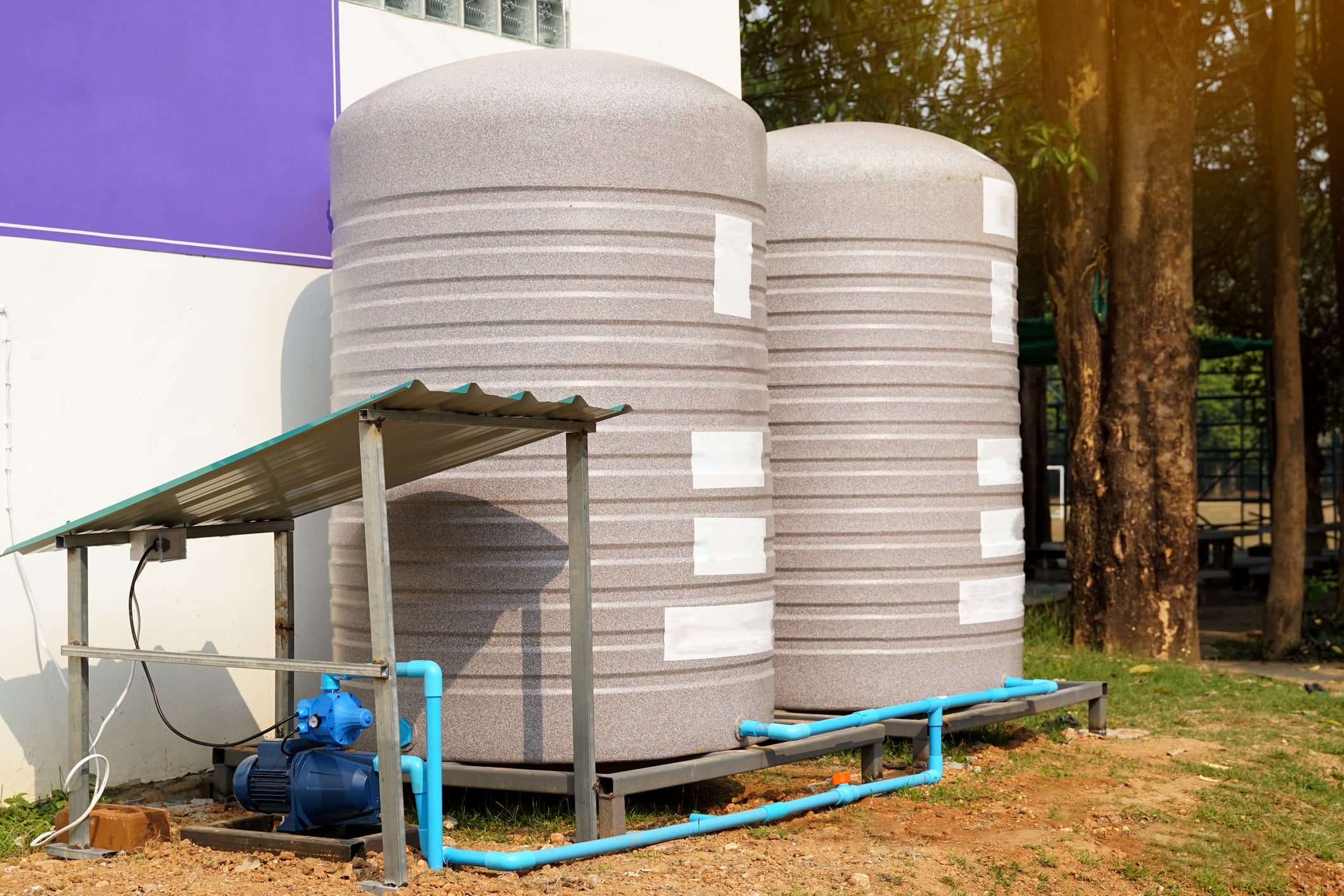
Water security has not yet reached the point where buyers routinely ask about it when viewing a property. But it's coming. Water tanks, boreholes and backup pumps could become the next solar panels of South Africa’s residential property market as buyers become more concerned about whether their homes can keep functioning when municipal water supplies fail. Water security has not yet reached the point where buyers routinely ask about it when viewing a property. But it’s coming. Tyson Properties’ Neil Abernethy said there were signs of the same transition that turned solar panels and inverter systems into major selling points during load shedding. “We are seeing greater awareness around water security, particularly from buyers who have experienced water interruptions or remember the severe water restrictions in the Western Cape,” he said. “A few years ago, a borehole or water tank was generally seen as a nice extra; today, buyers are much more likely to understand the practical value of having some level of independence from municipal supply.” However, the beginnings of a trend do not mean that installing a borehole or a bank of water tanks will automatically push up a home’s selling price. Abernethy said the market was not consistent enough to put a percentage premium on properties with backup water. Unlike solar installations, where buyers have become familiar with the cost and benefits of panels, batteries and inverters, water systems vary significantly by property and area. “I don’t think we can yet say there is a clear percentage premium directly attributable to water security,” he said. “What we can say is that a well-designed water solution adds to the overall appeal of a property and can differentiate it from competing homes.” Water backup may soon be as desirable as solar This could become particularly important in suburbs where municipal water interruptions are frequent. He said two similarly priced homes may look very different to a buyer if one can continue supplying toilets, showers and other household needs during an outage while the other is entirely dependent on municipal supply. Abernethy noted that this could eventually reverse the property-value argument. “If two otherwise comparable homes are competing for the same buyer and one has a properly integrated backup water system while the other has nothing, buyers are naturally going to take that into consideration,” he said. “Over time, we could reach the point where having some form of water security is expected in certain areas, and not having it becomes the disadvantage.” The pattern bears similarities to what happened as load shedding intensified, said Abernethy. Alternative electricity initially offered homeowners convenience and independence from Eskom, but solar and inverter systems subsequently became features buyers actively looked for when shopping for homes. However, water has not reached the same stage yet because outages have not affected households with the same frequency and consistency as load shedding did. “There are certainly signs of the same transition beginning. Buyers are becoming more conscious of the question: if the municipal water supply is interrupted, can this home continue functioning?” The aesthetics of a water system may be a turn-off, though. Large plastic tanks positioned prominently alongside a house can detract from its visual appeal, while newer systems can be incorporated more discreetly into a property. Aesthetic risk Abernethy said an integrated tank and pump system was probably the most straightforward option for many properties, while rainwater harvesting, greywater systems and water-wise gardens could form part of an integrated solution. Boreholes could provide a significant advantage where viable, but they can be expensive.
Could water backup become the new solar for SA homes?
Full Article
Original Source
Read the full article at Citizen →KhanList aggregates and links to publicly available news content. We do not host full articles from third-party sources. Always verify important information with original sources.