
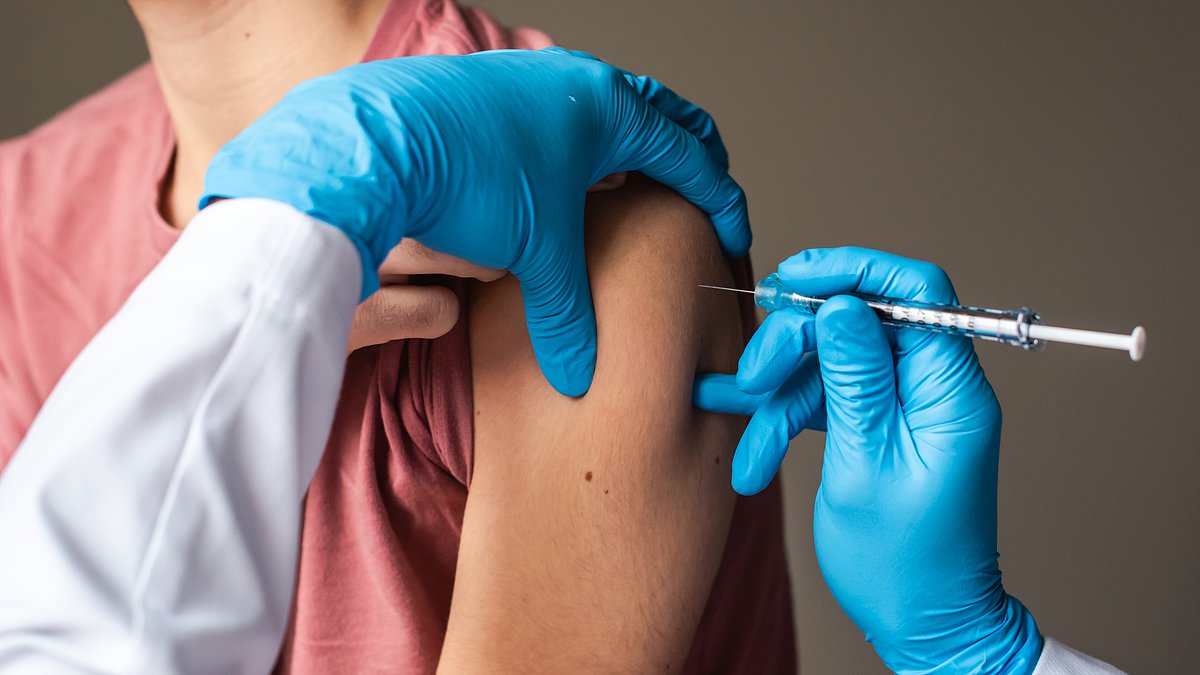
Vaccines can be lifesaving but they don’t work so well for everybody, including those with reduced immunity through illness or ageing – and this raises the risk of life-threatening infections such as flu and Covid.This is because a weaker immune system finds it harder to recognise the vaccine ingredients that prime the body’s defences to spot the real thing, should an infection strike.When it comes to ageing, by the time someone reaches 80 their response to vaccines may be half as good as someone under 65, studies show.Now scientists believe taking a daily supplement containing a compound called spermidine could help boost this immune response, making jabs more effective in older people and others with weakened immune systems – saving lives.Spermidine is a naturally occurring compound found in all living cells, including the human body, but also in foods such as mushrooms, broccoli and vintage cheddar cheese (where it’s a byproduct of the fermentation and ripening processes).It helps cells grow, keeps DNA stable and triggers a process where the immune system traps and destroys viruses and bacteria. Vaccines can be lifesaving but they don’t work so well for everybody, including those with reduced immunity through illness or ageingHowever, not only do levels of ‘natural’ spermidine decline with age, but so does this process – weakening our immune response to infections.In a new study, researchers at Max Delbruck Centre for Molecular Medicine in Berlin looked at 40 healthy people aged 65 and older who had received their third Covid-19 vaccine. Some 25 per cent had failed to produce enough antibodies (immune cells that patrol the bloodstream looking for invaders) to make the jab effective.Researchers then gave the participants either 6mg of spermidine, or placebo pills, daily for 13 weeks.Vaccine response improved substantially in the spermidine group (measured by markers of immune response, including antibodies), reported the journal Aging Cell.The researchers said the supplement seems to slow immunosenescence – the rate at which immune system cells age and die as we grow older – boosting their response to vaccines.It also appears to turbo-charge the process of clearing foreign organisms from the bloodstream. ‘Some might want a spoonful of wheatgerm on their porridge in the morning – it is also found in fermented food like kimchi and sauerkraut, which could be beneficial,’ said Professor Simon‘Our populations are ageing and after the age of 60, people are more susceptible to infections,’ said Katja Simon, a professor of immunology who co-led the study.‘Unfortunately, data consistently shows that the effectiveness of various protective vaccines decreases with age, especially when the vaccine is given for the first time at an advanced age.’This may be because older people have fewer naive T-cells, the specialised immune cells that respond to new threats.Professor Simon added: ‘A straightforward, easily-implemented intervention that improves immunity and vaccine efficacy in this group could save a lot of lives.’So should everyone over 65 be taking spermidine to boost immunity?In the study, the spermidine supplement was derived from wheatgerm.‘Some might want a spoonful of wheatgerm on their porridge in the morning – it is also found in fermented food like kimchi and sauerkraut, which could be beneficial,’ said Professor Simon.‘It’s difficult to say if you can eat enough spermidine in the diet to have the pathogen-clearing effect but it is unlikely to do harm and may do good.’So what do you eat to get 6mg of spermidine? Wheat and soybeans are rich sources. Aged cheeses such as vintage cheddar and Parmesan can contain up to 20mg per 100g. Chickpeas, lentils, oyster mushrooms and green peppers are also sources.Did you know?Spending time in nature with friends could be good for you. Research in the Journal of Environmental Psychology found that students who socialised while in nature stayed outdoors for longer – and that extra time outside may help explain why they also reported more positive emotions, less stress and better physical health. Professor Paul Klenerman, an immunologist at Oxford University, said: ‘It is an exciting finding but the trial is too small to know how much of an impact it can have.‘A few people in the trial with weak antibody responses made a much better response after the treatment. We need to find better ways of identifying those people and then perhaps we can target them with such interventions.’In the meantime, the Centers for Disease Control and Prevention in the US recommend older people receive higher doses of vaccines, or those containing adjuvants – chemicals that trigger a stronger immune response.But super-charging vaccines in this way can mean they are less well-tolerated, with side effects.Simple lifestyle changes can help. Professor Klenerman said: ‘Exercise, healthy diet and maintaining a safe weight will support a good immune response to vaccines.‘Vaccines can do some of the work but organs like the lungs and liver also need to be working well to provide good protection against infections, so avoiding damaging them long-term is important.’Professor Simon is conducting a trial looking at whether intermittent fasting could improve the body’s spermidine levels and vaccine effectiveness among older people given the flu vaccine.She urged over-65s to be vaccinated against infections such as flu, even if they have a reduced response. ‘It will undoubtedly help cut unnecessary deaths,’ she said.
Could eating wheatgerm supercharge your flu jab?
Full Article
Original Source
Read the full article at Dailymail →KhanList aggregates and links to publicly available news content. We do not host full articles from third-party sources. Always verify important information with original sources.