
Published Oct 19, 2026, 9:00 AM EDT Airline and Airport Management Graduate, Student Commercial Pilot and Commercial Aviation Writer. Based in London & Nagoya Ultra-long-haul commercial aviation is where widebody aircraft performance meets its limits, pushing twin-engine airframes across oceanic sectors that exceed 16 hours of continuous flight. Despite the widespread global success of the Boeing 787 Dreamliner family across standard point-to-point intercontinental networks, Boeing has steadfastly avoided announcing formal plans to build a dedicated ultra-long-haul derivative of its flagship composite twinjet. This absence of a purpose-built, very-long-range variant in Boeing's highly popular 787 family leads to one very interesting question. Can targeted structural and performance enhancements enable the 787 to successfully penetrate extreme long-range markets, or does the baseline composite wing and fuel-tank design inherently limit the Dreamliner against competitors? Not Quite Enough Range Boeing addresses extreme long-haul market demands primarily through targeted maximum takeoff weight increases, preferring to avoid designing a brand-new subtype from scratch. As Simple Flying previously explored, the 787-8's baseline operational range is 7,305 nautical miles (13,529 kilometers), the mid-size 787-9 is 7,565 nautical miles (14,010 kilometers), and the stretched 787-10 is 6,330 nautical miles (11,723 kilometers) While these performance thresholds comfortably service standard transatlantic corridors and secondary transpacific links, they fall well short of the extreme endurance required for nonstop sectors connecting Australia or Southeast Asia directly to Western Europe or the United States East Coast. Operating ultra-long-haul routes profitably demands massive fuel volume paired with optimized structural weight fractions to avoid sacrificing payload capacity for fuel burn. The trouble is that the standard Dreamliner airframe lacks the internal fuel volume and wing-loading efficiency needed to compete directly in the twenty-hour point-to-point category. Consequently, airlines seeking to launch ultra-long-range routes have historically looked toward heavy twinjets or more purpose-built variants engineered specifically for extreme endurance. Without a clean-sheet or heavily modified ultra-long-range derivative, Boeing relies entirely on incremental weight certifications to stretch the operational limits of existing production lines. This may not seem like the best long-term option on the surface; however, these adjustments are far from small additions to the aircraft's capabilities. Incremental Upgrades Are Enough? Recent regulatory milestones have unlocked meaningful range expansions across existing Dreamliner assembly lines without altering fundamental airframe geometry or external dimensions. Federal Aviation Administration (FAA) certifications clearing higher gross structural weights enabled a 10,000-pound (4,536-kilogram) maximum takeoff weight increase for the 787-9, alongside a 14,000-pound (6,350-kilogram) increase for the larger 787-10, according to Boeing disclosures. These structural weight adjustments translate to roughly 310 nautical miles (574 kilometers) of additional operational range for the 787-9, raising its overall ceiling to 7,875 nautical miles (14,584 kilometers), and pushing the 787-10's range to about 6,760 nautical miles (12,519 kilometers). It may seem incremental, but the added range lets the 787-10 compete directly with medium-haul widebody alternatives on high-density routes. Still, they stop short of turning the aircraft into a true ultra-long-haul platform. Operators using these higher gross-weight variants gain valuable payload flexibility during winter headwinds or when dispatching cargo-heavy schedules. However, these performance gains come from structural reinforcement and advanced flight-control software logic, not from adding dedicated auxiliary fuel tanks. What is clear is that even though these enhancements offer a lot in performance, they can only go so far without completely changing the aircraft's structure and design. That is why, at least for now, the 787 just cannot match widebodies such as the Airbus A350-900ULR or -1000ULR, purely because that level of range was never the design intention. Airbus' Answer To Extended Range Capabilities Purpose-built ultra-long-haul aircraft need significant volumetric adaptations to carry the massive fuel loads required for multi-day endurance missions. Airbus demonstrated the precise engineering focus necessary for this market niche by developing the A350-1000ULR specifically for Qantas' ambitious Project Sunrise initiative, installing a central rear-fuselage auxiliary fuel tank capable of holding an additional 20,000 liters (5,283 gallons) of jet fuel. The hardware modification enables nonstop sectors connecting Sydney Kingsford Smith Airport(SYD and Melbourne Airport(MEL) directly to London Heathrow Airport(LHR) and John F. Kennedy International Airport(JFK), achieving scheduled flight durations of up to 22 hours. As technical comparative assessments from The Flying Engineer and Simple Flying widebody studies highlight, the baseline Airbus A350 design retains a substantial range and payload advantage over the Dreamliner family because of a larger composite wing area and higher certified structural weight limits. While the upgraded 787-10 delivers exceptional fuel burn efficiency on regional and medium-to-long-haul trunk sectors thanks to its lighter operating empty weight, the A350 is still superior in fuel-burn economics per ton-mile on true ultra-long-haul routes, where heavy fuel weight dominates overall aircraft mass. Matching purpose-built ultra-long-range capabilities on the 787 airframe would require structural interventions far beyond standard weight re-certifications. The technical requirements to incorporate internal auxiliary fuel tanks and re-engineer primary landing gear assemblies would make it incredibly difficult to match the extended-range A350's capabilities on the 787 foundation. What About A 787-9ULR? Developing a hypothetical "787-9ULR" or dedicated long-range derivative would, like its larger Airbus counterpart, require integrating secondary fuel storage into the center wing box or lower cargo-hold compartments, directly reducing valuable commercial belly-freight capacity. Furthermore, significant increases to gross structural weight necessitate heavier main landing gear struts, intensive structural strengthening of the internal wing box structure, and potential thrust upgrades from engine manufacturers General Electric and Rolls-Royce. Every additional pound of structural reinforcement increases the aircraft's Operating Empty Weight (OEW), taking away the baseline fuel-burn efficiency that makes the Dreamliner economically attractive on standard intercontinental routes. Capital allocation realities at Boeing further reduce the likelihood of launching a standalone 787 ultra-long-range program. With engineering divisions and financial resources focused heavily on completing certification and flight testing for the wider 777X family, including the flagship 777-9 and high-capacity 777-8, Boeing already possesses a massive widebody platform engineered specifically to lift extraordinary payloads across extreme global distances. Diverting capital to re-engineer the composite 787 airframe for a small, highly specialized market segment offers minimal financial return compared to stabilizing baseline Dreamliner production rates and delivery cadence. These engineering and financial constraints are the main reasons Boeing prioritizes broad market versatility over niche endurance records. Boeing already sees its ultra-long-haul future being led by the 777X, so the 787 does not need to be redeveloped to help Boeing achieve its goals. So where does the 787 sit in today's airliner market now that the 777X is nearly in customers' hands? The Final Baseline Airlines evaluating widebody acquisitions increasingly view the 787-10 and competing Airbus platforms as complementary assets rather than direct head-to-head substitutes across every route network. Major global carriers, such as Etihad Airways and United Airlines, routinely leverage the 787-10's lower trip costs on high-density transatlantic corridors or intra-Asian trunk routes where extreme range is unnecessary, reserving higher-MTOW platforms like the A350 or larger Boeing widebodies for wind-limited or ultra-long-haul transpacific sectors. The division of operational labor validates Boeing's corporate decision to avoid heavy capital expenditures on a specialized 787 ULR variant. Instead, by offering modest MTOW enhancements that add several hundred nautical miles of operating range, Boeing lets network planners lift additional cargo or mitigate severe winter headwind penalties without saddling the global Dreamliner operator community with the weight and acquisition-cost penalties of a dedicated long-range structural overhaul. Future developments in ultra-long-haul aviation will likely remain tied to specialized widebody platforms rather than derivative twinjets, especially as route networks continue to grow across major global airlines. The underlying balance between production simplicity and operational flexibility ultimately has created what could be considered the final baseline for long-term manufacturing strategy. Keeping The 787 As Intended Boeing's decision to forgo a dedicated 787 ultra-long-haul variant reflects a disciplined focus on mass-market fleet versatility rather than specialized endurance milestones. Incremental maximum takeoff weight upgrades supply existing operators with vital tactical flexibility on challenging medium-long routes, but purpose-built platforms like the A350-1000ULR and Boeing's own upcoming 777X family will continue to command the outer boundary of nonstop commercial aviation, leaving the 787 family to continue offering exactly what it was designed for: maximum operational efficiency. The 787 is not going anywhere for now, even if it cannot keep up with other aircraft's range advances. Boeing's commitment to maximizing baseline Dreamliner efficiency and leaving the 777X to handle extreme range defines the manufacturer's competitive posture against European rivals. We may never see a 787ULR, but ultimately, there's no need for one.
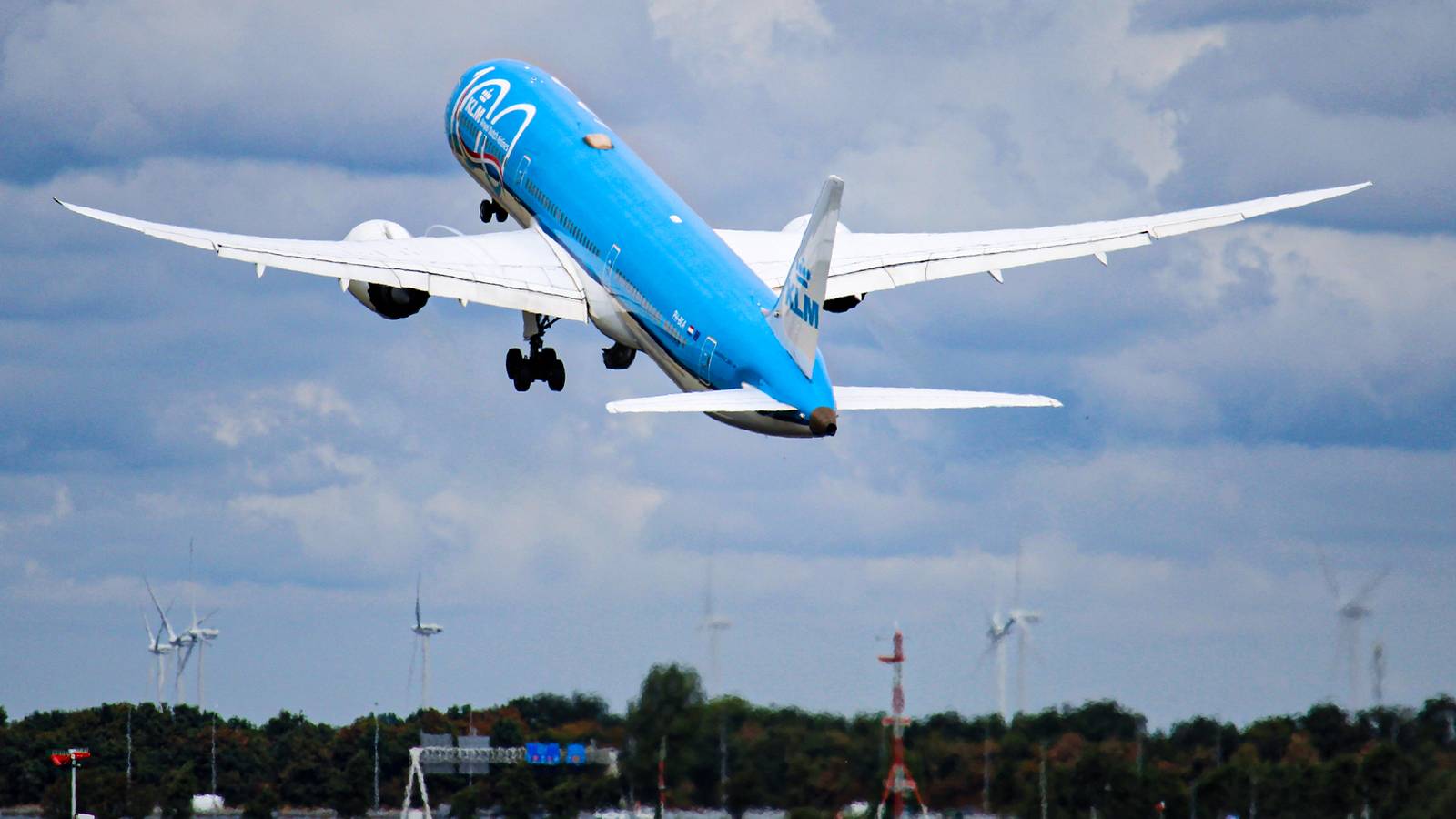
Could Boeing Really Develop A 787 Ultra-Long-Haul Variant?
Full Article
Original Source
Read the full article at Simpleflying →KhanList aggregates and links to publicly available news content. We do not host full articles from third-party sources. Always verify important information with original sources.