
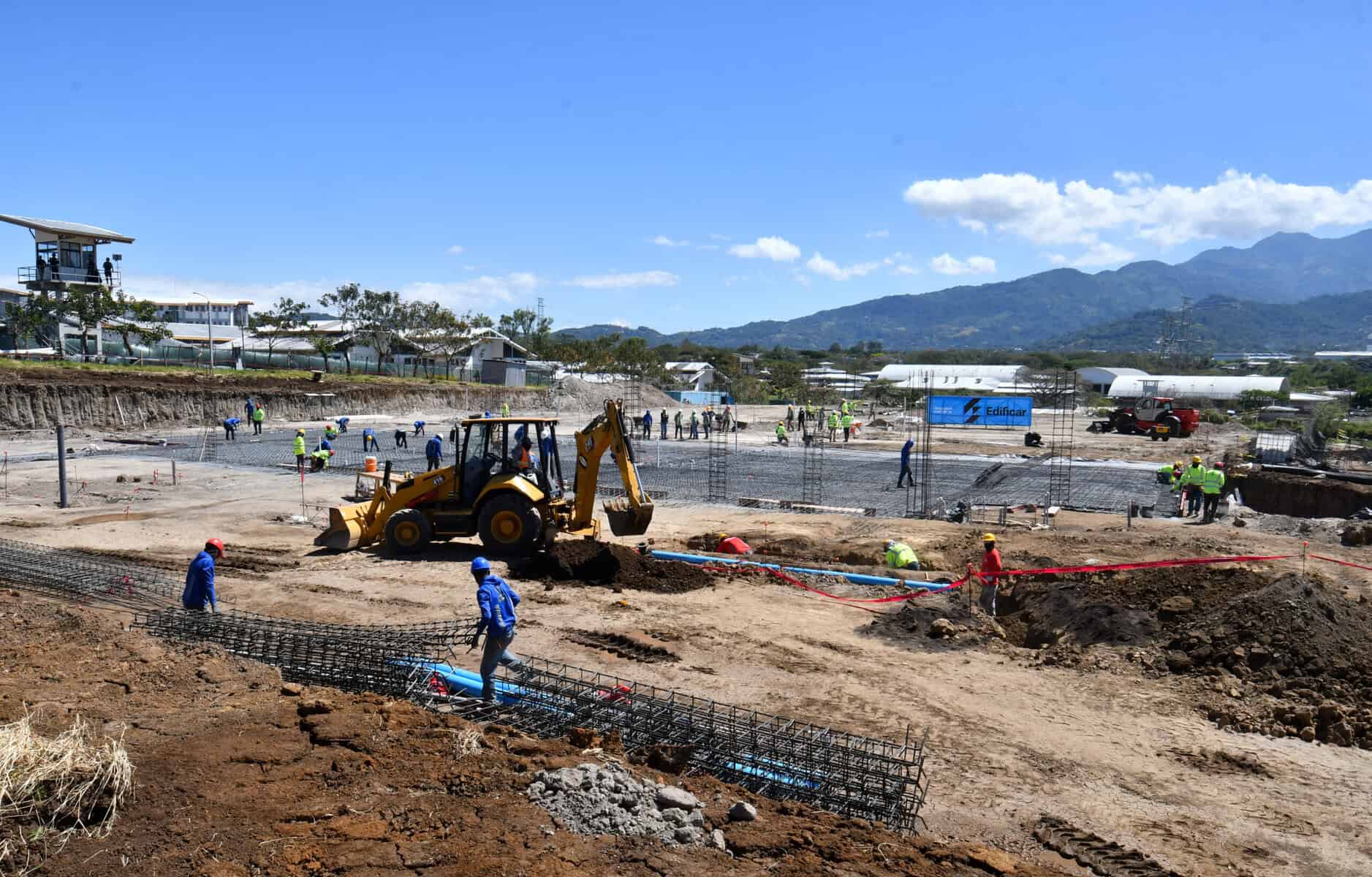
Costa Rica’s new high-security prison for organized crime is expected to be handed over to the government by the end of September, with authorities planning to put the facility into operation in October. Justice Minister Gabriel Aguilar announced during a government council meeting in Cartago that the Centro de Alta Contención del Crimen Organizado, known as CACCO, would be ready within 15 days. The prison is being built inside the La Reforma penitentiary complex in San Rafael de Alajuela and is intended to house inmates linked to organized crime as well as prisoners considered particularly dangerous. Construction began in January under the administration of former President Rodrigo Chaves. Aguilar noted that Chaves gave the order to begin the project, while President Laura Fernández’s government will now receive the completed facility. The latest timetable represents a delay from the government’s original schedule. Authorities initially gave the project a construction period of 195 days, which would have brought completion in July. The government now expects the prison to begin operating in October. CACCO’s design drew heavily on El Salvador’s Terrorism Confinement Center, better known as CECOT, the large maximum-security prison built under President Nayib Bukele. El Salvador provided Costa Rica with prison plans that were used as a reference for the project. The Costa Rican facility is being built by Edificadora Centroamericana Rapiparedes S.A. on a roughly 91,000-square-meter site, about 22.5 acres, within La Reforma. The prison itself will occupy approximately 31,000 square meters, or about 334,000 square feet. CACCO will have five separate housing modules, each designed for 1,020 inmates, giving the complex a maximum capacity of 5,100 prisoners. Each module has 17 cells designed to hold 60 inmates. The government has placed the overall cost of the project at approximately ₡21 billion. The construction contract itself was awarded for about ₡16.8 billion, with additional funding included as part of the wider project. Conditions inside CACCO will be considerably more restrictive than those in most Costa Rican prisons. The design includes controlled access points, extensive surveillance, internal walkways and separate outdoor areas. Authorities have said inmates will receive one hour of outdoor time, while prisoners involved in disturbances may be placed in isolation for up to 48 hours. Inmates assigned to CACCO will also wear mandatory uniforms designed without pockets, elastic bands or cords. The Justice Ministry says the clothing is intended to make it more difficult to conceal weapons, drugs, cellphones or other prohibited items. The stricter controls are part of a broader effort by the Fernández administration to prevent criminal organizations from maintaining contact with members outside prison. That concern is not theoretical. Costa Rican investigators have examined cases involving alleged criminal leaders communicating from maximum-security facilities, while authorities have also found methods used by inmates at La Reforma to bypass cellphone restrictions and continue contacting people outside prison. The prison is also expected to relieve pressure on a penitentiary system struggling with overcrowding. The Ministry of Justice has identified CACCO as one of its main responses to overcrowding, alongside proposals to expand the use of electronic monitoring for some prisoners. For the Fernández government, however, CACCO has primarily become part of its wider security strategy. The administration argues that isolating high-level criminal figures and tightening control over their communications is necessary to limit the ability of organized crime groups to continue operating from behind bars. With construction approaching completion, attention will now shift to how quickly the government can equip the facility, transfer inmates and put the new security system into operation once CACCO formally opens in October.
Costa Rica’s New High-Security Prison for Organized Crime to Be Ready in 15 Days
Full Article
Original Source
Read the full article at Ticotimes →KhanList aggregates and links to publicly available news content. We do not host full articles from third-party sources. Always verify important information with original sources.