
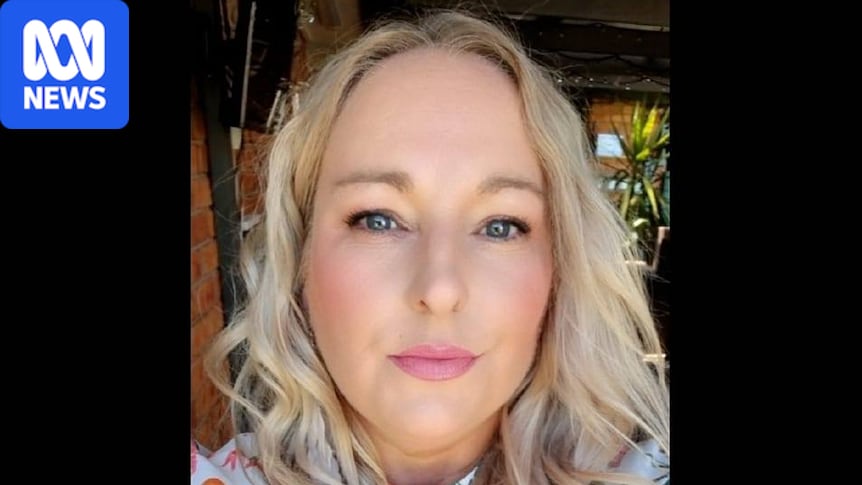
A coroner is calling for health departments in New South Wales and Victoria to coordinate a streamlined electronic record system for Albury Wodonga Health (AWH) following the death of a 46-year-old woman.Deputy State Coroner Rebecca Hosking made the recommendation as part of her findings into the death of Kate Manley, who died in the early hours of November 16, 2022 at Albury Hospital.The inquest focused on whether Ms Manley received adequate care and appropriate treatment during her admission to the acute mental health unit Nolan House and the hospital's medical wards between November 11 and 16, 2022.Kate Manley was remembered as someone who was independent, strong, beautiful and full of energy. (Supplied: Manley family)Nolan House is based in NSW, but is also subject to Victorian laws.Under a memorandum of understanding between the Victorian and NSW Health Departments, AWH must comply with laws in both states regarding the provision of mental health services.During earlier inquest hearings, AWH executive Danielle McLeish said the hospital had several combined systems in place to track patient movements and comply with the laws of both states, but managing them was at times confusing for staff.Ms Hosking found that, on the night of her death, Ms Manley had waited nearly five hours to be transferred from the mental health unit to a medical ward."Given the level of deterioration, her transfer ought to have been undertaken more quickly," Ms Hosking said.It was found that Ms Manley would have benefited from immediate intravenous (IV) therapy.However, Ms Hosking found there was no evidence that a quicker transfer could have prevented Ms Manley's death.No food or fluids for two daysMs Manley had a history of schizophrenia, depression and other medical issues, with multiple admissions to Nolan House from 2006 to 2017.On November 9, she saw her doctor for mental health concerns.Two days later, her partner took her to Albury Hospital after her mental health declined.Kate Manley was transferred to Nolan House. (Supplied: Albury Wodonga Health)Upon assessment, she was moved to Nolan House, diagnosed with catatonia, and had little interaction with staff.The inquest heard she was resistant to some medical tests and also upset about being moved to the acute mental ward.Her fluid and food intake was poor during her stay there and at one stage, she went nearly 48 hours without eating or drinking.On November 15, as her condition worsened, staff planned to transfer her to a medical ward for closer monitoring, when the transfer delay occurred.Just after midnight, she stopped breathing, and CPR was performed.It was later determined that Ms Manley had died from a pulmonary embolism, a sudden blood clot in a lung artery.No VTE assessment undertakenMs Hosking found venous thromboembolism (VTE) assessments during Ms Manley's stay at Nolan House were inappropriate and clearer protocols were needed to distinguish psychiatric from physical treatment.Vishal Bhargava, the first doctor to see Ms Manley, said a VTE risk assessment was warranted, but he was not concerned because she was moving around.AWH policy requires VTE risk assessment within 24 hours of admission."She was not given prophylaxis and her VTE risk increased as her mobility and hydration decreased," Ms Hosking said."The intertwining of physical and psychological symptoms was such that Nolan House could not provide Kate with the holistic treatment she required."Ms Hosking also said at the time of Ms Manley's death, standards and policies were not well known because some medical practitioners missed orientation or because locum and agency staff were used.It was also found Nolan House psychiatrists knew catatonia increased VTE risk but hesitated to prescribe Clexane, believing it was the medical team's role.Kate Manley died of a pulmonary embolism at Albury Hospital in the early hours of November 16, 2022. (ABC News: Annie Brown)In her findings, Ms Hosking recommended health departments in NSW and Victoria consider implementing a treatment pathway for catatonia patients and audit VTE risk assessments.It was noted that Albury Wodonga Health said it had updated VTE risk policies and staff orientation after Ms Manley's death.The inquest heard a new hospital communications tool was also being introduced to improve staff coordination.In her findings, Ms Hosking suggested Ms Manley's death could be used as a case study when training hospital staff in shared physical and mental health care.Remembered as having a heart of goldDuring the inquest, a family statement described Ms Manley as a treasured family member, with her daughter, Ruby, being the "centre of her world"."[Kate] was compassionate, creative and had drive … [and] brought fun, warmth and laughter into the lives of those who knew her," the family statement said.Rachel Anderson remembers her friend Kate Manley (right) as a fun and creative woman. (ABC News: Philippe Perez)Ms Manley's friend Rachel Anderson also attended hearings and remembered her as a fun and creative woman."She was one of my best friends [and] we did a lot together," Ms Anderson said."She was like a bright light … always did things spontaneously [and] she had a heart of gold."Ms Anderson said if policies at the hospital had been followed, Ms Manley could have been with her today.Rachel Anderson believes that if proper procedures had been followed, her best friend may still be alive. (ABC News: Philippe Perez)"I just feel like there needs to be some accountability on behalf of Albury Wodonga Health and I feel that Kate needs justice," she said."As a result, she's now gone forever, which hurts deeply."
Coroner recommends hospital fix cross-border communication after death
Full Article
Original Source
Read the full article at Abc →KhanList aggregates and links to publicly available news content. We do not host full articles from third-party sources. Always verify important information with original sources.