
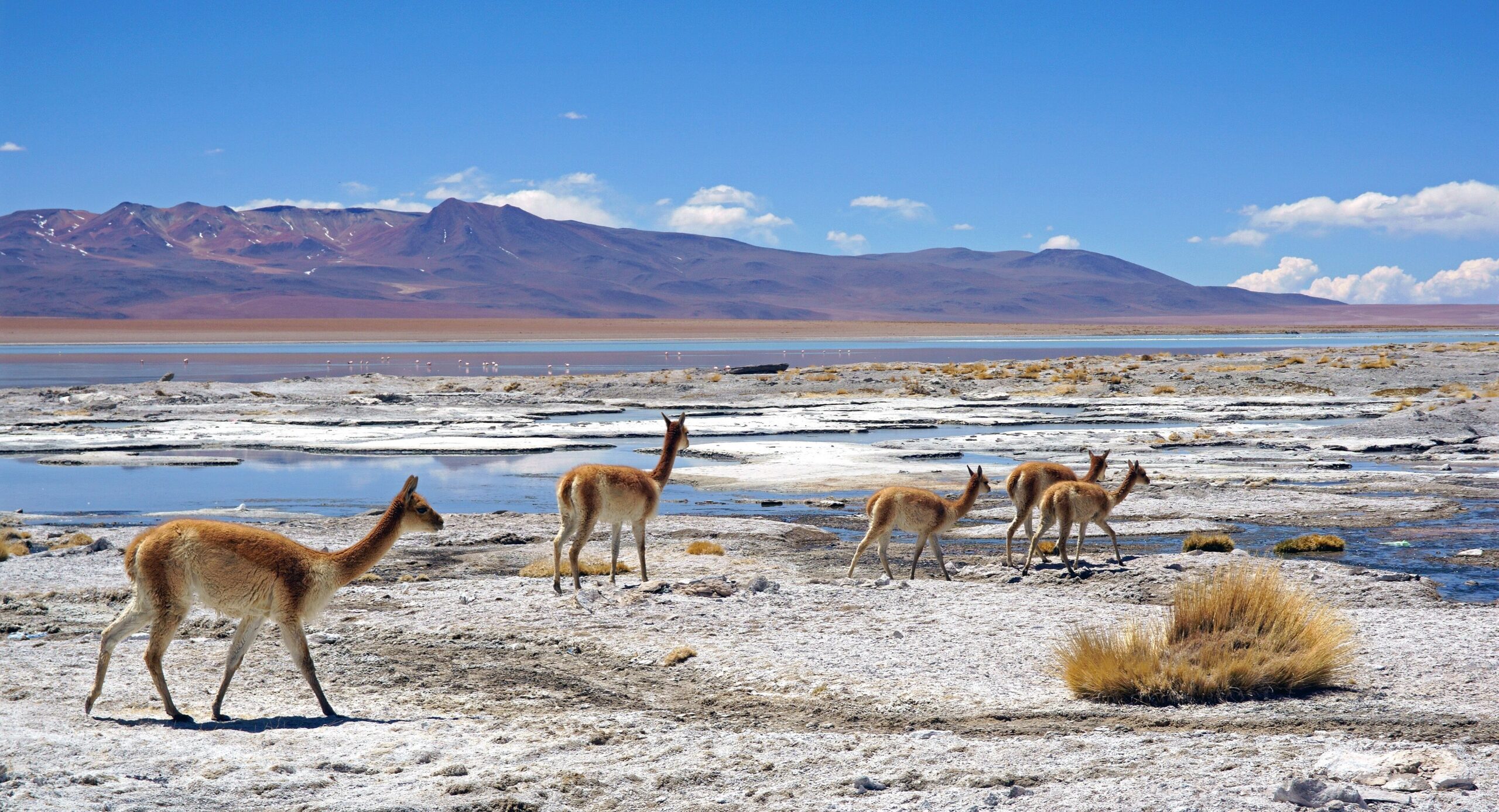
A vast multi-nation mining project, named Vicuña, is being developed in the Andes to help satisfy the world’s rocketing demand for copper, largely stemming from society’s demand for renewables, such as electric cars, and AI data centers.But experts worry that even gigantic projects like Vicuña will be unable to satisfy global copper demand, expected to reach 50 million metric tons by 2040, almost double this year’s consumption of 28 million metric tons.To meet that astronomical need, mining companies will have to move deep into untapped wildlands, requiring ever larger amounts of energy and water, leading to regional water stress. Indigenous areas will likely be targeted, making this an environmental justice issue. Biodiversity loss is also likely.The global explosion in copper mining underlines a troublesome conundrum faced by the environmental movement: Even green projects can have serious environmental downsides. In the high Andes of Peru, Bolivia, Chile and Argentina, you can still find the vicuña, a shy, elusive camelid, revered by Indigenous people. It has reasons to be cautious of humans. Long-prized for its fine wool, European colonists hunted it relentlessly. Flocks in the millions were reduced to 6,000 individuals by the 1960s. Indigenous-driven conservation efforts helped bring the species back from the brink, but the vicuña (Vicugna vicugna) still walks a knife-edge. “Its survival remains precarious due to a complex interplay of threats to its habitat,” James Murray wrote for the U.S. Institute for Environmental Research and Education. The vicuña today is a victim of a Latin America biodiversity crisis that has seen a 95% decline in wildlife between 1970 and 2020, according to the WWF’s 2024 Living Planet Report. A key driver of that decline is mineral extraction. During the Inca empire, an estimated two million vicuñas roamed the Andes. The population fell to 6,000 by 1974 primarily due to intensive hunting for wool. Today’s numbers have risen to about 350,000 due to legal protections, community-based conservation, and bans on international trade. The species’ namesake, the proposed Vicuña mining district, if not managed properly, could reverse that recovery. Image by Renzo Tirado via Wikipedia Commons (CC BY-SA 4.0). Vicuña is also the name given to a vast $18 billion metallurgical planning district that could devastate and transform endangered vicuña habitat. Straddling the border of Argentina’s San Juan province and Chile’s Atacama region, this high-altitude Andes region represents one of the largest recent copper finds on Earth. Once developed, the Vicuña district will supply a booming global copper market. That boom is driven in part by a technological revolution in sustainability as this versatile metal is utilized in electric vehicles, wind turbines, solar panels, storage batteries, grid electrification, and AI data centers, facilities, which may one day help curb the climate crisis. By 2040, the estimated annual global need for copper could reach 50 million metric tons a year, twice the total consumption from 1900 to 2022. “Copper, they say, is the next petroleum,” states Thyana Alvarez, vice president of Copper Giant, which owns the large Mocoa mining project in southern Colombia. But there is a problem: By 2040, global copper supply is predicted to fall 10 million metric tons short of demand, supercharging a rush for new extraction projects reaching deep into remote untapped regions and likely causing serious environmental and social harm. “The expansion of copper mining projects such as Josemaría — in the Vicuña district in San Juan [in Argentina] — is part of a broader extractive expansion process that entails serious breaches of environmental regulations, significant environmental impacts, and escalating social conflicts,” Leandro Gomez, a spokesperson for FARN, an Argentine environmental organization, told Mongabay in an email. The Josemaría project is a 50-50 joint venture between two mining companies: Canada-based Lundin and Australian BHP. In February 2026, Vicuña Corp. published a report in which it gave its view of how the Josemaría and Filo del Sol copper deposits under the Vicuña project would be mined, and how the once wild landscape would be transformed. Image courtesy of Vicuña Corp. A future without enough water? Copper isn’t the only vital resource needed for renewables that may be running short. The proposed Vicuña mining district is located in an area with 2,100 glaciers, which are expected to “lose more than 80% of their current volume by 2100” due to climate change, according to a report by the Argentine Institute of Snow, Ice, and Environmental Sciences. More than seven million Argentinians live within glacier-fed watersheds. But that meltwater is also key to the copper industry. Mining and processing copper is water intensive and getting more so: “Between 2015 and 2019 copper mines withdrew 13.6 trillion liters of water globally, with water use increasing at a rate 50% higher than copper production,” according to the Institute for Ecological Economics. Argentina’s Bajo de La Alumbrera copper mine alone consumes more than 25 billion liters of water annually and “the impact has been reflected over the years in the reduction of cultivated areas, lower agricultural production and the loss of crop quality due to water stress,” Leandro Gómez, an environmental policy coordinator told Dialogue Earth. One reason the mining industry has given for wanting exemptions from Argentina’s environmental laws (which until recently protected the nation’s glaciers) is that the companies are exporting “green” copper destined for sustainable industries. But copper’s sustainability claims are tarnished: Its supply chain impacts are well documented and even acknowledged by the industry. A 2023 report by the International Copper Association (ICA) listed “priority issues,” including climate change emissions, sulphur dioxide pollution, marine and terrestrial eutrophication potential due to nitrogen oxide releases, large-scale electricity consumption (including from coal), and ozone depletion potential. Located in the Apuseni Mountains in Romania, the Roșia Poieni open-pit copper mine, which represents 65% of the nation’s total copper reserves, was opened in the 1970s. The village of Geamăna (population 1,000) was located in a nearby valley. Residents were evicted and the valley used as a settling basin for toxic ore processing tailings. Image by Cristian Bortes via Flickr (CC BY 2.0). Copper production (from mining to crushing, milling, ore concentration, smelting, refining and waste management) generates large amounts of solid and chemical waste posing significant risks to human and environmental health. These problems could worsen: A 2025 study published in Nature found: “The transition to low-carbon technologies, essential for energy transition, significantly increases the demand for minerals, with projections indicating a sixfold rise by 2040.” The researchers also found that of 5,000 proposed and existing global mining projects extracting minerals for the energy transition, 54% are on or near Indigenous territories. Though the copper industry touts its recycling capacity, the rush is on to aggressively mine this versatile metal across the tropics. Mongabay has assembled a sampling of new copper mining projects, which have gained media or NGO attention due to perceived risks. They are as follows: Chuquicamata, a state-owned copper mine located 2,850 meters (9,350 feet) above sea level in Chile. The huge open-pit mine was first excavated in 1882 to extract both gold and copper. In April 2019, Chuquicamata started to extract minerals from its new underground mine, starting its transition into an underground operation. Image by Diego Delso via Wikimedia Commons (CC BY-SA 4.0). South American copper production expands In the Carajás Amazon region of Brazil, the drive to dig new copper mines is accelerating. A survey by Repórter Brasil conducted in partnership with Mongabay, identified 676 copper, manganese, and nickel projects developed in Carajás since 1969, with 25% of them happening between 2021 and 2025. Dozens of mining requests made there over the last five years threaten land reform settlements in the region. A simultaneous surge in mineral extraction is occurring in the high Amazon forests of southwestern Colombia, causing Indigenous apprehension. Enviro Link reported in November 2025: “Zuly Rivera, a youth coordinator for the Nasa people, recalls how first it was goldminers who came calling, [promising prosperity]. Now, it’s copper that has captured international attention.” In Mocoa, Southern Colombia, an Indigenous children’s movement has risen to protest encroachment on ancestral lands by Canadian transnational Copper Giant. “Mocoa is a unique territory,” Amazon Watch reported, located at the confluence of the Andes and the Amazon, where four of Colombia’s major rivers originate: The Cauca, Magdalena, Caquetá and Patía. Copper Giant promises economic development and responsible management, but a young woman leader expressed her fears of loss: “Mocoa is the most conserved territory, where the mountains hold the winds of the ancestors, which descend to embrace the Amazon.” The International Copper Association (ICA) has responded to such concerns by asserting that sustainability is at the core of its mission and that “the copper industry is united in its efforts to develop and operate in a more sustainable manner.” Mongabay contacted the ICA with further questions but got no reply by publication. The Bingham Canyon mine’s open-pit measures 0.7 miles by 2.5 miles and its massive pit is visible from space. It is believed to have produced more copper than any other mine in history. Image by Jet6581via Wikimedia Commons (CC BY-SA 3.0). The Bingham Canyon Mine, also known as the Kennecott Copper Mine, southwest of Salt Lake City, Utah, U.S., is the largest human-made excavation on Earth, and the deepest open-pit mine in the world. Historically known for its toxic pollution, Kennecott has spent more than $400 million on clean-up efforts since the early 1990s to meet Superfund regulatory requirements. Image by Eric.Prado via Wikimedia Commons (CC BY-SA 4.0). North American copper mining skyrockets In the U.S., 89% of copper reserves and resources are found within 35 miles of a Native American reservations. “Extraction of any kind near Indigenous communities is strongly correlated with increased rates of gender-based violence, including sexual violence, harassment, murder and trafficking, as well as substance abuse,” Jan Morrill, from Earthworks, an NGO that helps communities secure protections from extractive industries, told Mongabay in an email interview. 334 incidents of violence or protest were linked to mining cobalt, copper, nickel and lithium in the world’s top 10 producing nations between 2021 and 2023. In March 2026, the U.S. government gave the go-ahead for copper mining in Oak Flat, Arizona, the spiritual equivalent of Mount Sinai for the Apache people. The planned mine will leave a hole nearly 300 meters (1,000 feet) deep and three kilometers (two miles) wide. “Oak Flat is not just a piece of land: it is a place of prayer, ceremony and identity for the Apache people. This site should never have been traded away to foreign mining giants,” U.S. representative Adelita Grijalva, a Democrat from Arizona, said in a statement. “Throughout this wearying fight we have simply sought to protect our religious freedom,” Mona Polacca, from the International Council of Thirteen Indigenous Grandmothers said in a statement. “Destroying our sacred land is sadly not new for Indigenous communities.” Grandmother Mona Polacca is widely known for her leadership in the Native American revitalisation movement. She is chair of the International Council of 13 Indigenous Grandmothers, an international alliance of indigenous female elders that focuses on issues such as the environment, internationalism, and human rights. Image courtesy of Temple of Understanding. In Pinal County, northeast of Tucson, Arizona, more copper mining is planned. Melissa Crytzer Fry, chair of the Lower San Pedro Watershed Alliance, told Mongabay in an email of the implications: “The reintroduction of copper mining and its associated dewatering in the Galiuro Mountains would be devastating [to] one of the rarest ecosystems in the desert southwest. Copper Creek’s riparian area of mature cottonwoods and saguaros would be replaced with a 28-square-mile series of open pits.” Crytzer Fry believes mining would obliterate part of the desert Southwest’s Sky Islands, and with it the nation’s largest mesquite bosque — a lush green ribbon of breeding habitat for endangered southwestern willow flycatchers (Empidonax traillii extimus) and yellow-billed cuckoos (Coccyzus americanus), and home to bighorn sheep (Ovis canadensis). “This unfragmented landscape boasts an important wildlife connectivity corridor that simply is irreplaceable,” Crytzer Fry said. “It’s hard to describe the incredible beauty of this watershed and valley, and its resilience … [an area annually] awash in a sea of yellow, as green-trunked palo-verdes and acacia bushes bloom … More than 4,000 migratory birds [gather here] in the country’s most varied migratory flyway.” In the northern U.S, near Ely, Minnesota, Twin Metals Minnesota is moving ahead on an underground copper mine inside Superior National Forest, saying “our plan [is] to do this right.” Their extraction process will utilize copper sulphide mining, historically one of the most toxic and polluting forms of mineral extraction. In 2026, the U.S. Congress cleared the way for the project by overturning a long-standing ban on sulphide-mining in the forest by declaring the mine in the national interest. However, the parent Chilean company overseeing the project is contracted to send the copper to China, according to opponents of the mine. In British Columbia, Canada, the Similkameen Indigenous bands are protesting copper mining expansion. “The smǝlqmíx [Indigenous people] and our neighbours that choose to be here forever will have to deal with the consequences long after the profits and monies have left the valley,” a tribal statement read. Dead fish in the Kafue River near the town of Luanshya, Zambia, a day after the copper mine tailings dam spill in February 2025 that poured millions of liters of acidic mining waste into waterways. One and a half years after the disaster in Zambia’s Copperbelt Province, the environmental and human impacts of the toxic spill continue. Image by Richard Kille/AP photo. Environmental and health impacts Globally, the easy copper has been dug, meaning new mines could be more environmentally destructive due to declining ore quality, which requires more water- and chemical-intensive processing. The energy needed to extract hard-to-get copper has surged and remains fossil fuel intensive. “Since 1900, the energy we need to produce copper, the energy needed to make copper, is 16-fold up … And water consumption has doubled,” according to Robert Friedland, founder of Ivanhoe Mines. Copper extraction scars are likely to be lasting too: “From mining and milling through hydro- and pyro-metallurgical processing to refining, [copper’s] production has significant adverse impacts on atmosphere, surface and ground water quality, and the soil,” according to a study published in Environmental Science and Pollution Research. A review in the International Journal of Fisheries and Aquatic Studies found copper to be “one of the most harmful heavy metals, causing adverse effects on human health and aquatic ecosystems.” A report by the Business and Human Rights Resource Centre, headquartered in the U.K., declared it to be “the mineral with the highest number of allegations” of environmental, community and worker abuse. “Mine and smelting operations are having concerning impacts on air quality and health,” Morrill told Mongabay, with studies detecting frequent spikes near production sites of sulphur dioxide, “which contributes to acute and chronic respiratory problems, as well as acid rain.” Airborne particulate matter from mining and processing can contain heavy metals including lead, cadmium, nickel and arsenic. Near Serbian copper mines, “air quality monitoring between 2019 and 2022 found arsenic levels hundreds and even a thousand times higher than allowed under [national] regulations,” Morrill stated. A tailings dam failure in Zambia’s Copperbelt Province in 2025 led to millions of liters of acidic mining waste, including highly toxic substances such as arsenic, lead and zinc, being released into the Zambia River system. The disaster led to the death of wildlife and the contamination of soil and water sources in the region. Image by Richard Kille/AP photo. Copper extraction disasters can also come on suddenly. Sean Cornelius, who lives near the Kafue River in Zambia, was witness to the stream’s contamination by copper mining waste. “Prior to the 18th of February (2025) this was a vibrant and alive river. Now everything is dead … Overnight, this river died,” he told the Associated Press. The cause: The collapse of a tailings pile at the Chinese-owned Sino-Metals Leach Zambia copper mine that sent highly acidic water and heavy metals such as manganese, copper and cobalt flooding into the stream — a source of freshwater for 60% of Zambia’s 20 million people, according to the AP. It was not the first time. Villages close to the mine have long reported acid spills and other contamination. “You can smell and taste the pollution,” villagers told The Guardian. “We ate the fish and soon everyone started crying with stomach pains,” Floribert Kappa, a resident of Hippo Pool village said, The Guardian reported. “I collapsed and was taken to a hospital. I was told the damage was permanent.” Pure copper scraps like these are easily recycled. But products containing a multitude of materials, including copper are expensive and challenging to recycle. Image by Mauro Cateb via Wikimedia Commons (CC BY-SA 3.0). Recycling a partial, imperfect solution Copper can be recycled, and often is when practical, as “copper products [now] contain more than 30 percent recycled content,” according to ICS. But new demand greatly outstrips recycled availability. In addition, copper recycling isn’t harm-free. It is both expensive and hazardous due to difficulties in separating the metal from other materials. A study published in Environmental Science & Technology, for example, found that, “copper [contained] in steel causes metallurgical problems” when recycled. Copper recycling is costly because of its “complex and energy-intensive process, making it less economically feasible compared to mining new copper,” The Sustainable Life explained. “The limited sources for copper recycling, lack of infrastructure, transportation issues, and regulatory hurdles pose significant challenges to the recycling industry, making it less viable as a sustainable solution.” Wendsler Nosie Sr. was born in 1959 on the San Carlos Apache Indian Reservation in Arizona. He is a former Chairman and Councilman of the San Carlos Apache Tribe and a vocal opponent of copper mining planned for Chi’chil Bildagoteel, an Apache sacred site located on a high desert mesa in Arizona, also known as Oak Flat. Image courtesy of Wendsler Nosie Sr., San Carlos Apache Tribe, Indigenous Network.. A clouded future The greatest copper mining boom in history seems likely to go on unabated, with copper remaining a vital element in the post-carbon energy transition. But, without significant regulation and industry innovation, old ways of working may continue: “Historically, mining booms have been tied to colonization, the forced displacement of Indigenous Peoples, and the creation of sacrifice zones,” Morrill told Mongabay. Wendsler Nosie, a former San Carlos Apache tribal chairman interviewed by PBS, questioned the wisdom of Indigenous sacred sites like the one at Oak Flat being thrown open to mining: “They have to think this through because there’s not going to be copper here forever. And once it’s all gone, then the whole stuff is contaminated forever.” In a separate story featured in the Business section of the New York Times, Nosie noted further: “We’re confronting that big dominant way, this corporate way of life. It’s two ways of thinking clashing. There is no room for both. One will be destroyed.” Banner image: A herd of vicuña in Salar de Chalviri, Bolivia. Image by kallerna via Wikimedia Commons (CC BY-SA 4.0). In Chocó, river defenders say race for energy transition threatens lifelines ‘Clean energy is just one driver of mining’: Cleodie Rickard on critical minerals Renewables won’t save us from climate catastrophe, experts warn; what will? Citations: Izydorczyk, G., Mikula, K., Skrzypczak, D., Moustakas, K., Witek-Krowiak, A., … Chojnacka, K. (2021). Potential environmental pollution from copper metallurgy and methods of management. Environmental Research, 197, 111050. doi:10.1016/j.envres.2021.111050 Kellner, E. (2025). Mineral extraction on Indigenous land: employing a relational approach to navigate the convergence of Indigenous and other ontologies and practices. Energy Research & Social Science, 125, 104097. doi:10.1016/j.erss.2025.104097 Smriti, A. A., Lodhi, S., & Shukla, S. (2023). Copper toxicity in aquatic ecosystem: A Review. International Journal of Fisheries and Aquatic Studies, 11(4), 134-138. doi:10.22271/fish.2023.v11.i4b.2835 Rehman, M., Liu, L., Wang, Q., Saleem, M. H., Bashir, S., Ullah, S., … Peng, D. (2019). Copper environmental toxicology, recent advances, and future outlook: a review. Environmental science and pollution research, 26(18), 18003-18016. doi:10.1007/s11356-019-05073-6 Daehn, K. E., Cabrera Serrenho, A., … Allwood, J. M. (2017). How will copper contamination constrain future global steel recycling?. Environmental science & technology, 51(11), 6599-6606. doi:10.1021/acs.est.7b00997 FEEDBACK: Use this form to send a message to the author of this post. If you want to post a public comment, you can do that at the bottom of the page. Credits Topics
Copper boom fueling energy transition puts Earth’s wildlands at risk
Full Article
Original Source
Read the full article at News →KhanList aggregates and links to publicly available news content. We do not host full articles from third-party sources. Always verify important information with original sources.