
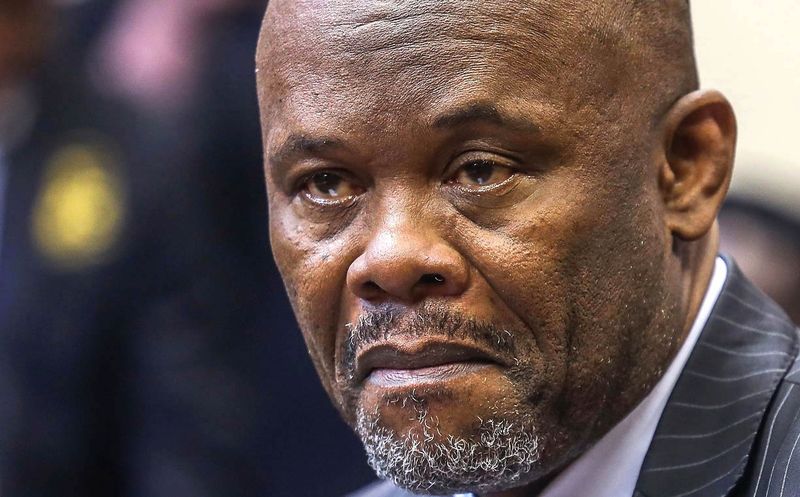
Roughly a year ago, then Deputy National Commissioner for Crime Detection Shadrack Sibiya told Parliament in a statement that his appointment to his police position “underscored the confidence” colleagues had in his leadership.Sibiya also said that his position placed him “at the forefront of shaping and directing the operational framework for crime detection” in South Africa.He even recalled heading an anti-corruption task team that one of South Africa’s former presidents had established, and another that targeted violent criminals and international fugitives.That statement was signed and dated 8 October 2025.Dishonourable dischargeFast-forward to Monday, 12 October 2026, when it emerged that Sibiya, who is facing sexual grooming, human trafficking and rape charges, resigned from the South African Police Service (SAPS).This means that when he next appears in the Randburg Magistrates’ Court, where he is expected on Tuesday for an ongoing bail application, he will do so for the first time as a civilian without the title of Lieutenant General.Sibiya resigned on Monday while a disciplinary hearing was held against him and as he remains in custody pending the outcome of his bail application.In a statement, the South African Police Service confirmed that he “is no longer an employee of the service”.“The disciplinary hearing against Lieutenant General Sibiya sat this morning, during which his legal representative tendered his resignation immediately after the disciplinary proceedings had commenced,” said the statement from Monday.“As the former senior officer had an ongoing disciplinary case against him at the time of his resignation, his departure from the service is therefore regarded as a dishonourable discharge.”Sibiya’s employment was terminated with immediate effect.His “dishonourable discharge” ends his 37 years in South Africa’s policing arena.The fall and fallExtreme and mounting controversy marked the last year and three months of Sibiya’s career.This latest round of controversy erupted in July last year, when KwaZulu-Natal Police Commissioner Nhlanhla Mkhwanazi alleged that a cartel, later identified as the Big Five, had infiltrated South Africa’s criminal justice system, politics and private sector.Mkhwanazi had implicated Sibiya, essentially alleging he was among a group of law enforcers protecting criminal suspects, the Big Five. Sibiya denied wrongdoing.The Madlanga Commission of Inquiry and a parallel ad hoc parliamentary hearing were created to investigate Mkhwanazi’s allegations.Sibiya testified at both.During the Madlanga Commission, several accusations were levelled against him, including that he shielded from investigation businessman-turned-crime accused and suspected Big Five member Vusimuzi “Cat” Matlala.Shadrack Sibiya’s stanceWhen KwaZulu-Natal Police Commissioner Nhlanhla Mkhwanazi alleged in July 2025 that a cartel had infiltrated the state, it exposed two main factions in the South African Police Service: one for and the other against him. Deputy national commissioner for crime detection at the time, Shadrack Sibiya, was among those who were against Mkhwanazi. Sibiya made his feelings about Mkhwanazi clear, once telling Parliament: “General Mkhwanazi is playing the country and he’s playing a mind game [with] the country… because he knows how to play with words… in such a way that the country gets moved.”About two months ago, President Cyril Ramaphosa essentially approved disciplinary and potential criminal investigations against several individuals, including Sibiya.Sibiya was arrested last month in the sexual grooming and rape case for which he is now trying to be released from custody.That case includes gritty allegations including that Sibiya plied a group of friends, young women, with alcohol at a strip club and raped one of them, an 18-year-old, at a hotel.Early years – ‘rising through the ranks’This is all a far cry from how Sibiya outlined his extensive career to Parliament via a statement to the ad hoc committee dated October last year.It said his “career in policing started on 2 January 1989 when I was employed by the SAPS as a student constable in Rustenburg”, a position he held until June that year.“I rose through the ranks, and in December 1997 I was appointed Head of the General Desk of Internationally Missing and Wanted Persons,” Sibiya’s statement said.Shadrack Sibiya, who resigned as deputy national commissioner for crime detection on 12 October 2026, appears in the Randburg Magistrates’ Court in a rape and sexual grooming case the week before. (Photo: Gallo Images / Sharon Seretlo) This saw him stationed at the international police organisation Interpol’s national bureau in Pretoria.By 2001, Sibiya had obtained his National Diploma in Policing Administration and B-Tech in policing, and he joined the Directorate of Special Operations, better known as the Scorpions.He was based in Gauteng as a senior investigator.The ScorpionsThe establishment of the Scorpions, a component of the National Prosecuting Authority, was announced in 1999 to fight high-level organised crime and corruption. Thabo Mbeki was South Africa’s president at the time, and his main political rival emerged as Jacob Zuma. Years later, in 2008, reports surfaced that the Scorpions would be dissolved, which led to suspicions of political interference. The following year, 2009, the directorate was officially disbanded, and Zuma became president.According to his statement to Parliament, Sibiya had also headed a joint anti-corruption task team in the Eastern Cape that former president Thabo Mbeki had established “to fight serious fraud and corruption” in that province.Sibiya was then transferred to the Scorpions’ head office as a project manager overseeing the Eastern Cape and Free State regional offices.After the Scorpions were disbanded in 2009, he was appointed a brigadier at the head office of the Hawks, fully titled the Directorate for Priority Crime Investigation.Sibiya took up a position at the commercial and organised crime unit.Targeting crooks ... and dismissal“I subsequently formed a specialised task team that was mandated to trace and apprehend the most wanted criminals in serious and violent crimes, including cash-in-transit heists, ATM bombings, bank robberies, the killing of police officers, as well as internationally wanted fugitives,” his statement to Parliament said.(The Madlanga Commission had earlier heard that the Big Five cartel was involved in crimes including cash-in-transit heists and ATM bombings.)Sibiya explained that this team, the tactical operations management section better known as Toms, became a fully-fledged structure in the Hawks.Lieutenant General Nhlanhla Mkhwanazi on 18 March 2026 at the parliamentary ad hoc committee investigating his accusations that a cartel has infiltrated the state. (Photo: Brenton Geach / Gallo Images) In 2010, he was appointed as the head of the Hawks in Gauteng.But five years later, the acting national Hawks head at the time issued Sibiya with a suspension notice.Sibiya was dismissed from the SAPS in 2015 over what he described as allegations about his role “in the illegal rendition and deportation of Zimbabwean nationals in 2010”. (A Labour Court finding later said that his dismissal was “procedurally and substantively unfair.”)The year after his dismissal, 2016, Sibiya was appointed to head the City of Johannesburg’s group investigation forensic services unit.Reinstatement, ‘fighting crime’, resignationSibiya was reinstated into the SAPS in 2022.In his statement to Parliament, Sibiya said that he filled the role of organised crime component head and held the rank of Major General.“In July 2023, I was promoted to the rank of Lieutenant General and appointed as the deputy national commissioner for crime detection,” he said.“In this capacity, I assumed overall command of national crime detection strategies, including the oversight of specialised investigative divisions, forensic services and intelligence-led policing initiatives.“My appointment to this position placed me at the forefront of shaping and directing the operational framework for crime detection in the republic…“It also underscored the continued confidence of the SAPS in my leadership and my ability to drive systemic improvements in the fight against crime.”This is the role from which Sibiya has resigned.His recent arrest underscores that the SAPS has no confidence in him or his leadership.It also emphasises that instead of viewing Sibiya as one who can improve the fight against crime, the SAPS sees him as being part of the crime he was meant to be fighting.Sibiya’s resignation on Monday therefore means his decades-long law enforcement career ends beneath a cloud of contradictions and criminal charges. DM
COP(PED) OUT: Sibiya kills his career: From Scorpions corruption-buster to alleged sex predator to ‘dishonourable’ quitter
Full Article
Original Source
Read the full article at Dailymaverick →KhanList aggregates and links to publicly available news content. We do not host full articles from third-party sources. Always verify important information with original sources.