
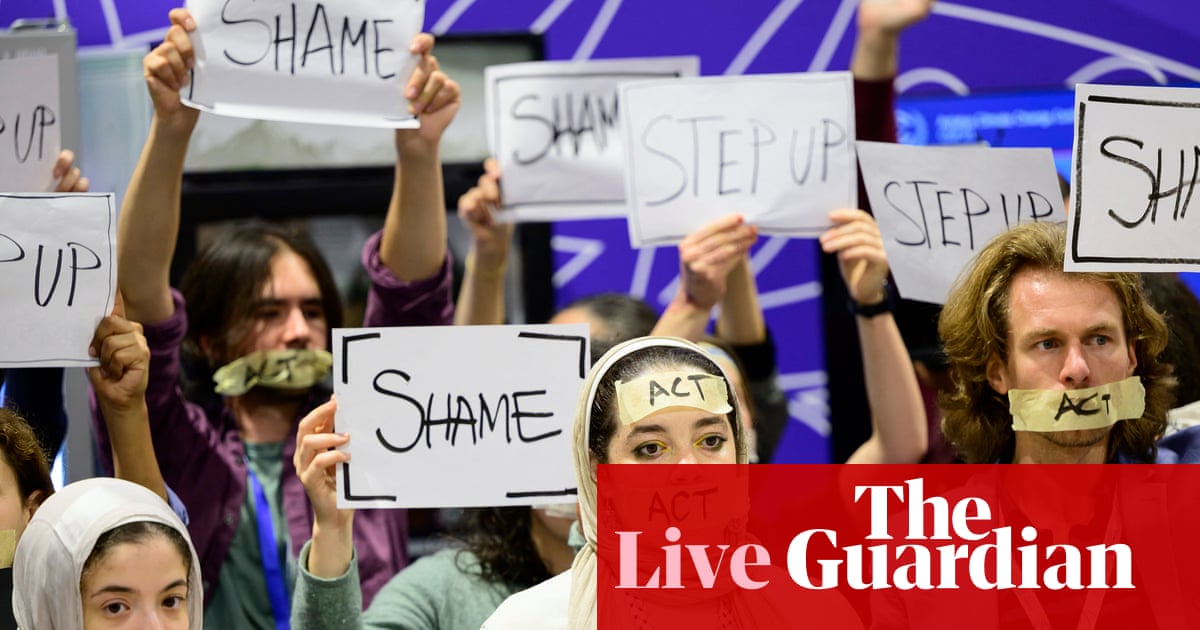
Summary postA quick summary of where we are as the summit heads into overtime: There have been two draft texts published. The first one included pretty much everything anyone wanted. The second one, which was just half the length, stripped most of it out again and was widely seen as a huge disappointment. Panama sent a letter to the Cop presidency on Thursday warning that it would block any deal that did not include its eight requirements which include real transparency, new rules of engagement, and a cap on oil production, among other things. African ministers came together to warn the summit that rich countries were undermining the process, trust and credibility of the UN climate summit process by failing to live up to their commitments under the Paris agreement. Numerous countries have demanded that “transition away from fossil fuels” must be returned to the text. Civil society activists called Antalya 2026 the ‘worst Cop ever’ China appeared to endorse the Cop Presidency’s flagship electrification pledge. Now we are waiting for the latest draft texts to arrive to see if any progress has been made.Key events3m agoSummary postFiona HarveyAs the talks continue into overtime, my colleague Fiona Harvey has written this useful explainer on what is required for a final decision to go through.When a final decision is made from Cop31, it will require “consensus” to be gavelled through and become official. But the meaning of consensus within the UN Framework Convention on Climate Change is not always well understood.Consensus means that the result has been thrashed out by all parties and that the strong feeling in the room is that it should be accepted. Consensus does not mean unanimity. Not every country has to agree for a Cop decision to be passed.“No country has a veto,” one Cop veteran said. “It’s wrong to think that one country can hold up everything.”This is important: at many Cops, there have been last-minute objections by a small number of countries, which have been overridden. For instance, at the Paris summit in 2015, a handful of countries including Nicaragua, Cuba, Bolivia and Venezuela were unhappy with the deal, but it was gavelled through. India raised objections in the final plenary of Cop29 in Baku in 2024, but the final deal was done.When a final decision is made from Cop31, it will require “consensus” to be gavelled through and become official. Photograph: Chris McGrath/Getty ImagesThe convention of consensus reflects an early Cop in the 1990s when Saudi Arabia and its allies in the Arab Group strongly objected to an outcome that the rest of the world favoured. They were named in the subsequent outcome of the Cop as having objected, and the countries then realised that they preferred not to be singled out as standing against progress on the climate crisis.Although consensus can be difficult to achieve, and some complain that the result is heavily compromised, it also gives a greater authority to the outcome than any majority decision could do. The universality of Cops is one of their key advantages – if some countries were to break away, it would diminish the authority of Cops, and make it more difficult to forge a unified global approach to a global crisis. As another Cop veteran put it: “All countries feel the impacts of the climate crisis. We are all in this together.”Good morning. Cop31 officially ended yesterday and we are now into overtime. Last night delegates were told to go home and come back in the morning. New draft texts were expected at 0900am local time – but that time has come and gone, and there is nothing to be seen.I’m Bibi van der Zee, helming the liveblog this morning, and we’ll be following developments this morning as they happen.
Cop31 live: climate talks drag into overtime as countries race to find agreement
Full Article
Original Source
Read the full article at Theguardian →KhanList aggregates and links to publicly available news content. We do not host full articles from third-party sources. Always verify important information with original sources.