
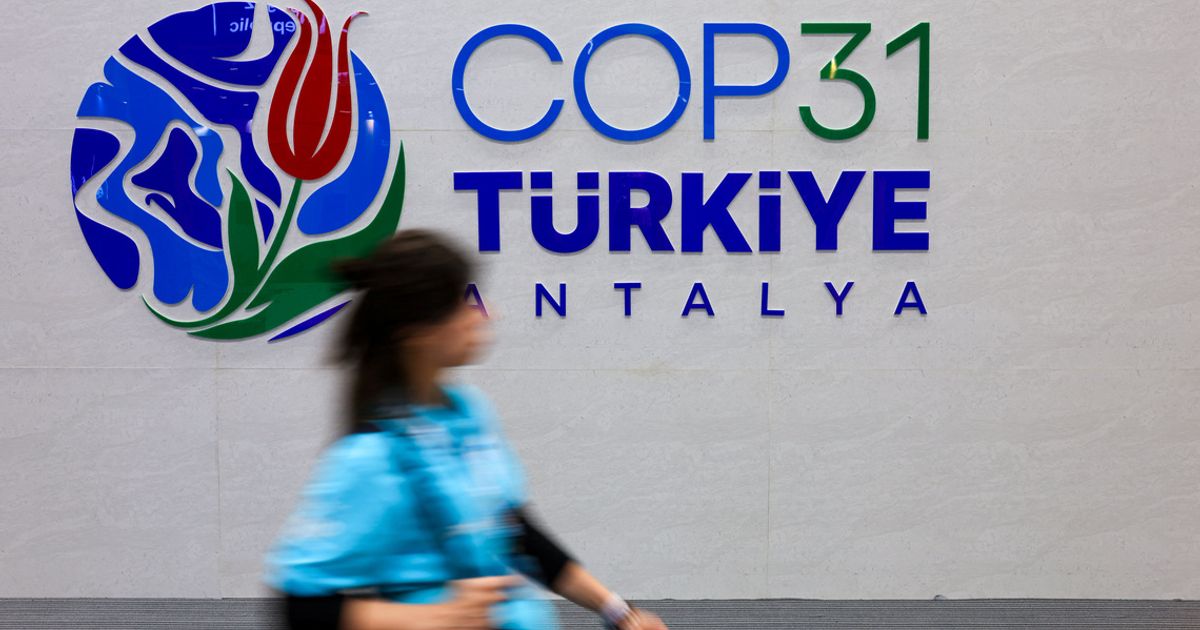
ANTALYA, Turkey – The UN climate conference COP31 kicked off on Nov 9 in the wake of a series of disasters linked to the planetary crisis, from the glacial floods in Nepal to the forest fires in Indonesia.Representatives from almost 200 nations are gathered in the Turkish city of Antalya for the two-week summit, to negotiate how countries can do more to limit global warming and protect their people from climate onslaught.At a press conference held on the opening day, leaders from the developing bloc of Pacific island nations called for a faster transition away from fossil fuels toward renewable energy instead. The small island states there are vulnerable to rising sea levels caused by melting glaciers. Nepal’s delegation also urged making mountain issues a priority.Yet, the summit is also taking place amid geopolitical headwinds like the Middle East conflict and rising costs of living.Climate finance – or funds that developed countries are obliged to contribute to developing countries to help them in their transition to greener, more resilient societies – looks set to be a major point of contention at this year’s talks.Negotiators were locked in discussions late on Nov 8 over demands by developing nations to include items on climate finance in the official agenda.But other than the official negotiations, the UN climate summit also features other events and exhibitions organised by non-state actors. These include non-government organisations, academics and companies.A mainstay of the climate conference are the pavilions – exhibition areas manned by countries and organisations to showcase climate solutions, host panel discussions and other events.The Straits Times recaps memorable moments from the conference so far.1. Traffic delaysThe second day of the summit on Nov 10 was plagued with traffic delays. Some attendees reportedly took at least three hours to reach the venue due to road closures.Shuttle buses and trams were also significantly delayed or suspended during certain hours. As a result, some events were postponed or cancelled.The disruption was likely due to the enhanced security arrangements made in advance of the World Leaders Summit, which was slated for Nov 11 and 12.The summit will see world leaders setting out the climate priorities for their countries, with speakers including Brazilian President Luiz Inacio Lula da Silva and British Prime Minister Andy Burnham.2. Mounting pressures to focus on mountainous regionsRepresentatives from the Nepal delegation on Nov 9 called for countries to do more to limit global warming to 1.5 deg C above pre-industrial levels – the threshold that climate scientists say can help the world avert harsher climate impact.Speaking at a press conference, Sagar Dhakal, member of parliament in Nepal, said: “This scale of disaster we have never seen, and the major factor is climate change. So this is the right time where we need to bring our issue to global attention.”On Aug 26, Nepal was hit by glacial floods which affected at least 80,000 people, and destroyed homes, schools and infrastructure like hydropower facilities.A Sept 17 analysis published by academic research group World Weather Attribution found that climate change likely compounded existing geological weaknesses that contributed to the rock and ice collapse.Dhakal said the disaster killed more than 7,000 people, and impacted nearly 10% of its gross domestic product. He is calling for a greater recognition of mountain communities’ needs in global adaptation and climate finance frameworks.Meanwhile, Dharam Raj Uprety, the chief executive for Nepal’s National Disaster Risk Reduction and Management Authority, said extreme climate events are overwhelming Nepal’s existing adaptation measures, including its monitoring infrastructure.He called for greater investment in mountain ecosystems, communities and infrastructure, including better hazard detection systems. He also noted that mountain disasters can also have transboundary effects across other countries like India.3. Pacific island nations take centre stageFor the first time, the presidency of the UN climate change conference is held by two countries – Turkey is hosting the summit, while Australia is leading the negotiations.Both countries had put in their bids to host the conference, with Turkey eventually beating Australia to stage the summit.Australia had hoped to host the conference partly to highlight the plight of the Pacific, one of the world’s most climate-exposed regions. The island nations there are particularly vulnerable to rising sea levels.On Nov 9, COP31 President of Negotiations Chris Bowen, who is Australia’s climate change and energy minister, raised the plight faced by these island nations in his opening remarks.He said Pacific nations have done the least to cause climate change but have the most at stake, and called for countries to speed up deployment of clean energy, accelerate electrification and deliver climate finance faster, among others.Pacific leaders themselves also called on world leaders to slash their emissions and ramp up renewables while prioritising Pacific issues, such as making climate finance more accessible.For example, COP31 Envoy for Oceania Tina Stege, who hails from the Marshall Islands, said that communities in low-lying atoll nations are already suffering severe impacts from rising seas, with increasingly frequent flooding threatening homes, infrastructure, freshwater supplies and livelihoods.Oceania refers to a geographical region that generally includes the Pacific islands, Australia and New Zealand.“For Pacific Island countries, this is not an abstract discussion about temperature targets. It’s about people, it’s about communities, it’s about the places we call home,” she said.Meanwhile, COP31 Pacific Envoy for Access to Climate Finance Ruel Yamuna said that in their disbursement of climate finance, developed countries should not add to the debt of developing countries. Developing countries have been calling for climate finance to be given through grants instead of loans.4. Displays at ASEAN country pavilionsThe pavilions at the UN climate conferences are where countries and interest groups showcase their climate change solutions and promote their cultures. Besides performances, organisers sometimes offer freebies and food to draw crowds to their events.Several ASEAN countries, including Singapore, Malaysia and Indonesia, have pavilions at this year’s conference.SingaporeLocated at the entrance of the hall where the pavilions are located, The Singapore pavilion has a feature wall of terracotta tiles with some vertical greenery. PHOTO: COP31 SINGAPORE PAVILIONThe Singapore pavilion has a feature wall of terracotta tiles with some vertical greenery. It is located at the entrance of the hall where the pavilions are located.In a tribute to COP31 host country Turkey, the pavilion also features special tiles that combine elements from Peranakan and Turkish tile traditions.The programmes on the first few days of COP31 were mostly finance-themed, including discussions on funding climate adaptation and carbon markets.Other topics that will be discussed at the pavilion over the next two weeks range from energy and transport to adaptation and resilience.Giving brief remarks at the opening of the Singapore pavilion on Nov 10, Australia’s Bowen said: “Singapore is a small country with a big heart and big impact.” He also lauded Singapore’s efforts in helping Asia decarbonise through its national blended finance Fast-P which aims to raise up to US$5 billion.Blended finance starts with capital from public or philanthropic sources to draw in the involvement of the private sector, which holds most of the world’s wealth.In a pre-recorded speech, Minister for Sustainability and the Environment Grace Fu said that the spirit of collective action is at the heart of the Singapore Pavilion.“Governments, businesses, financial institutions, researchers and communities must pool their strengths and work together to develop practical solutions that can make a difference at scale,” she said.IndonesiaAttendees can find out how emissions-intensive their journey to the conference is by entering details such as their country of departure and mode of transport into a calculator. ST PHOTO: CHIN HUI SHANAt Indonesia’s pavilion, a large screen highlighting the carbon footprint of a delegate’s journey to Turkey immediately draws the eye.Attendees can find out how emissions-intensive their journey to the conference is by entering details such as their country of departure and mode of transport into a calculator.Andrie Trisaksono, main director for Indonesian digital technology company Tritek behind the feature, hopes it will make visitors more aware of their carbon footprint as they travel.This could inspire visitors to pledge to cut their emissions, such as by planting a tree or doing more for climate action.The pavilion also featured dialogues on carbon markets and the clean energy transition.MalaysiaDesigned and painted by Malaysian street artist Yaul Acap, the painting is a tribute to the country’s biodiversity. ST PHOTO: CHIN HUI SHANThe Malaysian pavilion brought hornbills to life through a live painting, which is slated to be completed within the first few days of the conference. Designed and painted by Malaysian street artist Yaul Acap, the painting is a tribute to the country’s biodiversity.Malaysia is home to 10 hornbill species, including the rhinoceros hornbill which is regarded as its national bird.Titled The Birth of a New Enggang — the Malay word for hornbill — the work depicts a mother hornbill and her chick, symbolising a future that can still be protected.Malaysia’s pavilion showcases discussions on topics including nature-based solutions like mangroves. These habitats can act as a natural defence against rising sea levels.There were also a few cultural elements showcased at the Malaysia pavilion.Visitors were treated to teh tarik, the nation’s iconic milk tea. A hands-on sculpting workshop using clay made entirely from traceable, responsibly sourced Malaysian natural rubber, was also organised at the pavilion.5. Pin exchangeThis year, the Singapore pavilion is distributing three designs – one of a Peranakan-inspired tile that features the national flowers of Singapore, Turkey and Australia. ST PHOTO: CHIN HUI SHANCollecting pins is an informal and popular tradition among the attendees. This year, the Singapore pavilion is distributing three designs.One is of a Peranakan-inspired tile that features the national flowers of Singapore, Turkey and Australia.The other two depict Singapore’s iconic Merlion mascot, called Merli, adapting to the impacts of climate change. In one design, Merli fans itself to stay cool as temperature rises, and in the other, it is pictured next to a mangrove – nature’s natural defence against sea-level rise.Pins – which are usually attached to the participants’ conference lanyards – are in limited quantity and are often highly sought after.Malaysia’s pin features its national flower hibiscus.6. ProtestsWaving banners and chanting slogans with fists in the air, activists on Nov 10 called on governments to honour their COP30 agreement to establish a just transition mechanism. ST PHOTO: CHIN HUI SHANProtests are a central feature at every climate conference. COP31 also kicked off with some demonstrations at the venue, calling on government representatives at the event to be more ambitious about climate action.Waving banners and chanting slogans with fists in the air, activists on Nov 10 called on governments to honour their COP30 agreement to establish a just transition mechanism.A just transition refers to efforts put in place to ensure communities are not disadvantaged by the shift away from fossil fuels – through retraining programmes or governmental efforts to keep electricity prices stable, for instance.At COP31, countries will discuss how a just transition can be enabled.
COP31 climate summit kicks off in Turkey with cultural displays, protests and pin collectibles
Full Article
Original Source
Read the full article at Straitstimes →KhanList aggregates and links to publicly available news content. We do not host full articles from third-party sources. Always verify important information with original sources.