
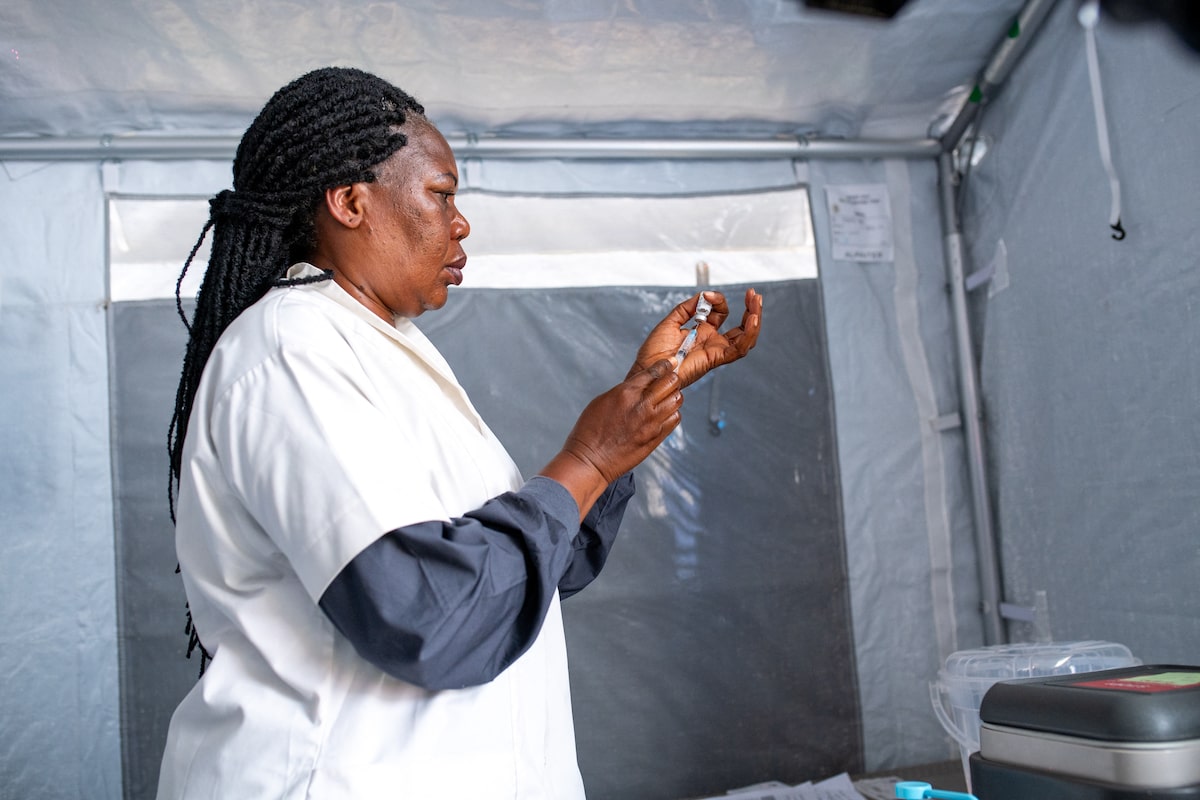
Open this photo in gallery:A health worker prepares to administer an Ebola vaccine at the Provincial Laboratory of Ituri in the northeastern province of the Democratic Republic of the Congo, on Saturday.LATOUIFA FETAFETA/AFP/Getty ImagesCongolese authorities have begun rolling out a Canadian-developed vaccine in an attempt to protect 20,000 health workers from a fast-spreading Ebola outbreak, but Ottawa could be doing more to develop vaccines that are effective against the current species of the virus, experts say.The vaccine, known as Ervebo and manufactured by Merck, was developed at the National Microbiology Laboratory in Winnipeg and has been deployed in outbreaks of the most common Ebola species, known as the Zaire virus. Its protective value against the Bundibugyo Ebola virus – the cause of the latest outbreak − is unknown, but health authorities have decided to try it anyway in a large-scale study.Ervebo was developed and licensed solely for the Zaire virus, but it is the only Ebola vaccine available in large quantities today. There are no proven vaccines for Bundibugyo.A leading Canadian vaccine researcher suggested in 2014 that the basic platform of what became Ervebo could be developed to target the Bundibugyo Ebola virus, documents show. The work was never done, and the international focus today has shifted to potential vaccines from other developers.Ottawa temporarily bars entry for foreigners who visited Congo due to Ebola riskThe current Ebola outbreak has infected more than 7,670 people and killed nearly 3,700 in the Democratic Republic of the Congo, according to official data Monday. It is already the worst Ebola epidemic in Congo’s history and is spreading faster than the world’s biggest outbreak, which killed more than 11,300 people in Liberia, Guinea and Sierra Leone from 2014 to 2016.The outbreak has been fuelled by armed conflicts in eastern Congo that have destabilized the region and forced thousands of people to flee their homes. The lack of a proven vaccine has hampered the response to the crisis.The vaccination campaign, launched Saturday, will target 20,000 front-line health workers in the epicentre of the outbreak, Congo’s Ituri and North Kivu provinces, over the next nine to 12 months to see whether Ervebo is effective against the Bundibugyo Ebola virus. “Preliminary data suggest that it may offer some degree of protection against the virus,” said Guyguy Manangama, an epidemiologist and deputy director of Congo Ebola operations with Médecins Sans Frontières (MSF). “In a race against time … we must use every tool available to us,” he said in a statement. “Even partial protection could help reduce severe illness and death. However, these potential benefits must be demonstrated scientifically.”Ebola outbreak is outpacing response efforts, WHO chief saysJudie Alimonti, a scientist at the Winnipeg lab who helped develop Ervebo, wrote in a 2014 internal report that she strongly recommended the use of the same vaccine platform to create vaccines for the Bundibugyo and other Ebola viruses. But she noted that there was a lack of money to support the research work in Canada.“The scientists would have happily continued working on it,” said Matthew Herder, a professor and associate director of the Health Justice Institute at Dalhousie University in Halifax.“It’s just that they had no more funding from the government, so they couldn’t continue to work,” he told The Globe and Mail in an interview. “Canada could do more now − and they could have done more in the past.”The 2014 report by Dr. Alimonti was obtained under the Access to Information Act by three researchers, including Prof. Herder.He said he is concerned that Ottawa’s current emphasis on defence spending could reduce its support for health research, including scientific research on Ebola. The government should recognize that diseases such as Ebola are global security issues that could affect Canada, he said.U.S. plan for Ebola quarantine in Kenya sparks angerAdam Houston, a medical policy and advocacy adviser at MSF Canada, said the Ervebo trial is a reminder of Canada’s potential role in future vaccine development.“It is really surprising that, despite the effectiveness of the original Ebola vaccine developed in the Government of Canada’s own laboratory, the Canadian government has been largely absent from efforts to further develop proven Canadian technology to tackle other viruses causing Ebola disease, including Bundibugyo,” he told The Globe.The Coalition for Epidemic Preparedness Innovations is funding studies of four potential vaccines for Bundibugyo. One of them, developed by Moderna, is undergoing its first clinical trial at three sites in Canada. Karine LeBlanc, a spokesperson for Health Canada, said the national lab in Winnipeg is continuing to conduct laboratory research on Ebola to develop vaccines, treatments and diagnostic tests, including possible Bundibugyo vaccines.Preliminary data from an animal study at the lab, presented to the World Health Organization in July, demonstrated that Ervebo gave ferrets full protection from Bundibugyo, she noted.
Congo rolls out Canadian-developed vaccine to fight Ebola outbreak
Full Article
Original Source
Read the full article at Theglobeandmail →KhanList aggregates and links to publicly available news content. We do not host full articles from third-party sources. Always verify important information with original sources.