
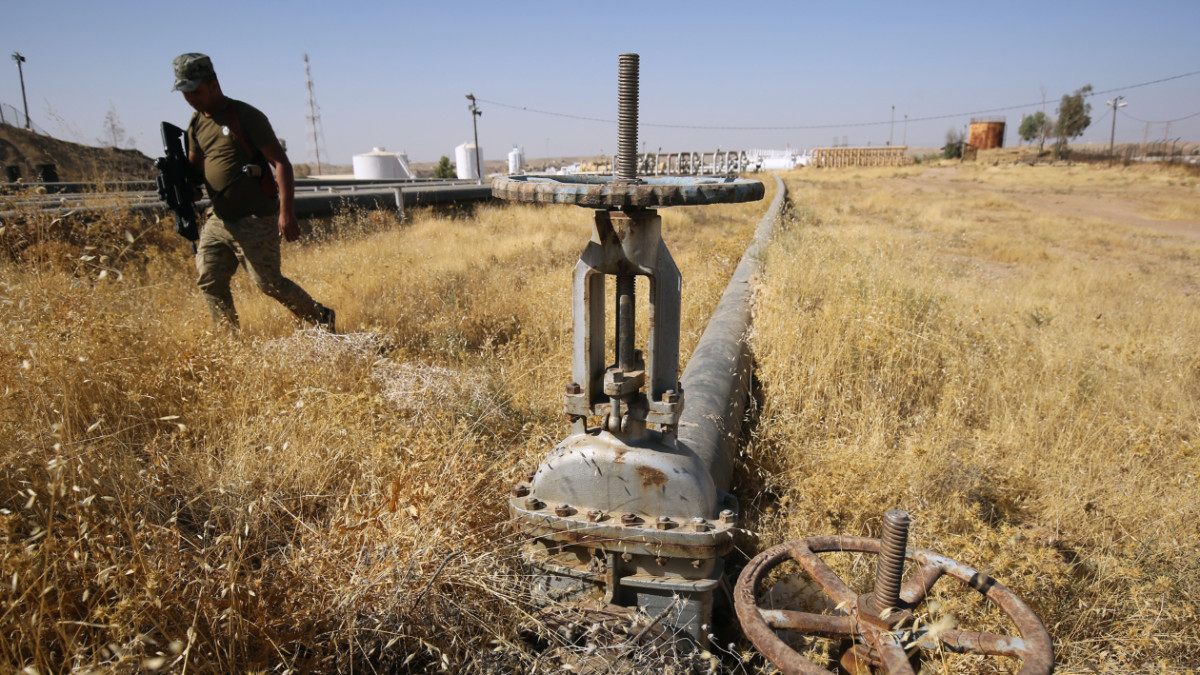
Energy chief says world can 'manage without Hormuz' but it will require $240bn in investments An Iraqi government forces member walks next to a pipeline at the Bai Hassan Oil Field, west of the northern Iraqi city of Kirkuk, on 19 October 2017 (Ahmad al-Rubaye/AFP) Published date: 19 November 2026 22:03 GMT | Last update: 4 sec ago The US-Israeli war on Iran has “crushed” confidence in the Strait of Hormuz as a reliable waterway for the export of energy, Fatih Birol, the head of the International Energy Agency (IEA), has warned. “I don’t see any credible pathway back to the situation that existed in February 2026,” Birol wrote for The Economist magazine in an essay published on Wednesday. “Shipping flows through the Strait of Hormuz have been blocked once, with a hugely disruptive effect on oil and gas markets. It can happen again. Confidence in the Strait as a safe and reliable corridor for energy and other goods has been crushed,” he added. Birol said that the world "can conceivably manage without the strait," but it would be "difficult". In its World Energy Outlook report published on Thursday, the IEA said developing alternative pipelines around the waterway would require around $40bn. This would add around $2 to the cost of a barrel of oil exported from the Middle East. An additional $200bn would need to be spent on alternative sources of energy outside the Middle East. New MEE newsletter: Jerusalem Dispatch Sign up to get the latest insights and analysis on Israel-Palestine, alongside Turkey Unpacked and other MEE newsletters The IEA said that in the case of oil alone, new pipeline projects are under construction or consideration in the Middle East that could pump around seven million barrels per day of oil, allowing producers to reach international markets without going through the strait. “If all these projects are completed, non-Gulf producers step up output, and importers bring down demand, then our Low Hormuz Case reduces the need for transit through the Strait to 2 mbp by 2035,” the IEA said, summarising how the strategic waterway could be made less relevant. From Syria to UAE, the race to bypass Strait of Hormuz is on Read More » Middle Eastern countries are racing to bypass the Strait of Hormuz. Saudi Arabia wants to expand the capacity of its East-West Pipeline terminating at the Red Sea port of Yanbu, while the UAE is doubling down on pipelines to bypass the chokepoint. Middle East Eye was the first to report US efforts to revive a pipeline connection between Iraq and Syria. This week, Iraq resumed the pumping of crude oil for export through the Kirkuk-Ceyhan Pipeline to Turkey, as it looks to bypass the Strait of Hormuz. The IEA said that even with bypass routes, pipelines would remain vulnerable to attack. For example, Saudi Arabia’s East-West Pipeline has come under attack from the Houthis and militias in Iraq. "If the Middle East is unstable, then alternative routes for Gulf exports are likely to be vulnerable too. And while it is possible to diversify away from the Strait of Hormuz over time, the same does not apply to the Middle East as a whole,” the IEA said. Middle East Eye delivers independent and unrivalled coverage and analysis of the Middle East, North Africa and beyond. To learn more about republishing this content and the associated fees, please fill out this form. More about MEE can be found here.
Confidence in Hormuz has been 'crushed' by war on Iran, IEA says
Full Article
Original Source
Read the full article at Middleeasteye →KhanList aggregates and links to publicly available news content. We do not host full articles from third-party sources. Always verify important information with original sources.