
The European Commission has proposed up to 15 years of post-accession safeguards to punish new member states in case of bad behaviour, in a long-delayed pre-enlargement policy review out on Tuesday (6 October). The reforms were initially requested by the European Council in June 2024 to be ready by spring 2025, but were delayed several times due to political sensitivities in EU capitals. They are aimed at frontrunners for future EU membership – Montenegro, Albania, Moldova, and Ukraine – each of whom will get an accession roadmap this month. EU Commission president Ursula von der Leyen has deemed union enlargement a “geopolitical imperative” amid the war in Ukraine and shift towards a new global order. By expanding, the EU hopes to promote democracy and strengthen the single market. But this also comes with fears that countries could misbehave after getting in, prompting the commission’s proposed new guardrails. The commission suggests that new member states promise “not to oppose EU decisions on future enlargements” due “to bilateral disputes” for an unspecified time. But Marta Kos, the EU’s enlargement commissioner, said this commitment would be voluntary. Commissioner dismisses ‘two-tier’ concerns The 15 -year post accession safeguard is meant to address serious breaches of Article 2 of the EU treaty regarding respect for rule of law and human rights. Available measures for violations could include a suspension of voting rights in the council. Similar protections already exist under the so-called Article 7 procedure, but they have been difficult to implement, as shown by the case of Hungary under former prime minister Viktor Orbán. The new safeguards could be triggered by “reasoned requests” of member states or the Commission. The Council would then vote to implement the measure by qualified majority. But there are fears that this could create an unequal system for EU member states. According to Agon Maliqi, a policy analyst from Kosovo and a resident fellow at The Atlantic, the 15-year safeguards “would effectively offer new member states a kind of second-class status in the bloc, creating a two-tier EU.” Kos said on Tuesday: “We don’t want a two-tier membership. This is about protecting ourselves - an insurance policy.” But the commissioner also struggled to reply to a reporter’s question of why the new safeguards were needed when Article 7 of the EU treaty already acts as a mechanism to suspend the rights of members in case of grave treaty violations. EU leverages existing protections Going further, the commission has recommended to "significantly extend" beyond three years existing accession safeguards covering the economy, internal market, and justice and home affairs. When Croatia became the most recent country to join the EU in 2013, safeguards were agreed upon allowing other member states to take extraordinary measures to protect their economy or curb legal cooperation, on issues such as labour or welfare rights, in case of problems. The commission now wants to prolong this protection from three years to an undefined period. The Brussels-executive also sought more use of passerelle clauses in Council, replacing unanimity requirements with a qualified majority for issues such as sanctions, tackling tax fraud, and fiscal measures in the energy sector. It recommends qualified majority votes for intermediate stages of accession negotiations, reducing the chance of countries blocking candidates while they prepare for membership. And the commission encourages wider use of enhanced cooperation - a measure allowing nine member states or more to collaborate (bypassing malcontents) on specific issues, such as loaning money to Ukraine. Gradual integration replaces fast-tracking The push for an enlargement has been driven by geopolitical tensions over the war in Ukraine, prompting member states to put forward various models for future expansion of the union. In June 2026, France, Germany, Belgium, the Netherlands, and Luxembourg proposed a non-paper outlining a “catalogue of options” for future European Union accession treaties. It included ideas for “temporary transitional limitations of voting rights for new member states, particularly in areas requiring unanimity”. German chancellor Frierdich Merz has also urged EU leaders to facilitate Ukraine’s accelerated entry into the bloc. But member states rejected the commission's proposal of ‘reverse enlargement’ with a ‘membership first, reforms later’ model intended to fast-track Ukraine’s EU accession.Four candidate countries have now received a signal of readiness for accession by the EU. Plans for Montenegro’s accession are expected to move ahead this year, with Albania and Moldova expected to complete steps in the coming years. Ukraine, too, is reforming its laws to align with those required by the bloc. The commission is to adopt its 2026 enlargement package on 28 October and will feature accession roadmaps for the four countries. Other EU membership candidates include Bosnia and Herzegovina, which has been held back by internal divisions, Kosovo, which has been blocked by EU states which do not recognise its sovereignty, Serbia, which has seen a resurgence of nationalism, and North Macedonia, which is locked in a bilateral dispute with Bulgaria. Georgia and Turkey also remain candidates, but their accession processes are on hold due to their authoritarian regimes.
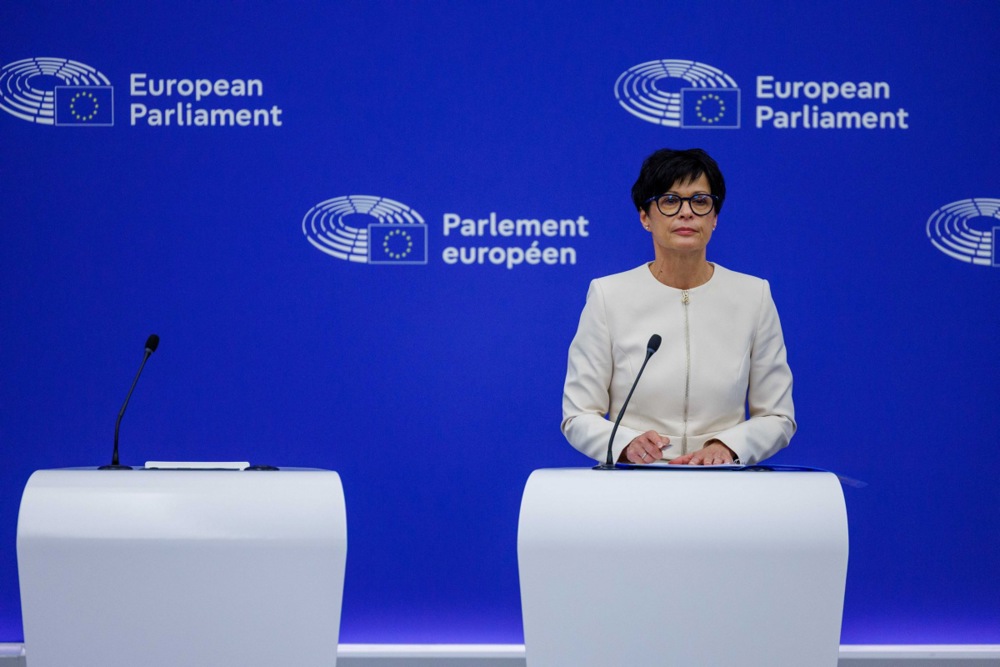
Commission seeks 15-year safeguards on future member states, but says reforms won’t create two-tier EU
Full Article
Original Source
Read the full article at Euobserver →KhanList aggregates and links to publicly available news content. We do not host full articles from third-party sources. Always verify important information with original sources.