
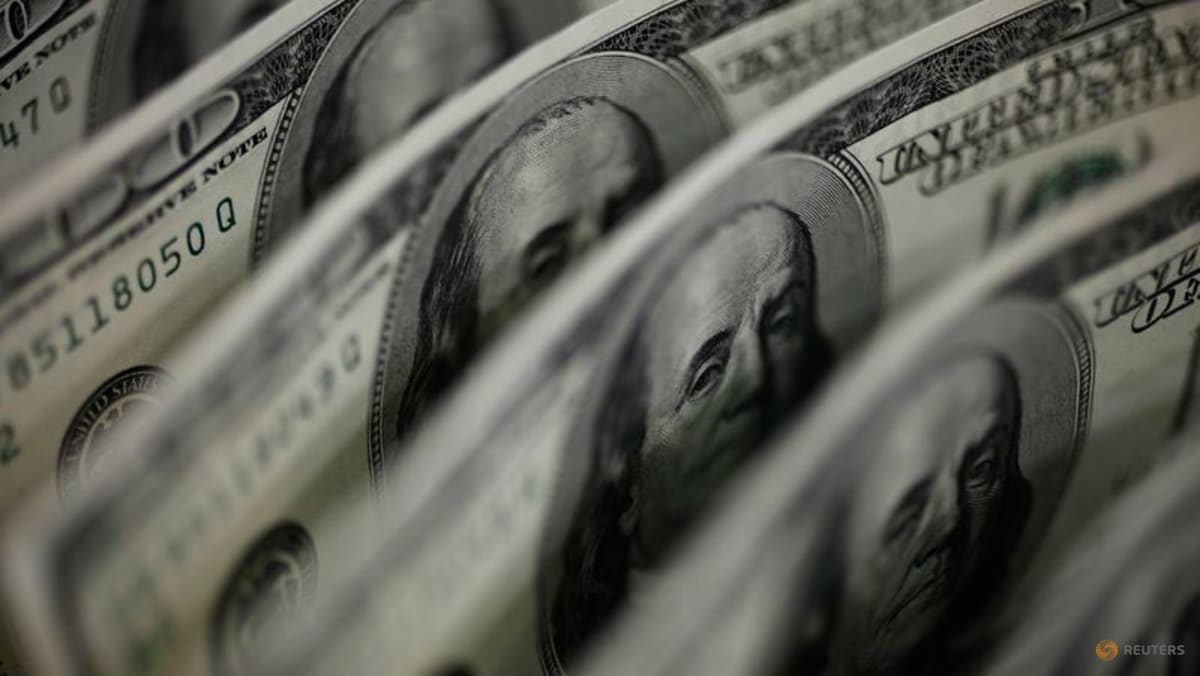
Commentary If long-term interest rates decisively breach the 5 per cent threshold, the impact could derail the AI boom, says Ruchir Sharma for the Financial Times. A picture illustration shows US$100 bank notes. REUTERS/Yuriko Nakao NEW YORK: Doomsday warnings about America’s rising debt date to the 1970s, when the US government began running persistent budget deficits. Late in the next decade, a worried New York real estate developer placed the “national debt clock” in Times Square. None of the warnings materialised, so like the boy who cried wolf, they became background noise, easy to ignore. Now, as in the fable, the wolf is approaching the door.Runaway debt is starting to matter, triggering a global sell-off in government bonds last month. And the first material impact could be that higher interest rates on US bonds short-circuit the AI boom. WHAT'S DIFFERENT THIS TIMEGoing back 300 years, every major bubble ended only when borrowing costs rose significantly for the companies at its core, including the serial railroad busts of the 1800s. In the last century, the era of modern central banking, all big bubbles popped after central banks sharply raised their short-term lending rates. This time is different in a key respect. Normally in a market mania, firms begin borrowing heavily to double down on the hot investment theme, and boomy conditions fuel inflation and drive up interest rates and that eventually pops the bubble. Governments then arrive, taking over the debt of the affected companies and borrowing to stimulate the weakened economy.In recent decades, the government role shifted to providing constant stimulus, even in good times. Long after 2008, it continued to rapidly run up debts. This decade, the US has consistently run budget deficits of around 6 per cent of GDP - more than twice the average of earlier decades.For much of this period, households and corporations avoided taking on too much new debt. It was only in the last year that tech hyperscalers began racking it up to finance the massive AI infrastructure build-out as their cash surpluses dwindled. Their debt levels, though, are still manageable for such large companies.The substantial borrowing excesses in this cycle have so far piled up on government books. And problems begin where excesses run deepest. HALLMARKS OF A BUBBLE?A critical warning comes from interest payments on public debt, which in the last five years have more than doubled to over 3 per cent of GDP. That is a new US record, and the sharpest increase to the highest level for any major developed economy. Growing unease about government finances, along with other factors including surging energy prices, has driven yields higher on government bonds globally. The elevated rate backdrop is also adding to borrowing costs for AI groups, which account for the largest slice of new corporate debt issuance.I have argued the AI boom has many of the hallmarks of a bubble but will keep inflating until interest rates get to prohibitive levels. My research now suggests the marker to watch is the yield on 10-year US Treasury bonds, the global benchmark for long-term borrowing costs, which is now at 4.8 per cent. When it decisively breaches 5 per cent, the upper end of its range since the dotcom period, the AI bubble could pop.This breach would signal the start of a new era of tighter money, in which AI mega projects will be harder to fund. When Big Tech must compete for capital with a government paying a yield of more than 5 per cent on bonds - which matches an inflation expectations-adjusted return of over 2.5 per cent - many will find themselves crowded out of the debt markets, with serious consequences. Estimated annual revenue from AI use is about US$200 billion this year, a fraction of the more than US$1 trillion companies are spending on data centres and other infrastructure. AI groups increasingly rely on new bond and equity issues to fund the gap, and a 10-year bond yield of more than 5 per cent will slow both channels. A yield that high will top the earnings yield of the US stock market, which historically has been a headwind for stocks.Further, if the 10-year yield stays above 5 per cent, the rate the US pays on its debt will soon exceed the expected rate of nominal growth in its economy, making the debt far less sustainable. The pace of the rise matters as well. If it passes the 5 per cent level by November, the 10-year yield will have increased more than 75 basis points within six months. Historically, spikes that sharp have ended bull markets.Some analysts say this milestone would merely mark a return to an era like the 1990s, which saw strong US growth and stock market returns, with the 10-year yield above 5 per cent throughout. But America was much less addicted to debt then. The decade ended with a US government surplus, and since then the deficit has exploded. Public debt has nearly tripled to 100 per cent of GDP. As a result, debt-servicing costs are much higher now. Rising public borrowing costs will squeeze other borrowers sooner, and hit the bubbly AI markets harder.Others are raising louder alarms about how America’s debt burden could undermine its superpower status, and dethrone the dollar as the world’s reserve currency. This doom-loop thinking is premature, since America’s major rivals are grappling with similar problems on the debt front. For now, what bears close watching is how quickly the 10-year Treasury yield breaks 5 per cent and the threat that poses to the AI boom. Source: Financial Times/sk
Commentary: Why America’s debt binge is starting to matter
Full Article
Original Source
Read the full article at Channelnewsasia →KhanList aggregates and links to publicly available news content. We do not host full articles from third-party sources. Always verify important information with original sources.