
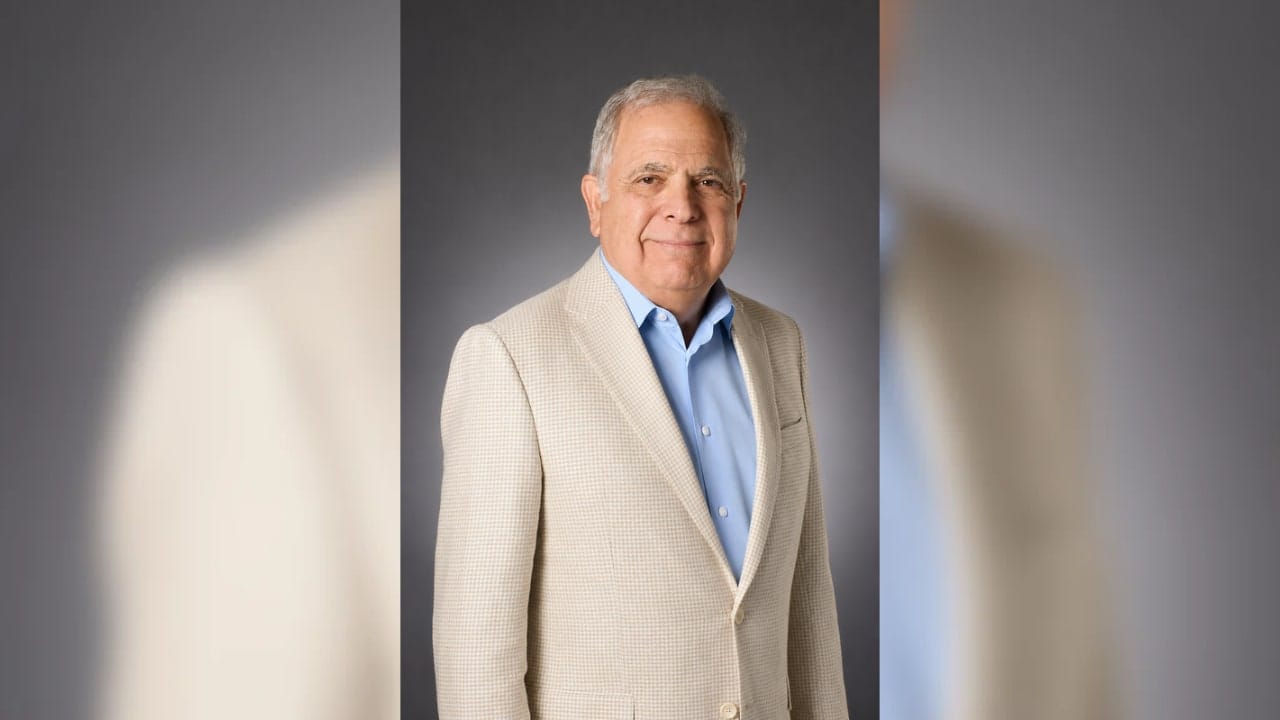
OCTOBER 12, 2026 19:01Hebrew University of Jerusalem is launching a new Center for Advanced Medical Education, using a gift of $30 million from the family foundation of Steven H. Lavin, designed to revolutionize the way physicians are trained in Israel by incorporating new AI technology into education.The new center aims to combat Israel's so-called 'brain drain', in which an increasing number of Israelis are receiving extensive education overseas and remain elsewhere just as Israel may need them the most. This has led to an increasing shortage of doctors in Israel, with the country projected to have only three doctors per 1,000 people by 2035.Lavin told The Jerusalem Post that the October 7 massacre in 2023 highlighted the problem of this brain drain, specifically the element where highly qualified medical students are forced to go study abroad and often settle there just as Israel needs them the most. "People are training abroad and staying abroad...they start to build their life, and they don't want to return," Lavin told the Post. Lavin met up with a friend, Vice President of Hebrew University Ambassador Yossi Gal, with whom he discussed the problem, which led to the start of a concrete system to address the problem by partnering with Hebrew University to create a new system that would allow an increasing number of Israelis to study within Israel and begin to build their lives within the country. Professor Eli Pikarsky, Dean of the Faculty of Medicine at the Hebrew University of Jerusalem. (credit: Elad Barmy)In addition to retaining doctors within the country, Lavin stressed the benefit of having a generation of physicians trained in Israel, while immersed in the culture.Professor Eli Pikarsky, Dean of the Faculty of Medicine at Hebrew University, underlined the importance of cultural immersion in patient care.Pikarsky told the Post that the cultural preparedness of physicians and healthcare professionals will be an immensely important part of the program under development, as an essential, and yet one of the most difficult parts of the medical profession. New training to utilize self-learning, group-learning systems to increase capacityThe system is designed to improve Israeli's medical education capacity without sacrificing the quality of education or the time and mentoring feedback from senior physicians.Pikarsky explained that within the new system, a high proportion of the knowledge acquisition will be done using technology, both in self-learning and group learning. The new center envisions a future in which classes in large lecture halls can transition into modules that students will work individually and collaboratively to learn and work through.Additionally, assessments of individual students will become more efficient, according to Pikarsky."Today, a physician, a mentor, meets a student next to a patient, and they do this simulated discussion of the patient case. They hear the patient, they examine the patient, and then this physician who is overworked, tired, has a family, has other obligations, and also wants a life has to sit at home at 10 o'clock at night and write the feedback. This is not the way to do it," he told the Post. By using an automatic system during the discussion that will take notes and write a structured feedback outline for the mentor to use, the physician can then give more feedback sessions while also having an objective and online component.Pikarsky said that the feedback itself will still come from the mentor, who will get an outline of what happened, suggested points for discussion with the student, and the general assessment."Then the mentor can then go over these and decide what he agrees with, what he doesn't agree with, and then provide that to the student," Pikarsky told the Post. Pikarsky emphasized that the educational tools he'd described were just two of many under development.Another tool Pikarsky suggested will use technology to assess medical students' ability to effectively communicate. While skill at communicating as a physician is one Pikarsky told the Post comes over time, the advantage that the system gives is the ability for students to strengthen their abilities without doing so in front of the patient. They can then go over what happened, understand potential improvements, and implement them with another try in the system.Tools will also be designed to help students collaborate and teach each other, which Pikarsky describes as an invaluable experience."It's really a very different way of learning something. And if all of our students had the opportunity to teach as part of their learning, they will learn more.Embracing AI as the future of healthcareBoth Pikarsky and Lavin acknowledged that the idea of incorporating AI and additional technology into medical training concerns many who fear that this will lead to less personal connection within their education and then within patient care. However, Lavin explained that while medical professionals will still be overseeing the work being done, tasks that are "inefficiently using highly trained people" will not have to be done by them.Lavin told the Post that embracing these tools for training is the way forward to advance medicine and increase the quality of care. "It's something that we will, as people have to adjust to. But I think that if we don't use the tools available to us for this training, we won't be getting the best medical service there is."Pikarsky added on, explaining that contrary to the fear, the system is optimized to allow mentors more time to connect with students, observe them, discuss complex cases, and provide personal guidance without spending time on tasks students can complete with technological guidance.Follow us on Google
Combating Israel's 'brain drain': Inside Hebrew University's new medical education center
Full Article
Original Source
Read the full article at Jpost →KhanList aggregates and links to publicly available news content. We do not host full articles from third-party sources. Always verify important information with original sources.