
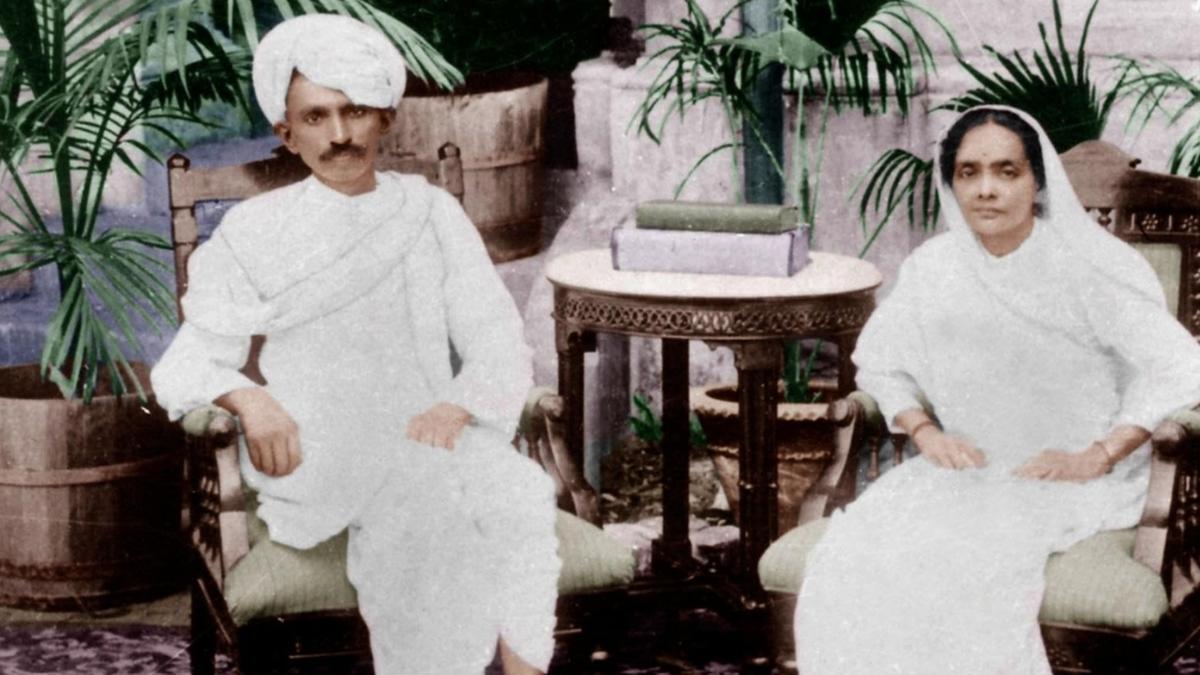
A still from Cynthia Lukas’ documentary Kasturba Gandhi: Accidental Activist (2023). He organised satyagraha-like sit-ins at Vanderbilt University, Tennessee, and later wrote at length about how Gandhi inspired this strategy, calling him “one of the most creative political leaders of all time”. There are so many lesser-known aspects of Mahatma Gandhi’s life that even otherwise well-informed Indians are not aware of.Since the days of Richard Attenborough’s Gandhi or Shyam Benegal’s Making of the Mahatma, directors have kept reinventing Gandhi on screen. Sudhir Mishra’s forthcoming historical film will see Manoj Bajpayee reprise Bapu, and Pratik Gandhi essays the Mahatma from plays (Mohan No Masalo) to web-series (Hansal Mehta’s upcoming OTT series). But popular feature films can only do so much.That’s where history books and documentary films can fill the gap.Past the familiarTo that end, Rajmohan Gandhi (the Mahatma’s grandson) and James Lawson are both interviewed in the excellent documentary Ahimsa — Gandhi: Power of the Powerless (2021), directed by Ramesh Sharma.In the film, Rajmohan says, “[Mahatma] Gandhi saw the horror of violence in South Africa. And he realised the need for something with which to fight it without inviting a horrible retribution [upon the oppressed]. It occurred to him that a non-violent struggle could be the way — but it had to be absolutely fearless, you had to be prepared to pay the full price.”Veteran documentarian Sharma, known for the Shashi Kapoor-Om Puri political thriller New Delhi Times (1986), on Delhi media’s ethics and corruption, balances the talking-heads exposition with rare archival footage of Gandhi in the documentary.At the 2026 Mumbai International Film Festival (MIFF), audiences were treated to a restored version of the 1968 documentary Mahatma: Life of Gandhi (1869-1948), directed by Vithalbai Jhaveri, the late writer, photographer, freedom fighter and filmmaker. Restored under the government’s National Film Heritage Mission (NFHM) initiative, the film documents crucial moments from the Mahatma’s life, including the 1930 Dandi March. A still from Cynthia Lukas’ documentary Kasturba Gandhi: Accidental Activist (2023). Another noteworthy documentary is American filmmaker and producer Cynthia Lukas’s Kasturba Gandhi: Accidental Activist (2023). Narrated by actor Naveen Andrews, it’s the first of a three-part non-fiction series which seeks to present an independent history of Kasturba’s life and activism, not merely placing her as a conduit for the Mahatma’s efforts. PBS (Public Broadcasting Service) is planning to broadcast the second installment, Kasturba Gandhi: Compassionate Activist, in March 2027 for Women’s History Month.Make it clickableFor audiences accustomed to YouTube and Spotify, they may not exactly be flocking to PBS or NPR. They seek — if at all — fast, clickable information, laced with irony and internet-specific humour. If your brain is wired this way, there are some excellent new Gandhi-related histories you can dip into. The popular YouTube channel History After Dark released a Gandhi documentary last year: Gandhi: The Most Dangerous Pacifist in Human History. It was very well-received among American audiences because it does an excellent job of condensing the big, influential moments in Gandhi’s life. But in its second half, it also provides us with some of the edgier, more controversial aspects of the man’s belief system, including his views on caste, race and sexuality.Another excellent online resource in this context is the 2024 podcast Gandhi — The Beginning, where veteran journalist Ashraf Engineer sat down with writer-activist Tushar Gandhi (the Mahatma’s great-grandson and founder-president of Mahatma Gandhi Foundation in Vadodara) for a tête-à-tête on Gandhi’s family history and formative years in South Africa. Together, they unpack the basic elements of the Mahatma’s ideology, and how he arrived at his most well-known and unshakeable political-moral convictions. The podcast is based on a memoir by the Mahatma’s secretary Pyarelal who recorded minutes for Gandhi’s meetings in the 1920s and 1930s.In 1947, in the newspaper he edited, Harijan, Gandhi wrote: “In a democratic scheme, money invested in the promotion of learning gives a tenfold return to the people even as a seed sown in good soil returns a luxuriant crop.” Let these documentaries and podcasts fortify or challenge what you make of the man behind the Mahatma.The writer is working on his first book of non-fiction. Published - October 02, 2026 06:58 am IST
Column | Gandhi beyond the biopic
Full Article
Original Source
Read the full article at Thehindu →KhanList aggregates and links to publicly available news content. We do not host full articles from third-party sources. Always verify important information with original sources.