
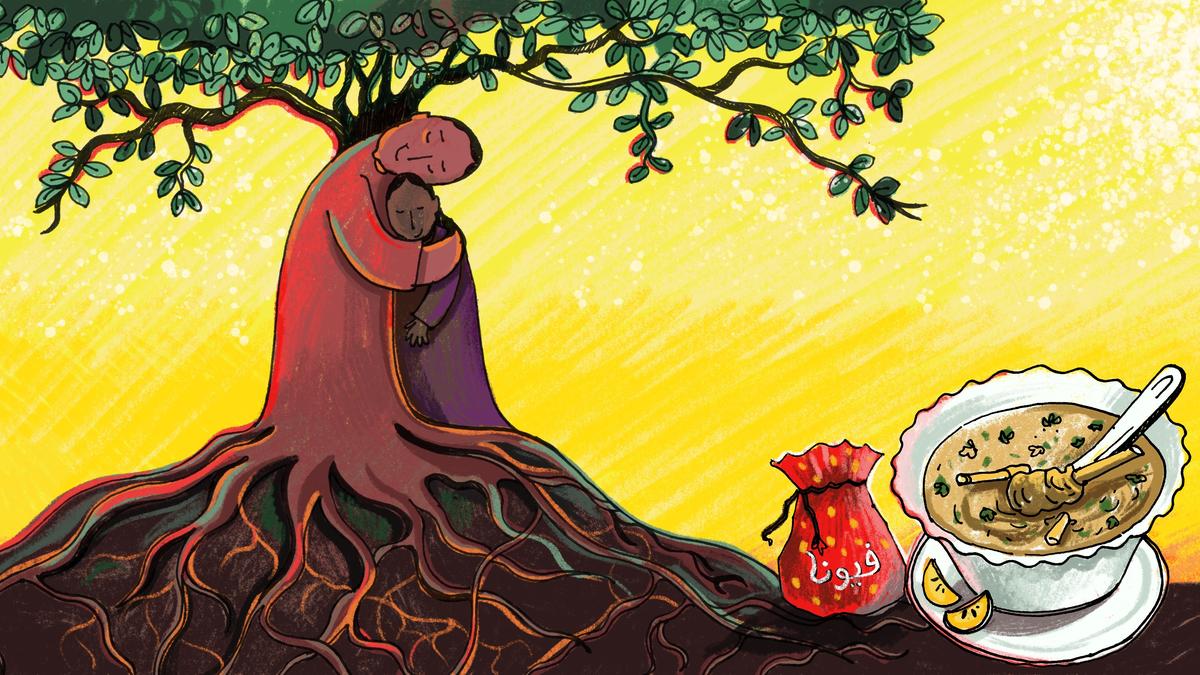
Not so long ago, on an oppressively hot and humid day in July, I walked into the cancer clinic. This was my second visit. On the first, I had come in after being referred by my physician because I had found something ‘suspicious’ in one of my breasts.I stepped into the cool air-conditioned room, the nausea and anxiety of uncertainty rising in me. The waiting room was painted the usual ‘hospital lemon’ and smelt of worry and unease. It was a small room and only a few chairs were occupied. I took a seat next to a lady.I sat scrolling through my phone as I waited for my name to be called. I had tried reading for a while to distract myself, but had given up after going over the first sentence again and again. I looked at a website for handbags. I had been admiring a beautiful handmade leather handbag for months now, but had always come up with reasons to not buy it. It came in two colours, tan and black, and had a shiny gold lock on the front, like a statement that whatever you placed inside would remain safe.I must have been fidgeting when the woman seated next to me said, ‘Definitely the tan one.’ She had thin tubes attached to her wrists. She was in a hospital gown but she didn’t look unwell.She said her name was Fiona. She asked me why I was there, ‘If it’s not too impertinent of me to ask.’ I explained, and asked her about why she was there.She replied, ‘The bastard’s everywhere,’ to which I must have reacted so visibly that she reached out to touch my arm and said, ‘Oh, don’t worry, I am alright. I don’t really feel anything as yet.’She seemed to register my hesitation of not knowing what to say, so she carried on speaking for which I was grateful.She wasn’t ‘old old,’ she said. Her children were all grown up, but she would have loved to watch them get married and have babies. ‘I was never the sentimental type,’ she said wistfully, ‘but I do wish I could have been around to see the grandchildren.’‘Is there nothing that can be done?’ I asked.‘Well, they say removing them might buy me a bit more time,’ she replied, pointing to her chest, ‘but during that time I might just be chained to my bed. I don’t know if it’s worth it. I think I might just prefer to go in my own bed at home, surrounded by people I know and love. I don’t see the point of inflicting more misery on myself.’She was about to say something when the nurse came in and called her name. She gathered her stuff and, before disappearing into the corridor, she whispered, ‘If you ever buy the tan one, name it in my honour. Call it ‘the Fiona’.’After a short time, my name was called and I was taken in. As I lay on the table, thoughts flew in from every direction. I thought of Fiona and her hopes. I thought about my children and their smiling faces. I thought about how they ran to me in happiness and in sorrow. I remembered being a child and running to Phuphee in the same way and I wept quietly, without moving, so as not to disturb the precise site from where the biopsy had to be taken.I prayed, silently, while a long needle tore a tiny bit of my flesh. I prayed that I made my children feel just as safe as Phuphee had made me feel and that they felt just as loved. One of the nurses who was holding my hand, dabbed a tissue against my cheek and asked if I was in pain.When Phuphee and a bag named Fiona offered hope | Video Credit: The Hindu I said I wasn’t really in any pain but that something was digging into my ribcage.She replied it was probably because of the way the table was designed, to which the doctor who was doing the biopsy added, ‘Yes, that’s because it was designed by a man,’ in a grumpy tone. Her remark was met with peals of laughter and it felt, for a split second, more like a soiree and not a medical procedure.Later at home as I was resting, Phuphee rang.‘Myoan shoosh [my lungs], are you alright? I am just making some paatchi rass [soup made from slow cooking lambs’ feet] for you. I will bring it over soon.’ I told her I was okay and then I told her about Fiona.Waenyij ches derr [her liver is strong — a reference for someone who has courage],’ she replied and told me to get some rest.Later that evening as Phuphee spooned the soup into my mouth, I told her I was afraid of what the results would bring. She put her hand in her pheran pocket and took out a small red pouch.‘Here, I made this for you. It is from a suit from my wardhan [wedding trousseau].’It was made from deep red silk, the sheen still present though time had tried its best. She had sewn little flowers on it in delicate white thread. It smelt faintly of cardamoms and time. On the inside, she had hand embroidered the name ‘Fiona’, in Urdu.‘‘Myoan jaan [my life], I know you are terrified,’ she whispered as she moved closer to me.I leaned into her body, my frame now bigger than hers, but she held her ground and me in place as she had always done. I wept, with great big heaving sobs as I stood on the precipice of this mountain not knowing what tomorrow would bring, not even sure how many tomorrows were left, but absolutely certain of her love and her steadfastness in the face of everything life had thrown at me.‘Bae ches yeti, bae ches yeti, bae ches yeti [I am here, I am here, I am here],’ she whispered, as she held me, chanting the words like a prayer, over and over again, until I fell asleep.Saba Mahjoor, a Kashmiri living in England, spends her scant free time contemplating life’s vagaries.
Column by Saba Mahjoor | The women who held me
Full Article
Original Source
Read the full article at Thehindu →KhanList aggregates and links to publicly available news content. We do not host full articles from third-party sources. Always verify important information with original sources.