
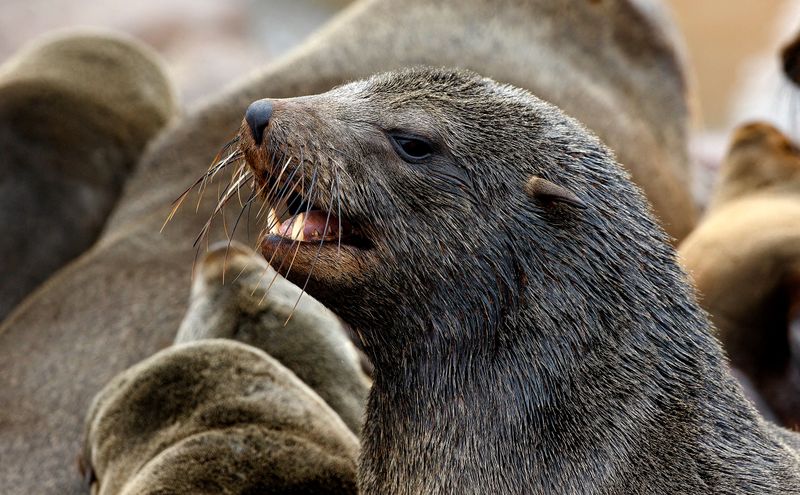
South African researchers have warned about a likely increase in the number of people and dogs being attacked by rabid Cape fur seals, and the possible spread of this fatal disease to other marine mammal species as far south as Antarctica.Already, at least 176 people have been bitten by Cape fur seals along the South African coastline. But, considering that this number only includes local attacks recorded by the end of 2025, the true figure is likely to have risen significantly over the past eight months – and it also excludes other likely attacks on people in neighbouring Namibia and Angola.“As the virus spreads, such interactions are likely to increase, threatening public health and safety, as well as marine tourism and recreation,” seal researcher Dr Tess Gridley and colleagues say in a recent journal pre-print report published by Research Square.A panel of images showing examples of some of the injuries to swimmers’ calf muscles, legs and hands inflicted by rabid seals, as well damage to a wetsuit and a surfboard off the coast of Cape Town. (Images: Gridley et al / Research Square) The World Organisation for Animal Health (WOAH) has also cautioned other countries to be on high alert for signs of rabies spreading into other marine mammals.It says the sustained rabies transmission in Cape fur seals marks an “unprecedented development in the ecology of rabies” and there is a risk that the virus could spread to other regions of the world, including Antarctica, remote mid-oceanic islands and even to other continentsWOAH is a Paris-based intergovernmental organisation which helps to coordinate the global response to animal health emergencies and the prevention of zoonotic diseases (infectious diseases such as Ebola and Covid-19 that can spread from animals to people).In their research article, Gridley and 22 co-researchers say the detection of this disease in Cape fur seals is the first such outbreak of rabies in a free-ranging marine mammal species.But they say widespread rabies control via vaccination is currently “neither practical nor feasible” – though it may become necessary in future if it spreads to more vulnerable marine species.Dr Lesley van Helden, senior state veterinarian in the Western Cape Department of Agriculture, told Daly Maverick that mass vaccination of seals remains impractical with current technology because there is no method of delivery that can realistically be used to vaccinate up to two million wild Cape fur seals.Though baited vaccination has proved successful in controlling rabies in some wildlife species on land, this is not suitable for free-ranging seals, which don’t chew their prey or scavenge ashore.She notes that there are somewhere between 1.5 and two million Cape fur seals in roughly 40 breeding colonies that stretch nearly 3,000km from Algoa Bay in the south, up through Namibia and into southern Angola.Van Helden suggested that the ecosystem consequences of a spillover to other marine mammal species could range from “insignificant to devastating”.A mass of Cape fur seals at the Cape Cross breeding colony in Namibia. (Photo: Michel & Christine Denis-Huot / Hemis via AFP) “Rabies does not usually cause extinctions of species, but can contribute if an endangered species is under pressure from other factors.”Researchers, personnel and tourists in remote regions could also be vulnerable to infection as well as severe injuries from rabid animals, especially where access to immediate medical treatment is limited.Dr Ilse Jenkinson, a co-author and veterinarian at the Two Oceans Aquarium, says the species most at risk from spillover include southern elephant seals, Subantarctic and Antarctic fur seals, crabeater seals and leopard seals.Though most of these species are rarely seen near Cape fur seal colonies, southern elephant seals are an important exception, since they frequently haul out at Cape fur seal colonies and may remain there for several days or even weeks, particularly during the moulting season.“Southern elephant seals are large, confident animals and are unlikely to retreat when threatened by a Cape fur seal. This raises concern that they could become a pathway for rabies transmission from Cape fur seals to other seal populations in the Southern Ocean. As a precautionary measure, a programme has therefore been established to vaccinate vagrant southern elephant seals against rabies.”Marion Island researcher Tammy Eggeling is dwarfed by a towering southern elephant seal bull, one of the species at potential risk if the rabies outbreak spreads to other seal species. Up to 5m long, heavier than a rhino and with a mouthful of 30 sharp teeth, these ‘beachmaster’ bulls can weigh up to four tonnes, while adult females are about 900kg. (Photo: Christopher Jones) “Strategic vaccination” was also under way for semi-habituated seals around the Cape Town harbours, as well as for any vagrant seals deemed to be in good health (especially elephant seals) that come ashore along the South African coastline.The increased risk for human transmission is also a significant worry, if more bathers and their dogs are attacked.While vaccination has led to the near-total elimination of rabies across North America and Europe, roughly 60,000 people die from rabies every year in Africa and Asia after being bitten by dogs.Closer to home, 19 people have died from rabies in the eThekwini (Durban) area over the past six years, mostly south of the city. The latest two victims died last month in the Ethenjane area after being bitten by the same rabid dog.In the Western Cape, reports of seal-borne rabies began to emerge in late 2021, but so far none of the at least 176 seal bite victims has died. While most victims were treated after exposure, it also postulated that because they were bitten in seawater, and often through a wetsuit, which may have significantly reduced the rabies viral load transferred.A map of the southern and western Cape coast showing the number of furs seals that tested positive for rabies in relation to those sampled at various locations between 2021 and 2025. (Map: Gridley et al / Research Square) Gridley and her colleagues say the first reports of hyperactive and aggressive seals emerged in late 2021, but the first case of infection was only positively confirmed though laboratory analysis is early 2024.Things came to a head after two high-profile attacks in Cape Town in May 2024.Early on 26 May there was a prolonged in-water attack on surfers by a juvenile seal at Muizenberg beach. The seal was acting erratically and aggressively, biting several surfboards and injuring swimmers. Two days later there were reports of a rabid dog in Cape Town, the first case of a domestic dog in 18 months in the Western Cape.Thereafter, there was confirmation of several more rabid seals in the Western Cape, Northern Cape and Namibia and a strongly suspected case at Jeffreys Bay in the Eastern Cape (but tissue from this animal was not tested for confirmation).The Human ImpactAt least 84 human attacks involved people engaged in commercial tourism “swim-with-seals” tours, although beach walkers, swimmers, surfers and kayakers were also attacked.In one case, the victim needed plastic surgery and skin grafts after suffering more than 20 puncture wounds.The researchers say the longer-lasting psychological effects of seal attacks include insomnia and recurrent flashbacks of the incident. The psychological effects of potentially being infected with an incurable, fatal disease could also be long-lasting and costly. “Swimmers are at an additional risk of bleeding out or drowning from in-water attacks and small-vessel users may suffer from exposure/hypothermia in cases where vessels/rafts are severely damaged and set adrift.”Rabies is one of the oldest known infectious diseases. It is now endemic in Cape fur seals. Adult seals forage for food over long distances, sometimes travelling up to 140km from their colonies. (Photo: Michel & Christine Denis-Huot / Hemis via AFP) According to eyewitness accounts and video footage, most rabid seals show signs of disorientation, thrashing their necks and heads sideways, muscle twitches in the hindquarters and muscle weakness, eventually progressing to coma and death.Both in water and on land, rabid seals would aggressively approach and indiscriminately bite inanimate objects, such as surfboards, kayaks, boats and debris, along with other seals, people, birds and dogs.At sea they displayed abnormal swimming behaviour such as extended circling, haphazard leaping or fighting with other seals.“Rabid seals were commonly encountered at the high tide mark but were reluctant to re-enter the water once ashore. When disturbed they would charge towards, rather than flee away from, the trigger (often a person or dog), in some cases barking/vocalising repeatedly.” DM
COASTAL OUTBREAK: Rabid seals bite at least 176 people as fatal disease spreads, threatening other species
Full Article
Original Source
Read the full article at Dailymaverick →KhanList aggregates and links to publicly available news content. We do not host full articles from third-party sources. Always verify important information with original sources.