
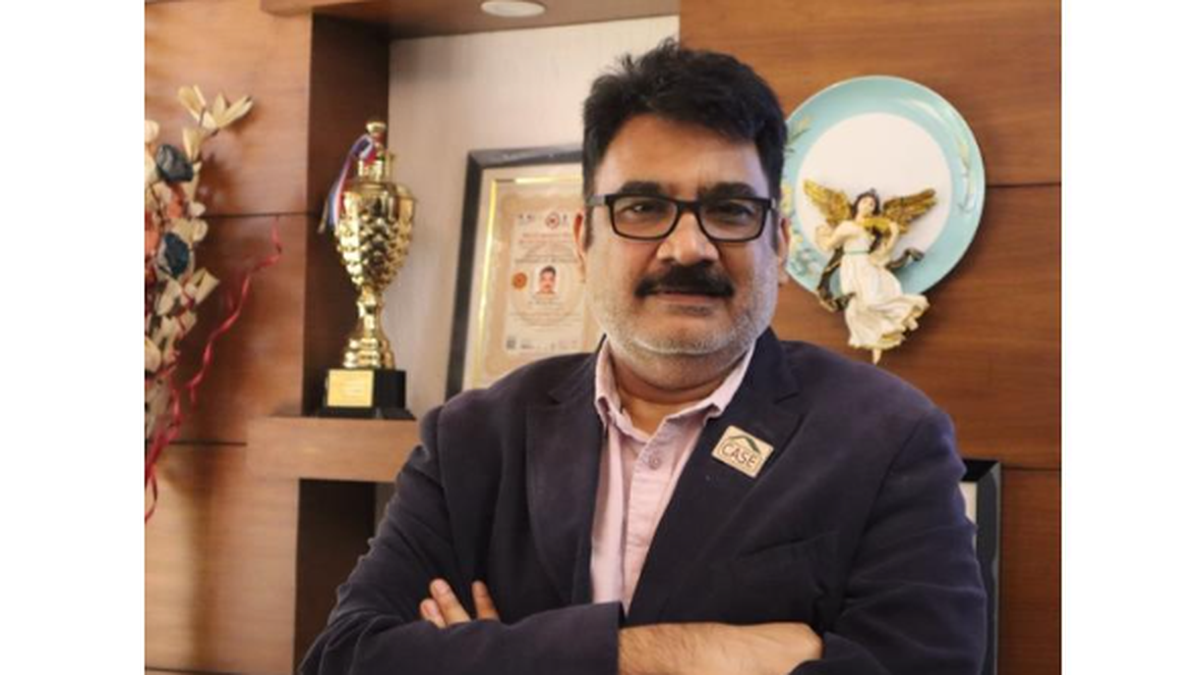
Industry veteran welcomes the Rs. 37,500-crore scheme and its strong first-round response. He outlines a five-point roadmap to reach the 100 MT target faster by scaling proven indigenous thermal gasification alongside coal-to-chemicals.Faridabad, Haryana, New Delhi, Delhi, India – Business Wire IndiaDr Roger Kumar, Founder and Managing Director of CASE Group, has welcomed the Government of India’s growing momentum on coal gasification. He calls the Rs. 37,500-crore Scheme for Promotion of Surface Coal/Lignite Gasification Projects one of the most significant steps yet towards Atmanirbhar Bharat in energy.The Union Cabinet approved the scheme on 13 May 2026. It aims to support projects gasifying around 75 million tonnes of coal and lignite, advancing the National Coal Gasification Mission’s target of 100 million tonnes by 2030. The first application round closed on 7 September with seven proposals from Adani Enterprises, NTPC, TalcherFertilisers, Gallantt Ispat and Shyam Sel & Power, covering urea, synthetic natural gas, syngas and DRI. The Ministry of Coal opened the second round on 8 September.The scheme offers incentives of up to 20% of plant and machinery cost through competitive bidding. It extends coal linkage tenure to up to 30 years for syngas production. It is technology-agnostic while encouraging indigenous technologies. The government expects it to catalyse Rs. 2.5–3 lakh crore of investment across about 25 projects and create nearly 50,000 jobs. It builds on the Rs. 8,500-crore scheme of January 2024, under which eight gasification projects are already being implemented.“The Government has shown genuine vision and consistency on coal gasification,” said Dr Roger Kumar. “India spent roughly Rs. 2.77 lakh crore in 2024-25 importing LNG, urea, ammonia and methanol. Converting our own coal into these products is a matter of economic security. The structure of this scheme gives industry exactly the policy certainty it needs: long-tenure linkages, rolling application rounds and support for indigenous technology. The response in the very first round shows that confidence is building.”Engineered for Indian coalDr Kumar highlighted NITI Aayog’s September 2025 workshop on gasification of high-ash Indian coal as a turning point. The workshop noted that Indian coal typically carries 25–45% ash. It concluded that past difficulties stemmed from a mismatch between technology and feedstock, not from the coal itself.“NITI Aayog has made an important point with great clarity. India’s gasification journey must be engineered around the coal India actually has,” said Dr Kumar. “That is where our domestic engineering base becomes a national asset.”Two tracks, one national goalDr Kumar explained that coal gasification in India runs on two complementary tracks. The scheme’s focus, coal-to-chemicals, uses oxygen-blown gasifiers to produce controlled syngas for urea, methanol, ammonia and synthetic natural gas. This is capital-intensive, long-horizon nation-building work.Alongside it runs coal-to-thermal gasification. Here, air and steam convert coal into producer gas, which is burnt directly for industrial heat in furnaces, kilns, dryers and boilers across steel, paper, textiles, ceramics, chemicals and food processing.“Thermal gasification is the track that can deliver results immediately,” said Dr Kumar. “By industry estimates, Indian plants have gasified on the order of 100 million tonnes of coal for process heat over the past three decades. That experience is ready to be scaled. If we give it a clear place within the national mission, the 100 MT goal becomes not just achievable but achievable sooner.”Proof on the groundA dedicated thermal gasification track. Recognise coal-to-thermal gasification within the National Coal Gasification Mission, complementing the chemicals-focused scheme. This would let industrial heat users count towards the 100 MT goal. Cluster-based retrofit programmes. Target industrial clusters still dependent on furnace oil, diesel or direct coal firing, so that MSMEs can convert collectively with shared coal handling and ash management. National performance standards for high-ash gasifiers. Common benchmarks for efficiency, emissions and effluent would give lenders and buyers confidence and reward proven indigenous designs. Easier coal access and finance for smaller users. Extend the spirit of long-term linkages to mid-sized thermal users, backed by concessional credit for oil-to-gas conversions. An industry–academia–government knowledge platform. Bring together research institutions, PSUs and technology providers to consolidate decades of field data on Indian coal into a shared national knowledge base. Dr Roger Kumar’s five-point roadmap to accelerate the mission“With a more organised, two-track approach, India can move faster, save more foreign exchange and show the world how to use high-ash coal responsibly. Coal-to-chemicals will build India’s future feedstock base, while thermal gasification delivers savings in factories today. Industry stands ready to partner in that mission.”About CASE GroupEstablished in 1993 and headquartered in Faridabad, Haryana, CASE Group is an Indian engineering company specialising in coal gasification technologies, industrial cooling towers, air pollution control, water treatment and industrial energy-efficiency solutions. Its gasifier systems are designed for high-ash Indian coal and support national priorities including Make in India and Atmanirbhar Bharat.About Dr Roger KumarDr Roger Kumar is the Founder and Managing Director of CASE Group and a Fellow of the Institution of Engineers (India). He has championed indigenous coal gasification as a pathway to industrial energy security for over three decades. “This is a company press release that is not part of editorial content. No journalist of The Hindu was involved in the publication of this release.”
Coal Gasification Push Marks a Defining Moment for India’s Energy Self-Reliance: Dr Roger Kumar, CASE Group
Full Article
Original Source
Read the full article at Thehindu →KhanList aggregates and links to publicly available news content. We do not host full articles from third-party sources. Always verify important information with original sources.