
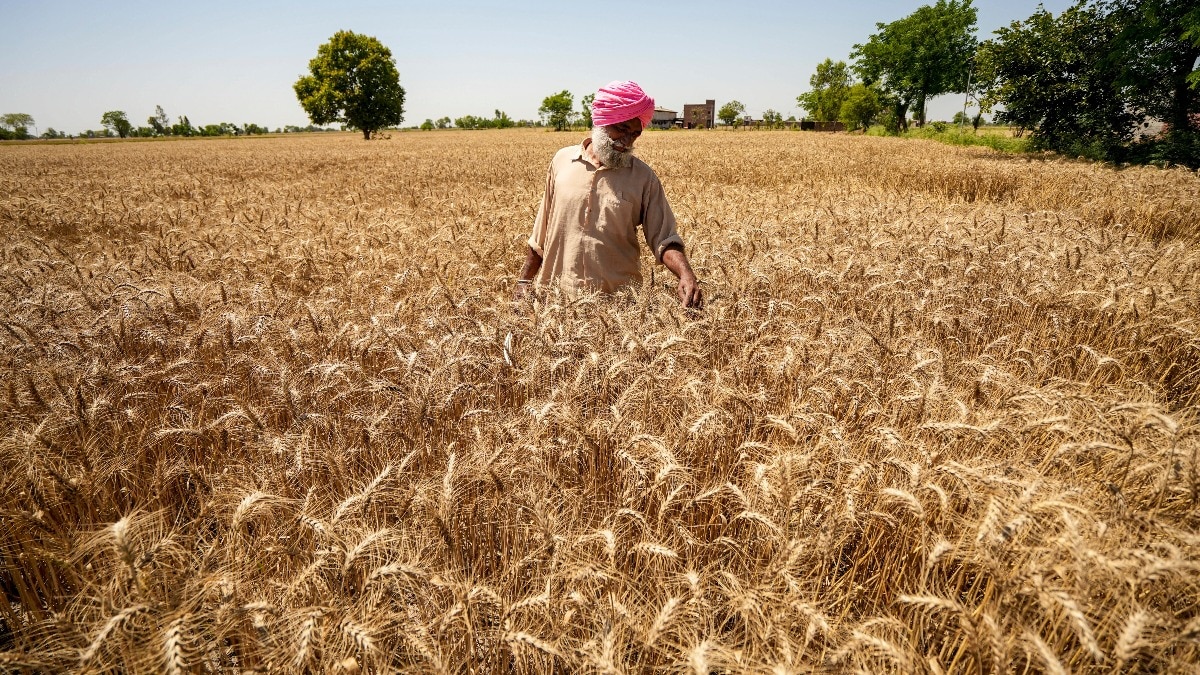
An item omnipresent in Indian kitchens and those across the world is in danger from a warming planet and rising levels of CO2 humans are spewing into the atmosphere.An elderly farmer checks the crops before harvesting season begins. (Photo: PTI)New Delhi,Oct 17, 2026 16:49 ISTClimate change could be changing the proteins in a staple food found in kitchens around the world.As carbon dioxide (CO2) levels rise, the proteins in this everyday food are changing in ways that could affect the quality of baked goods and may have implications for people with certain food-related disorders.A new study led by the Leibniz Institute for Food Systems Biology at the Technical University of Munich found that higher carbon dioxide levels changed the types and amounts of proteins found in wheat.Wheat is widely eaten around the world, including in India, where it is a key ingredient in everyday foods such as roti, chapati and bread. Ripe wheat crops during the harvest season in a field, in Amritsar. (Photo: PTI) HOW IS RISING CO2 CHANGING WHEAT?Carbon dioxide levels in the atmosphere rose from around 340 parts per million in 1980 to about 425 parts per million in 2024. Depending on how society develops, levels could reach around 600 parts per million by 2050, the researchers said.To study the effects, the team grew 10 varieties of winter wheat under field conditions. Some plants were exposed to higher carbon dioxide levels of 546 parts per million, while others grew under normal conditions. After harvesting the grain, researchers examined its proteins. They found that higher carbon dioxide levels increased some proteins that help protect wheat against pests, while reducing gluten proteins and other proteins found in the grain.Gluten is the group of proteins that helps dough stretch and hold together. It is important for making bread and other baked goods.The changes varied between wheat varieties. A farmer carries a bundle of wheat in a field, in Prayagraj. (Photo: PTI) “However, the extent of these changes depended largely on the specific wheat cultivar,” said Sabrina Geisslitz, the study's principal investigator. A cultivar is a particular variety of a crop.“Our results also showed that the reduced concentration of gluten proteins was associated with poorer baking quality,” she added.COULD THIS AFFECT HUMAN HEALTH?The researchers also found changes in certain protein fragments linked to coeliac disease, an illness in which the body's immune system reacts to gluten and damages the small intestine.However, the study does not show that rising carbon dioxide levels will cause more people to develop the condition.“The observed changes in amylase/trypsin-inhibitors and certain celiac disease-active peptides could also be relevant in the long term for wheat-related diseases,” said Katharina Scherf, who leads the institute's Food Biopolymer Chemistry research group. An image of a loaf of bread on a rustic surface with scattered wheat grains. (Photo: Pexels) “However, further studies are needed to clarify the actual biological and immunological significance of these differences,” she added.The researchers say wheat breeding should focus on more than producing larger harvests.Developing varieties that maintain good baking quality as carbon dioxide levels rise, while containing fewer proteins that some people may struggle to tolerate, could help farmers adapt to climate change.- Ends
Climate change is stealing the protein from this staple in your kitchen
Full Article
Original Source
Read the full article at Indiatoday →KhanList aggregates and links to publicly available news content. We do not host full articles from third-party sources. Always verify important information with original sources.