
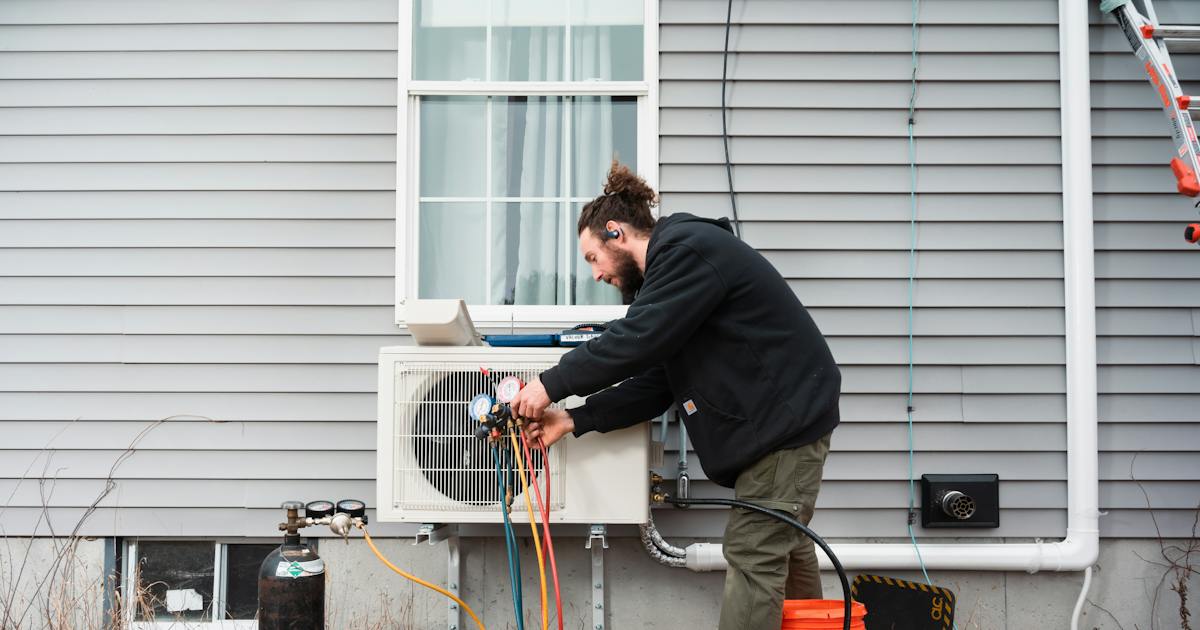
In Maine, as everywhere else in the country, one of this year’s biggest electoral issues is the cost of energy. The price of electricity is rising at the third-highest rate in the nation, and heating oil—which Maine relies on more than any other state—now costs a record $6. So it’s no surprise that the state’s candidates for governor were asked about this issue in a debate last week. But Democrats should take note of how their nominee responded.Hannah Pingree, a former speaker of the Maine House of Representatives, rightly attributed these rising costs in part to the global energy crisis caused by President Trump’s war against Iran. “We need to end the war,” she said. “That might bring relief.” She also called on the state and federal government to provide more funds, especially to help low-income families. The usual solutions. But then she went one step further.“I do believe deeply in weatherization and efficiency programs,” she said. Pingree formerly co-chaired the Maine Climate Council, an advisory group that created the state’s ambitious climate plan, and she noted that she helped create Maine’s quasi-state energy-efficiency agency, which Republican nominee Bobby Charles “wants to get rid of.” She added, “I believe investing in efficiency, continuing to install heat pumps, which help people get off foreign oil ... will long term save us money and make us more energy independent.”The magic words here, believe it or not, are “heat pumps,” which Mainers have adopted at a rapid clip thanks in part to Pingree’s championing. And notably, in her answer, she did not utter two other words that have bedeviled the Democrats: climate change. Since Trump’s return to the White House, a debate has roiled the Democratic Party about “climate hushing”—the accusation that politicians are deliberately not talking about climate change. This is a real phenomenon, and it’s driven by the belief, sowed in part by the consultant class, that the subject alienates voters. But as the Maine race shows, “climate change” is on midterm ballots all over the country—even if those exact words aren’t being spoken—because of its connection to voters’ wallets. Rising gas and electricity prices are top of mind for many voters—second only to the affordability of health care, according to a Kaiser Family Foundation poll published Tuesday. That’s a huge problem for the Republicans, not merely because they’ve been in power amid the price spike but because their president is directly responsible for it. In addition to Trump’s war with Iran, his war on climate policy has put extra pressure on the global oil supply by taking so many alternatives off the table. Energy Innovation, a California think tank, released data last week showing that policy changes since he took office—like cancelling wind, solar, and other clean energy projects—would raise household energy costs by thousands of dollars through 2040.Trump is also perhaps the country’s most prominent supporter of one the biggest villains in this year’s elections: data centers, which are rapidly proliferating across the country to support the AI boom—and consequently increasing communities’ electricity bills. These energy-hogging monstrosities, many of which are powered by natural gas, also befoul the local environment and, yes, contribute to climate change. Voters in Maine, Michigan, Colorado, Arizona, and beyond might not be opposing them for that reason—or at least not only for that reason—but there’s no doubting the net benefit to the planet of that opposition. Welcome to the new political landscape, in which “climate” and “cost of living” are no longer politically incompatible priorities—rather, a productively messy coupling. As utility bills rise, the cost at the pump gets prohibitive, and rural America is invaded by data centers, it’s clear that environmental and economic issues are so intertwined that it no longer makes sense to talk about them as separate “issues.” The shift counters conventional wisdom: Political consultants and pundits have in recent years warned that climate was divisive and that Democrats should instead stick to “affordability.” David Schor, an influential pollster, said in 2021, “when you talk about climate change, you sound like a weird, very liberal white person.” Democrats weren’t talking that much about climate change anyway, but largely heeded this advice, even when making climate-forward policy. President Biden hardly bragged about his considerable investments in renewable energy, the whole package of which was branded as the “Inflation Reduction Act” to advertise (somewhat misleadingly) an economic impact.Trump’s 2024 victory only made matters worse, apparently convincing even more elected Democrats that talking about climate change is at best ineffective, and at worst damaging. The warnings from consultants and pundits intensified. The Searchlight Institute, run by Adam Jentleson, Senator John Fetterman’s former chief of staff, released a report a year ago titled “The First Rule About Solving Climate Change.” That rule is, “Don’t Say Climate Change,” because while “battleground voters overwhelmingly agree climate change is a problem, addressing it is not a priority for them.” Socialist geographer Matt Huber, writing in The New York Times in May, suggested that Democrats emulate candidates who avoid the subject to win back the working class: “The kinds of policies they support — for example, public investments in infrastructure like housing and electricity — will help address climate change, but there is little reason for politicians like them to focus on the issue anymore.”Many Democratic candidates, even some insurgents on the left, are finding their own path through this thicket. Michigan Senate candidate Abdul El-Sayed has gone on Fox News and flatly stated, “I’m not going to defend the Green New Deal.” But he has called for a moratorium on data centers, not just to protect ratepayers, but the environment, too. “Keep the data centers away from our Great Lakes,” he said recently. He’s perhaps avoiding “climate change” as a political issue, but he’s showing how we can’t silo the wellbeing of “nature” from our own. It’s all connected.New York Mayor Zohran Mamdani is perhaps the foremost example of a Democrat who’s threading this needle. He ran on an affordability platform last year before it became a buzzword among Democrats, and he doesn’t talk much about “climate” or the “environment”—but he has been working to expand bike lanes and make buses free, which will save New Yorkers money and reduce car emissions. The socialist mayor has a 60 percent approval rating, more popular by far than any other New York politician. It’s hard to argue with success. Still, drawing the connection between climate and affordability more explicitly—as some, but too few Democrats are doing—will help build an even bigger constituency for the policies that address both problems, and will sharpen the Democrats’ line of attack on the Republicans. And there are ample other opportunities to make these kinds of connections on the campaign trail. For instance, a new study by Food and Water Watch found that over the past decade household water costs have increased by 62 percent. Privatization, federal disinvestment in water systems, and climate change are all factors, the group said. The biggest increase—a staggering 177 percent—was in New Hampshire; take note, 2028 presidential primary hopefuls.Climate change is not a toxic subject for voters. It’s just not a top priority: A recent Environmental Voter Project poll of likely voters in eight Senate battleground states found that just 23 percent of Democrats and 19 percent of independents consider “climate change and pollution” to be a top-three issue. However, the same poll also found that voters are more likely to support candidates who want to transition away from fossil fuels, and that “they wanted politicians to spend more time talking about climate change and pollution (59%), rather than less (17%).” In other words, voters themselves are coming out against climate hushing.
Climate Change Is on the Ballot—Even If Dems Aren’t Saying Those Words
Full Article
Original Source
Read the full article at Newrepublic →KhanList aggregates and links to publicly available news content. We do not host full articles from third-party sources. Always verify important information with original sources.