
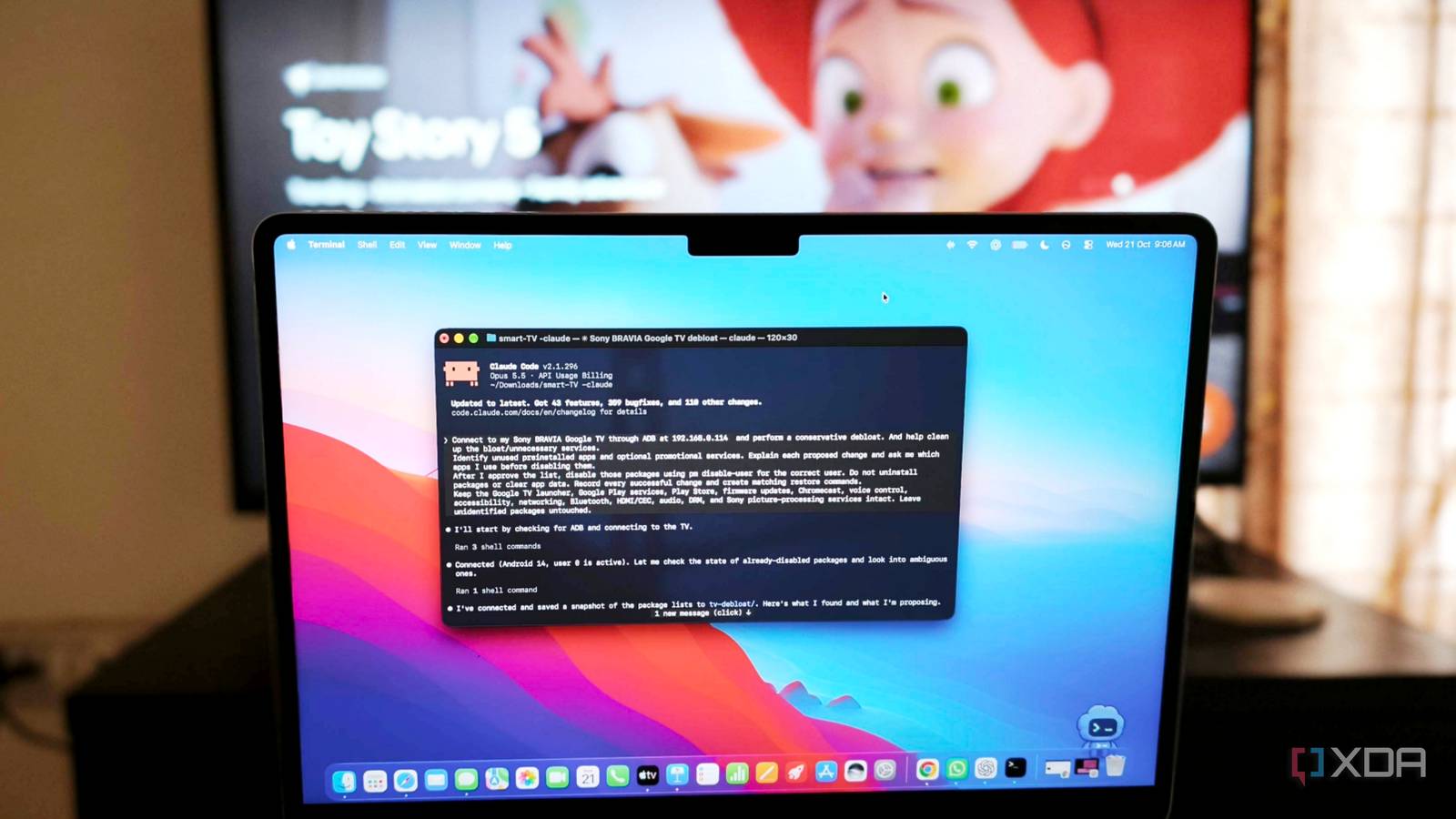
Published Nov 14, 2026, 7:30 AM EST Anurag is an experienced journalist and author who’s been covering tech for the past 5 years, with a focus on Windows, Android, and Apple. He’s written for sites like Android Police, Neowin, Dexerto, and MakeTechEasier. Anurag’s always pumped about tech and loves getting his hands on the latest gadgets. When he's not procrastinating, you’ll probably find him catching the newest movies in theaters or scrolling through Twitter from his bed. I've been using Claude Code for all kinds of projects, but one of its most interesting applications has been working with hardware. A few months ago, I used it to build a custom ESP32 sensor for my smart home, something I wouldn't have been able to program myself. Claude Code helped me figure out the wiring, write the firmware configuration, and get everything working with Home Assistant. And I'm certainly not the only one experimenting with it this way. People are using coding agents to program microcontrollers, troubleshoot hardware, and even develop drivers for devices that manufacturers have never properly supported. It's particularly interesting because hardware development has traditionally required a fair bit of specialized knowledge. With tools like Claude Code making these projects more accessible, I think Linux hardware support could be one of the biggest beneficiaries. Claude Code is making hardware projects more accessible You don't need to know everything One of the biggest challenges with hardware projects is that knowing what you want to build doesn't necessarily mean you know how to build it. When I started experimenting with ESP32 boards, I understood what the sensors were supposed to do, but figuring out which GPIO pins to use, how different components communicate, and how to configure everything in ESPHome was another matter entirely. Claude Code helped me work through those problems, and I eventually had a working multi-sensor device feeding data into Home Assistant. People are taking this much further. I've come across projects where developers have used Claude Code to turn inexpensive ESP32 boards into touchscreen music controllers, wireless network monitors, and custom notification displays. Others are using it to develop firmware, design circuit boards, and build companion applications for their hardware. One developer even used it to create a digital hourglass with an ESP32, a custom PCB containing 211 LEDs, and a companion iPhone app. There are also tools specifically designed to make this process easier. For example, an open-source Claude Code skill for ESP32 development can identify connected boards, compile Arduino sketches, flash firmware, and monitor serial output directly from the terminal. It’s also making reverse engineering easier Figuring out how devices actually work Building your own hardware is one thing, but getting an existing device to do something its manufacturer never intended is a different challenge altogether. Many devices communicate through proprietary protocols, and figuring out how those protocols work usually involves analyzing firmware, inspecting network traffic, or reverse engineering the manufacturer's software. One interesting example comes from a developer who wanted better Home Assistant integration for his Bluetti EP760 home battery inverter. He used Claude Code to analyze the manufacturer's Android app, understand its cloud APIs, and reverse engineer its Bluetooth communication. He eventually built a custom implementation in Rust that could communicate with the inverter locally and integrate it with Home Assistant through MQTT. Another developer used Claude Code to reverse engineer the communication protocol of the original Ray-Ban Stories smart glasses. He built an alternative Android app that could access photos, download videos, and check the glasses' battery and storage without relying on Meta's official app during normal use. This is very good news for us consumers because, for ages, brands have been locking us behind proprietary software, even though the hardware is perfectly capable of doing what we need it to do. Another good example is the recent trend of people using Claude Code to clean up their TVs. This has been possible for decades using the traditional ADB method, but Claude Code has made it more accessible to people who had no idea they could do it in the first place. Linux hardware support could be the next big breakthrough From Windows-only drivers to working Linux alternatives Credit: Wikimedia Commons / Xcion One area where I think Claude Code could make a particularly big difference is Linux hardware compatibility. Take the experience of Christian Schaller, who purchased a Plustek OpticFilm 8200i scanner after finding that it supported Linux. Unfortunately, the manufacturer had changed the chipset in newer units, and the existing Linux driver no longer worked. He spent months trying to develop a compatible driver before eventually giving up. He later revisited the project with Claude Code, but this time with a different approach. He set up a Windows virtual machine running the manufacturer's official driver and captured the USB communication between the computer and scanner. Claude Code could then compare those captures with the behavior of his experimental Linux driver, identify differences, and help fix them. Within a few hours, he had his first recognizable scan on Linux. A few days later, he had a nearly complete driver with infrared scanning support. He also applied a similar approach to fixing the webcam on his ThinkPad X1 Carbon Gen 14, which produced unusually dark images with incorrect colors under Linux. By examining the Windows driver configuration and the existing Linux implementation, Claude Code helped identify several issues in the kernel driver and libcamera. He had patches ready for review by the end of the day. Interestingly, Schaller discovered that another developer had independently added support for his scanner to SANE in September 2026. His own driver remained a separate implementation, but he has since released an open-source project called hw-harness to help others reproduce his approach. Getting these experimental drivers merged into Linux is another challenge, since they still need proper testing, code review, and ongoing maintenance. But if coding agents can help developers get through the initial reverse-engineering work, we could eventually see better Linux support for devices that manufacturers have largely ignored. There's a lot more to explore I'm particularly excited to see where this goes next. There are so many old gadgets and abandoned devices lying around that could still be useful with the right software. I've already had a great experience experimenting with Claude Code on my own hardware projects, and I'm looking forward to trying something more ambitious next.
Claude Code is quietly becoming a hardware hacker's best helper, and Linux support is next
Full Article
Original Source
Read the full article at Xda-developers →KhanList aggregates and links to publicly available news content. We do not host full articles from third-party sources. Always verify important information with original sources.