
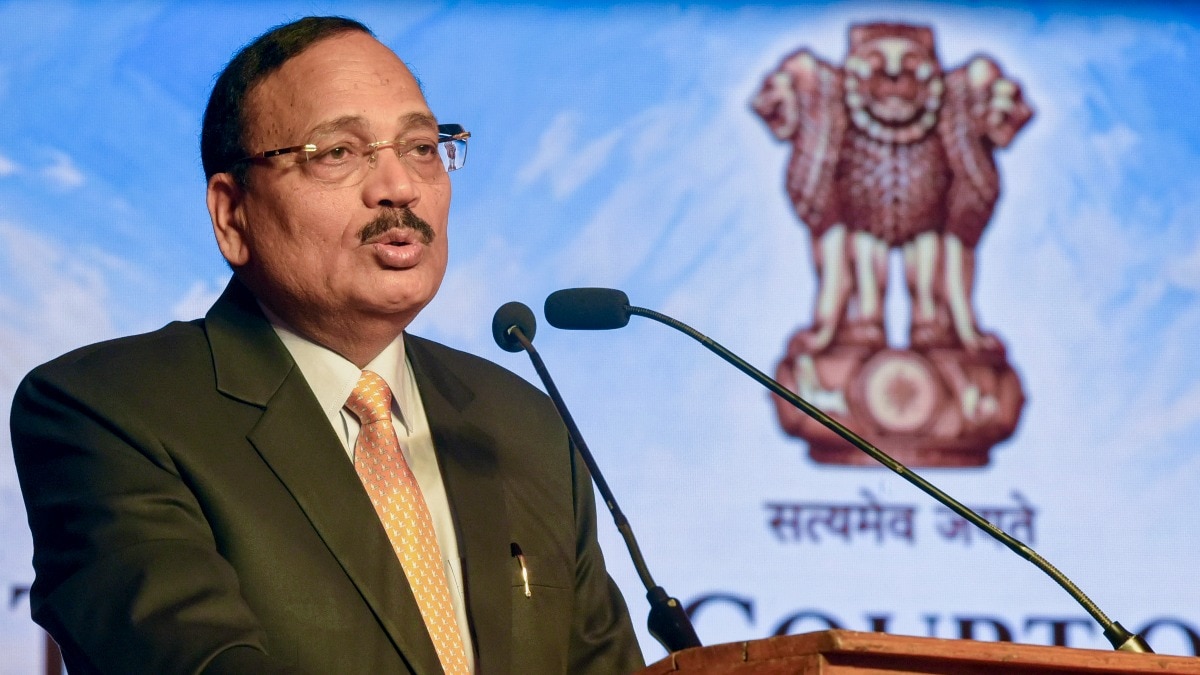
On the eve of Constitution Day, Chief Justice of India (CJI) Surya Kant said the judiciary must introspect and equip itself to deal with emerging challenges posed by artificial intelligence (AI), digital crimes and disputes in an increasingly interconnected world. He stressed that courts must find effective remedies to new questions while ensuring that justice is delivered in a timely and affordable manner.In an interview with DD News on Wednesday, CJI Kant clarified that his call for judicial introspection was not intended to question the judiciary's historic contribution or undermine its role. Rather, he said, the changing nature of crimes and people's expectations of their rights required courts to reassess their preparedness."The Indian judiciary has performed a historic role throughout its existence. But, with the passage of time, the nature of responsibilities has also changed and expanded. The nature of crimes has evolved. People's expectations regarding their rights have changed. The kinds of rights people spoke about 30 or 40 years ago are different from the rights they seek today," he said.Pointing to the growing influence of technology and AI, Surya Kant said geographical boundaries had become increasingly irrelevant, creating entirely new kinds of disputes. "Today, we are dealing with artificial intelligence, technological challenges, and global issues. Geographical boundaries have become increasingly irrelevant, giving rise to entirely different kinds of disputes," he said.DIGITAL ARRESTS, AI AMONG EMERGING CHALLENGESReferring to the rise in digital arrest scams, in which fraudsters impersonate law enforcement officials to dupe unsuspecting people, the CJI said courts must understand their powers in the context of changing times and explore innovative ways to tackle such crimes. Describing these frauds as a form of "digital dacoity", he said the judiciary must ensure that the rights of ordinary citizens are protected.CJI Kant emphasised that justice must not only be timely but affordable. The cost of seeking legal remedies should not become prohibitive for ordinary citizens, he said.He also said introspection meant examining how effectively the judiciary could respond to these developments and finding solutions within the constitutional framework.CONSTITUTION A LIVING DOCUMENT, SAYS CJICalling the Constitution a "living document", CJI Kant said courts must interpret its provisions in keeping with changing social, technological and global realities.A constitutional provision understood in one way four decades ago could require a wider interpretation today, depending on the circumstances before the court and the demands of the time. However, such interpretation must remain faithful to the Constitution's principles and framework."There are new questions before the courts every day, but you have to find an effective remedy within the language of the Constitution," he said.Explaining the limits on constitutional interpretation, the CJI referred to the basic structure doctrine. Citing the landmark Kesavananda Bharati judgment, he said Parliament could amend the Constitution but could not alter its fundamental framework.He identified the rule of law, democracy, fundamental rights and an independent judiciary among the elements of the basic structure.CJI Kant also said the Constitution clearly defines the responsibilities of the legislature, executive and judiciary, with all three ultimately working towards the welfare of citizens.While the legislature makes laws and the executive implements them, the judiciary examines whether laws conform to the Constitution and work in the interests of the people, he explained.Acknowledging that some judicial verdicts had been perceived as interference in the executive's domain, the CJI said the three organs were complementary and must function within their respective constitutional boundaries.CJI FOR DIALOGUE TO RESOLVE CENTRE-STATE DISPUTESOn India's federal structure, CJI Kant said the Centre and Parliament must respect the powers and independence of states and their legislatures. State governments, in turn, must respect the authority of Parliament.He said the Constitution provides mechanisms, including approaching the Supreme Court, to resolve differences between the Centre and states or among states. However, disputes should, as far as possible, be settled through dialogue rather than judicial intervention.Citing the GST Council as an example of cooperative engagement, the CJI suggested that an Inter-State Council could help resolve disputes involving water-sharing and state boundaries. Mediation, he added, was another option for settling such disagreements amicably and with mutual respect.'RIGHTS MUST GO HAND IN HAND WITH DUTIES'CJI Kant also underlined the need to balance citizens' fundamental rights with their constitutional duties.Since Independence, efforts have been made to educate people about their rights, he said, adding that awareness was essential for citizens to claim and protect them. However, he cautioned that exercising one's rights should not come at the cost of violating another person's rights."Unless people know their rights, they will not be able to ensure that they are provided their rights," he said.Emphasising the importance of fundamental duties, the CJI said citizens had a responsibility to respect and preserve the rights of others while asserting their own. "I cannot take away the rights of someone else for my own rights," he said.Speaking about the Preamble's commitment to justice, liberty, equality and fraternity, CJI Kant said these values required continuous effort to translate them into people's everyday lives. The four principles were interconnected: liberty could not exist without equality, while justice could not take deep root without fraternity.The CJI said the Constitution's greatest achievement was its ability to sustain democracy in a country as vast and diverse as India. Despite differences in language, religion, traditions and social experiences, it had united citizens through equal citizenship and a shared constitutional identity, he further said.- Ends(with inputs from PTI)
CJI Surya Kant says judiciary must introspect to tackle AI, digital-age challenges
Full Article
Original Source
Read the full article at Indiatoday →KhanList aggregates and links to publicly available news content. We do not host full articles from third-party sources. Always verify important information with original sources.