
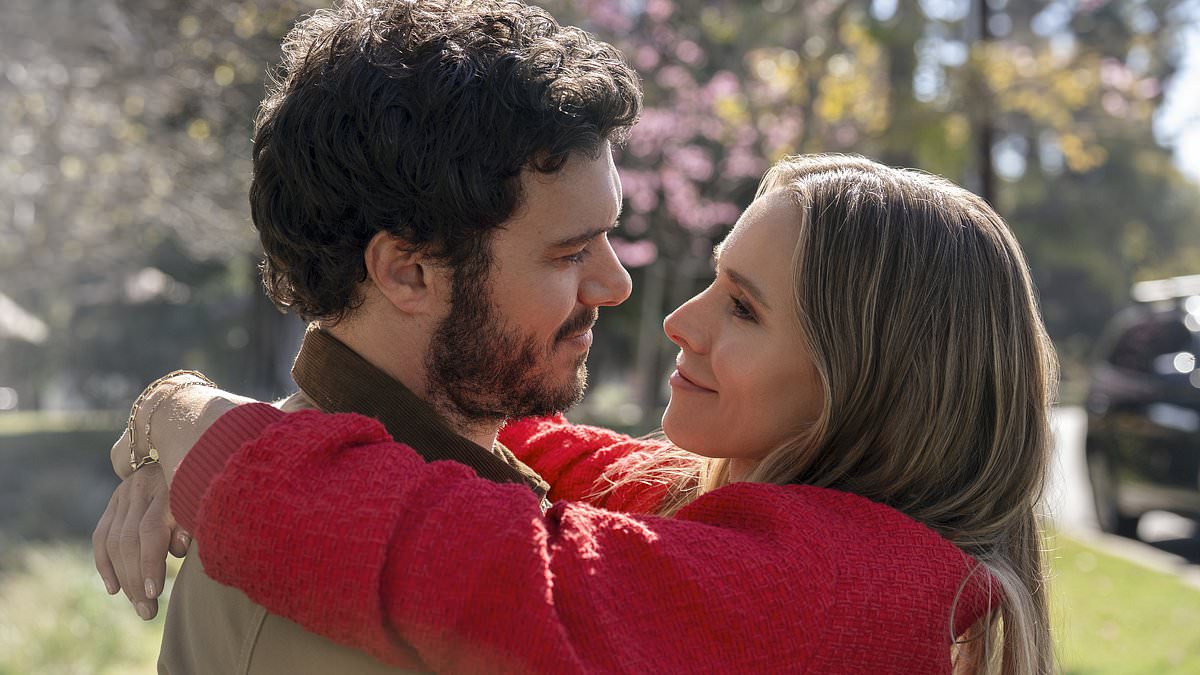
Are you a zombie? If you have a Netflix account that you barely watch, that's how the business analysts refer to you – 'subscription zombie'.Zombies are the undead of the TV audience. They pay their monthly fee for the back catalogue of shows that once were essential viewing: Stranger Things, Baby Reindeer and older classics such as The Crown or Squid Game.But as its content deteriorates into shallow shockumentaries, derivative dramas, true-crime-by-numbers and endlessly recycled comedy series from past decades, viewers have grown bored. Their enthusiasm for Netflix binges has flatlined. And no wonder. When I checked recently, the top ten UK chart revealed a schedule that's tepid at best.The Netflix show most watched by British viewers was a romcom called Nobody Wants This – a title that's begging for trouble. Now in its third season, it stars Kristen Bell as a sex podcaster and Adam Brody as the rabbi she falls in love with. The best word to describe its appeal is 'niche'.At No 2 was a reality show dressed up as a psychological study, The New Stanford Prison Experiment, which is based on a real-life study conducted by a Stanford University professor in 1971, takes 30 volunteers and puts them in jail, some as convicts and others as warders.I f you don't fancy that, in third place was Canadian sci-fi thriller Below, about a Canadian fisherman protecting his remote town from a sea monster.At No 6 was the wonderful BBC1 comedy Ghosts, with Charlotte Ritchie as a woman who inherits a decrepit country mansion and discovers she can see all its spooks.The show is a treasure – but it ended three years ago. Surely Netflix doesn't see itself as just another nostalgia channel for repeats of beloved sitcoms, like Gold, Dave and all the other rerun services. Of the original content in that top ten, the only show I thought even worth reviewing for the Daily Mail was the seventh-placed East Of Eden, an adaptation of John Steinbeck's novel, starring Florence Pugh as the malevolent Kathy. I gave it two stars and described it as 'highly flammable – timber houses, log barns and truckloads of wooden acting'. The Netflix show most watched by British viewers was a romcom called Nobody Wants This. It stars Kristen Bell as a sex podcaster and Adam Brody as the rabbi she falls in love withNetflix keeps a close watch on how often viewers log in and how much they watch. When subscribers start a series and give up, plaintive automated emails are despatched. Last week, I received one about an insipid costume drama, with the heading, 'Don't forget to finish My Brilliant Career' – to which I felt like replying: 'Why would I want to do that? It was dreadful.'The term 'subscription zombies' is not encouraged within Netflix. They talk about 'qualified play days' or QPDs, a measure of how many people pay for the service but don't bother watching. And the QPDs are on the rise.All this starkly explains why the number of minutes individual consumers spend every year watching Netflix products – a key media metric for gauging popularity – has increased by just 2 per cent per person in 2026.Netflix was supposed to herald an entertainment revolution. But 2 per cent a year is not a revolution: it's a plateau.And the stock markets know it. In the past year, Netflix's share price has fallen by almost 30 per cent, down from $93.76 on January 1 to $65.85 by the end of last week. And the price has halved since its high-water mark of $134 in June last year. That's equivalent to a loss of $300billion (£225billion) in market value.Incredibly, Ted Sarandos, the co-chief executive and a man regarded as one of the most flamboyant egos in the industry, doesn't seem to recognise the problem. 'Our business and our business flywheel are working. There is no need for a fundamental shift in the strategy,' he insisted, as the gloomy figures for the third quarter were revealed this month.'We do need better execution in the US,' he added. This was taken to mean that Sarandos expected to see better results from small changes, though perhaps he meant 'execution' more literally, because on October 14 roughly 1,000 employees, or 6 per cent of the workforce, were dismissed via an internal memo.The lay-offs were overseen by Netflix's chief content officer Bela Bajaria – who was herself fired a few hours later. So, too, was head of films Dan Lin, who embarrassingly found himself reunited with Sarandos at a gala last weekend for the Academy Museum of Motion Pictures in Los Angeles. Incredibly, Ted Sarandos, the co-chief executive and a man regarded as one of the most flamboyant egos in the industry, doesn't seem to recognise the problem Disney+ makes Rivals, based on Jilly Cooper's uproariously saucy novels and starring the likes of Aidan Turner, Emily Atack, Danny Dyer and David TennantThis was the biggest tranche of job losses in the company's 29-year history, going back to its beginnings as a DVD-through-the-post service, though it has always been ruthless in its readiness to axe staff.Managers are encouraged to apply the 'keeper test' at appraisals: unless they believe they'd roll up their sleeves and fight to keep an employee, dismissal follows.'While once the disrupter, challenger and share taker, Netflix now finds itself on the other side of the chasm,' Sean Diffley, an analyst at banking giant Morgan Stanley, told The Hollywood Reporter, adding that the streamer will have to 'fight harder to remain relevant'.That fight pitches it against numerous rivals that are, quite simply, commissioning and delivering much better shows. These include Disney+, which actually makes a sensationally successful series called Rivals, based on Jilly Cooper's uproariously saucy novels and starring the likes of Aidan Turner, Emily Atack, Danny Dyer and David Tennant... genuine household names.Apple TV has Slow Horses, with Gary Oldman and Jack Lowden, and Ted Lasso, which stars Jason Sudeikis and Hannah Waddingham. Amazon Prime has Alan Ritchson as Reacher, and Clarkson's Farm. It's telling that when James Bond returns, it will be on Amazon, not Netflix.It's too soon to claim that Netflix is doomed, however. Last year it had 325 million subscribers and that figure has grown in 2026 – probably by 13 per cent, according to best estimates.But the fact that the firm no longer releases regular subscriber figures is telling. If growth was booming, they'd be shouting about it. Instead, they claim there are better metrics for success, such as revenue.The obvious way to increase revenue without improving the service or increasing the number of subscribers is to put prices up. And that's what they've done in the UK, twice this year.Fees rose in February and again last month. The basic plan, with adverts, has risen from £5.99 a month to £7.99, an increase of 33.4 per cent. The ad-free plan went up by a less swingeing 7.7 per cent but skipping the ads means paying almost double, with a £13.99 tariff (up from £12.99).And if you subscribe to the premium tier, which offers 4K Ultra High-Definition and the option for four users to watch different shows on their own screens, it's £20.99 a month, up by 10.5 per cent from £18.99.No surprise, then, that the 'subscription zombies', the untold millions who can't find anything worth bingeing on and who continue to pay their fee out of habit, are multiplying.Soon they will rise from the grave (or sofa) to cancel a direct debit that has become a waste of money. Unless Netflix can find a way to hold them back, it too will become one of the living dead.
CHRISTOPHER STEVENS: Are you one of the growing army of Netflix zombies who just can't find anything to watch?
Full Article
Original Source
Read the full article at Dailymail →KhanList aggregates and links to publicly available news content. We do not host full articles from third-party sources. Always verify important information with original sources.