
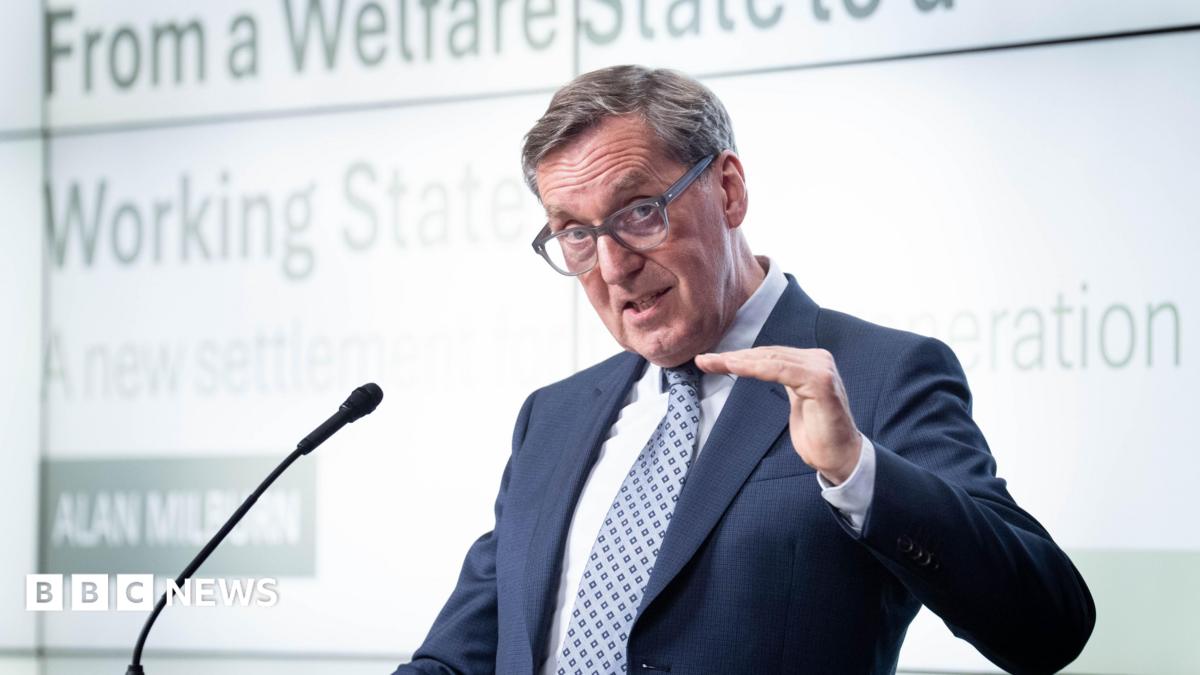
The prime minister describes Alan Milburn's report on jobs, training and benefits for young people as a "watershed moment".In so doing, he is accepting Milburn's case for change and taking on the task of delivering it. Were ministers to actually manage that, it would amount to one of the most significant shake-ups of the welfare state in its history.But the proposed timeframe for this stretches to a decade, which is another geological era in political terms, at least two general elections away.Milburn is a deft operator. From a round of morning television and radio interviews, to addressing the cabinet, to releasing his report into the wild, he was still out and about on Tuesday evening in Westminster persuading, charming and cajoling those possibly in need of all three.And this former MP, still every inch the politician, has an ongoing role - appointed the chairman of the government's new Youth Opportunities Unit.The new job, which will report directly to Andy Burnham, is about tying together the myriad different aspects of change he is suggesting, involving multiple government departments.And yes, it does mean a 68-year-old bloke becomes an early beneficiary of new employment prospects for the young.But that glib observation apart, there is a hope that Milburn has gifted Labour MPs a moral argument for welfare reforms they can endorse. Or, to put it more bluntly, one not grounded in a specific objective to make benefits cuts to make the sums add up elsewhere.Plus, him hanging around perhaps means he can be a useful lightning conductor for any forthcoming angst on Labour's benches – as having persuaded them of the big picture mission, the gritty reality of implementing it begins to take shape.As the prime minister puts it in an interview in the Times, external, the government wants to offer "a new social contract" for "the let-down generation".And he tells the newspaper that the initial upfront cost of around £500m, for employment support in 2027-28, will come from existing government budgets, which will mean cuts to other things elsewhere in government. "I've asked the cabinet to reprioritise," he said.Crucially, if you are in Scotland, Wales or Northern Ireland, many of the decisions around whether or not to press ahead with these ideas will be up to the devolved governments in Edinburgh, Cardiff and Belfast.From the government at Westminster's perspective, the focus now will be drawing up the specific plans for implementing Milburn's ideas, having accepted the broad thrust of his argument.A white paper will follow in the new year, and then legislation.What we don't know yet and will be crucial to the next stage of this debate, is precisely who will be the perceived winners and losers, at least in the short term, of the proposed changes.Work and Pensions Secretary Pat McFadden told me that "those with the most severe and lifelong disabilities where work is not a realistic prospect" should, as Milburn suggests, "get more support than they receive at the moment". But how will those in this category be defined?McFadden also told me that for some of those facing "extra costs" associated with their circumstances "there will be an extra cost benefit that will make at least a contribution towards that". Again, how will those in this category be defined?There is too an emerging political argument, following remarks from Alan Milburn already seized upon by the Conservatives, that decisions taken by Labour in its first few years in power have made a difficult situation harder still for young people looking for work.On page 66 of his report, external, Milburn says the Employment Rights Act 2025 "could have major implications at a time when the youth labour market is already weak".Interestingly, on this point, the prime minister is willing to push back, telling BBC Breakfast that "there is a balance to be struck". "It is important to consider on the other side of this that the more you strengthen employment security, that can create more durable jobs that young people are more likely to stay in," he says. "We're going to consider all of this in the round."The big decisions, then, now sit on the prime minister and the work and pensions secretary's desks.In accepting the magnitude of Milburn's diagnosis and proposed treatment, they are tacitly accepting too that it is their responsibility to deliver – or at least begin to deliver – on much of what he suggests.Their success or otherwise will matter to this generation of young people and those that will follow – and to the sustainability of the benefits system in the years ahead.
Chris Mason: Milburn may have gifted Labour MPs a moral argument for welfare reform
Full Article
Original Source
Read the full article at Bbc →KhanList aggregates and links to publicly available news content. We do not host full articles from third-party sources. Always verify important information with original sources.