
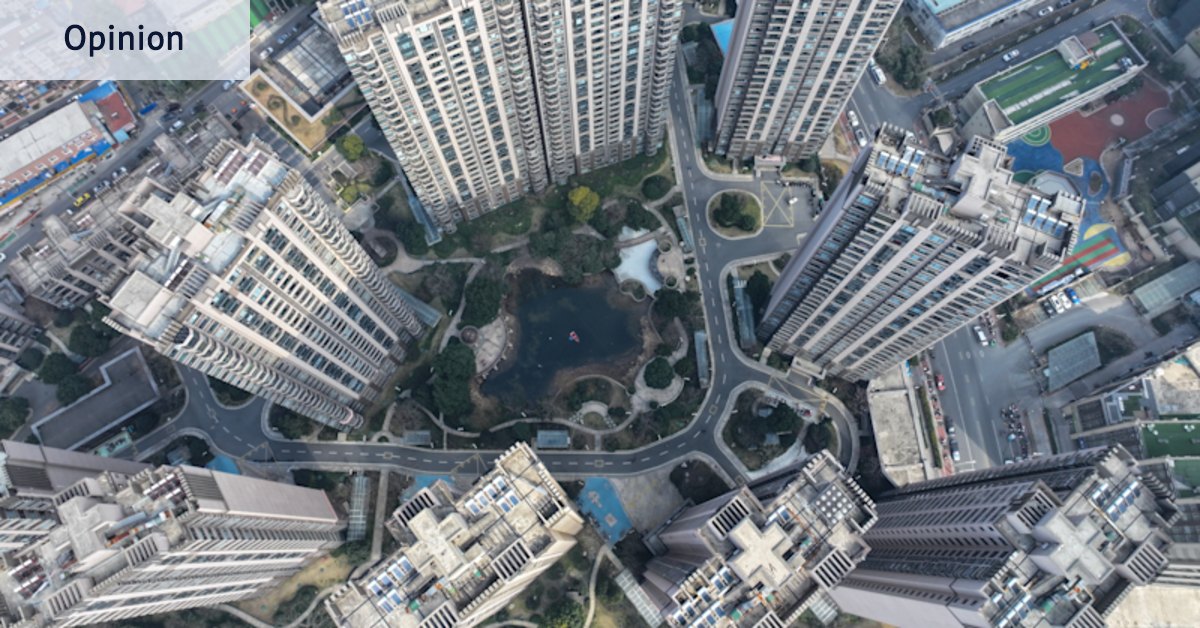
OpinionSenior business columnistNovember 12, 2026 — 12:05pmNovember 12, 2026 — 12:05pmLate last month, a shudder rippled through China’s credit and bond markets, one linked to the hidden property-related stresses that still lurk within the shadows of the country’s financial system six years after its property sector began imploding.The sell-off, which saw yields on corporate bonds spike and exchange-traded bond prices slump, came after state-owned conglomerate Zhuhai Huafa Group missed payments on two trust products and sought an extension of some of its bank loans.Property-related issues are still lurking in China’s financial system six years after its property sector began imploding.BloombergZhuhai Huafa is owned more than 93 per cent by the local Zhuhai government, with the rest owned by the finance department of Guangdong province, the largest provincial economy in China.While the company is a conglomerate, with interests in financial services, technology, trade and services, its roots and its most substantial operations lie in real estate and infrastructure development.The company’s importance to Zhuhai and Guangdong was underscored by the alacrity with which the local and state authorities rode to the rescue. The local government injected more than 40 billion yuan (about $7.75 billion) into the company and pledged to arrange a further 70 billion yuan.Zhuhai Huafa is grappling with a liquidity crisis – it has assets of about 723 billion yuan and liabilities of about 545 billion yuan – that is threatening to turn into a full-scale solvency crisis.The fact that a liquidity crisis within a mid-sized state-owned enterprise in a mid-tier city could cause tremors in China’s bond and credit markets says how fragile the lower tiers of China’s economy are seen to be.It lost the equivalent of about $1.7 billion in the first nine months of this year, it had negative cashflows of about $328 billion in that same period and its offshore bonds have traded as low as 54 cents in the dollar.Its woes are its city’s woes, where revenue – dominated in the past by sales of land to developers like Zhuhai Huafa – has fallen almost 95 per cent over the past five years.Before Xi Jinping introduced the “Three Red Lines” restrictions on debt and leverage in 2020, the city Zhuhai had revenues of more than 56 billion yuan. Last year, that was just 3 billion yuan.It is a familiar tale within China. The Three Red lines policy precipitated a wave of private sector property developer collapses, most notoriously the failure of China Evergrande, the company dubbed “the world’s most indebted property company,” which had more than $400 billion of liabilities.China Evergrande is still being liquidated, but the best estimate of the returns to creditors are, at best, one cent in the dollar owed.With local governments and China’s shadow finance sector heavily exposed to land sales and property-related revenues, the implosions within a sector that once contributed more than 30 per cent of China’s economic growth sent shockwaves through the economy that persist today.Since 2020, or more correctly since 2022, when China Evergrande’s defaults on its debts showed the full extent of the crisis, property prices in some of China’s major cities have fallen by up to 40 per cent. Property sales have halved.The market is still shrinking and prices are still declining, although the rate of decline appears to have slowed and there is some hope that the market might finally stabilise some time next year. Property investment was down more than 20 per cent in the first nine months of this year.China Evergrande’s collapse has started a property cancer in the China’s economy, which continues to metastasise.Getty ImagesThe severity of the sector’s fall has decimated the wealth of China’s middle class and, despite a series of stimulus packages (quite modest packages, it should be said) to try to spur greater consumption, consumers have tightened their spending. This year, retail sales are essentially flat-lining.There have been numerous attempts to stabilise the property market via more generous mortgage terms and lower or subsidised mortgage interest rates, most recently last month, but they’ve had little effect.The slump in domestic consumption has made China far more reliant on exports for growth as Beijing has reoriented its economic strategies.Lower domestic demand means factories have substantial excess capacity, which has been directed towards offshore markets, causing a growing backlash from governments in those markets concerned about their local industries and jobs being wiped out, particularly by cheap imports from sectors Beijing and/or local governments have been subsidising.What Zhuhai Huafa’s struggles signal is that the less visible flow-on effects of the property market’s collapse on local governments and their development and financing vehicles are still flowing.There’s always been a mismatch in the way China’s local governments are funded. They are responsible for about 85 per cent of public spending, but collect only about half the tax revenues generated by their region.The downward spiral of a sector that used to account for more than half their revenue, mainly from land sales, has left them – and the off-balance sheet vehicles they used to enhance their finances – stressed, despite efforts by Beijing to rebalance the relationships between the central, provincial and local layers of government. So far this, year, even the much-diminished revenues from land sales in China have fallen another 28 per cent.The distinguishing feature of Zhuhai Huafa among the very large coterie of fallen or teetering developers is that it is state-owned.It has a AAA rating from local ratings agencies because no-one believes the local government, the provincial government – with a tier one economy within China – or Beijing will allow a significant state-owned entity to collapse. The company is among the top 10 Chinese developers still standing.The speed at which cash was injected into the company and sales of some of its assets to other state-owned or influenced businesses were proposed suggests that is a reasonable assumption. While the authorities have allowed some state-owned enterprises to default in recent years, they’ve ultimately been bailed out.Beijing needs to devise a new mechanism – or perhaps just a much bigger shot of stimulus – to spur consumption and broaden the base of its economy, reduce its vulnerability to the shrinking or closure of export markets and put its provincial and local government finances on a sounder footing, able to fund the social services and infrastructure that are largely their responsibility.It needs to either pump more funds into local government or find a new model for local government financing to replace the lost revenues from the land sales that sustained the old model.It also needs to make sure that Zhuhai Huafa, backed by a cash-strapped local government, doesn’t default.If the company were unable to service its debts because the Zhuhai authorities themselves didn’t have the cash to continue to support it, there would be a risk of contagion for other state-owned companies and their local governments and the banks and other institutions financing them.The fact that a liquidity crisis within a mid-sized state-owned enterprise in a mid-tier city could cause tremors in China’s bond and credit markets says how fragile the lower tiers of China’s economy are seen to be. Beijing can’t allow that fragility to develop into fissures.The Market Recap newsletter is a wrap of the day’s trading. Get it each weekday afternoon.More:Inside ChinaOpinionProperty marketSalesXi JinpingFor subscribersFrom our partners
China’s property implosion has further to go, and markets are worried
Full Article
Original Source
Read the full article at Smh →KhanList aggregates and links to publicly available news content. We do not host full articles from third-party sources. Always verify important information with original sources.