
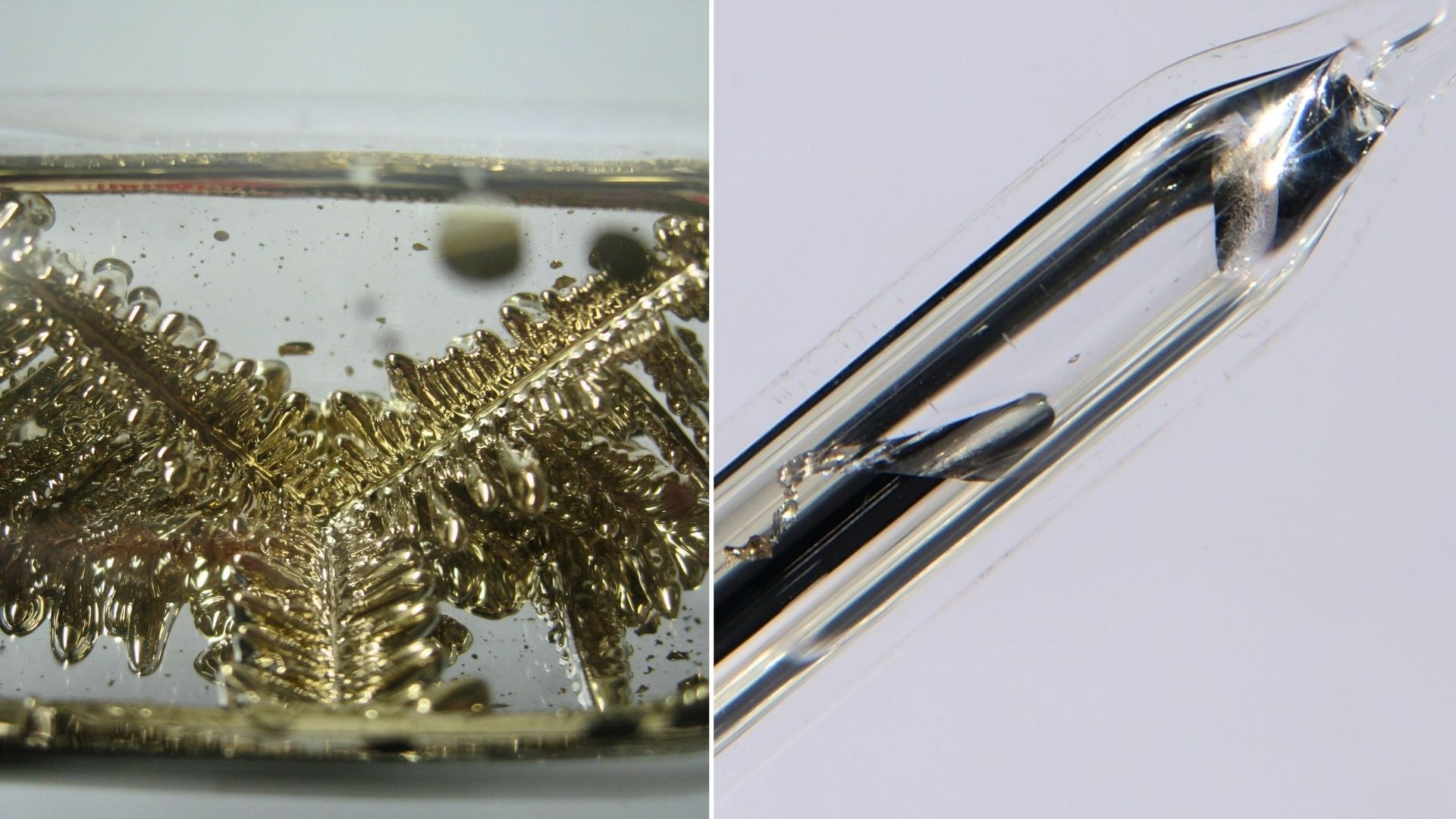
China has put into stable operation what researchers describe as the world’s first industrial extraction column system for recovering rubidium and cesium from lithium ores, turning two previously overlooked metals into commercial products. The demonstration line in Jiangxi Province was jointly developed by the Institute of Process Engineering of the Chinese Academy of Sciences (CAS) and Ganfeng Lithium Group. It uses continuous extraction columns to separate the rare metals from material left over during lithium processing. According to Global Times, the system can produce rubidium carbonate and cesium carbonate with purities above 99.9 percent, while achieving overall recovery rates exceeding 95 percent for rubidium and 98 percent for cesium. China Daily reports that the demonstration line has an annual production capacity of 500 tons, with its products already entering the market. Rubidium and cesium are difficult to obtain because they rarely occur in deposits concentrated enough to be mined economically on their own. Cesium is particularly scarce, with pollucite being its major ore source, while rubidium is found in minerals such as lepidolite and in salt-lake brines. Both metals are used in specialized applications. China Daily cites aerospace, precision instruments, 6G communications and quantum technologies among the fields where they have important applications. Their scarcity, however, has not necessarily meant they were efficiently recovered. “The new process recovers rubidium and cesium, which were previously discarded, as byproducts of lithium ore processing,” said Wang Yong, a researcher at the CAS Institute of Process Engineering who led the project, according to China Daily. Wang said a typical metric ton of lithium concentrate contains approximately 25 kilograms of lithium oxide, 7.8 kilograms of rubidium oxide and 1.8 kilograms of cesium oxide. Although the latter two quantities are much smaller, recovering them alongside lithium can make better use of the same ore. 17 columns replace more than 70 conventional tanks The key innovation is the use of compact extraction columns instead of conventional extraction tanks. Traditional systems expose organic solvents to the air, whereas the new columns operate as a fully enclosed system. According to Wang, this reduces solvent vapor emissions and odors while also lowering associated fire risks. The equipment also substantially reduces the size of the processing operation. A single extraction column can provide separation performance equivalent to up to 15 conventional stages, while cutting solvent consumption by about 40 percent and reducing the equipment footprint by more than half, according to China Daily and Global Times. A conventional facility processing the same amount of material would have required more than 70 tanks. The new plant instead uses 17 extraction columns, arranged across four sections for extraction, scrubbing, stripping and de-oiling. The resulting system operates continuously and automatically. That is particularly important because rubidium and cesium have similar chemical properties and occur at relatively low concentrations. Separating them while maintaining both high recovery and high product purity requires precise control over how the different liquids interact and how the metals move between them. From lithium byproduct to commercial material The demonstration facility can produce cesium carbonate, rubidium carbonate and other compounds, including chlorides, oxides and sulfates. These materials can subsequently be processed into metallic rubidium and cesium for industrial applications. The project is the result of nearly two decades of research into extraction-column technology, the report said. The entire system was also designed and manufactured in China, Wang said. The technology is not limited to lithium processing. Extraction columns developed through the research have already been applied to the industrial separation of zirconium and the purification of phosphoric acid, while further development is underway to extract nickel, cobalt and lithium from ores and other raw materials. The significance of the new facility is broader than recovering two scarce metals. It demonstrates a way to extract additional value from existing mineral-processing streams, potentially reducing the amount of rubidium and cesium that would otherwise be lost while improving the overall utilization of lithium resources.Get the latest in engineering, tech, space & science - delivered daily to your inbox.Kaif Shaikh is a journalist and writer passionate about turning complex information into clear, impactful stories. His writing covers technology, sustainability, geopolitics, and occasionally fiction. A graduate in Journalism and Mass Communication, his work has appeared in the Times of India and beyond. After a near-fatal experience, Kaif began seeing both stories and silences differently. Outside work, he juggles far too many projects and passions, but always makes time to read, reflect, and hold onto the thread of wonder.
China’s new 500-ton plant recovers 98% of cesium and 95% of rubidium from lithium ore
Full Article
Original Source
Read the full article at Interestingengineering →KhanList aggregates and links to publicly available news content. We do not host full articles from third-party sources. Always verify important information with original sources.