
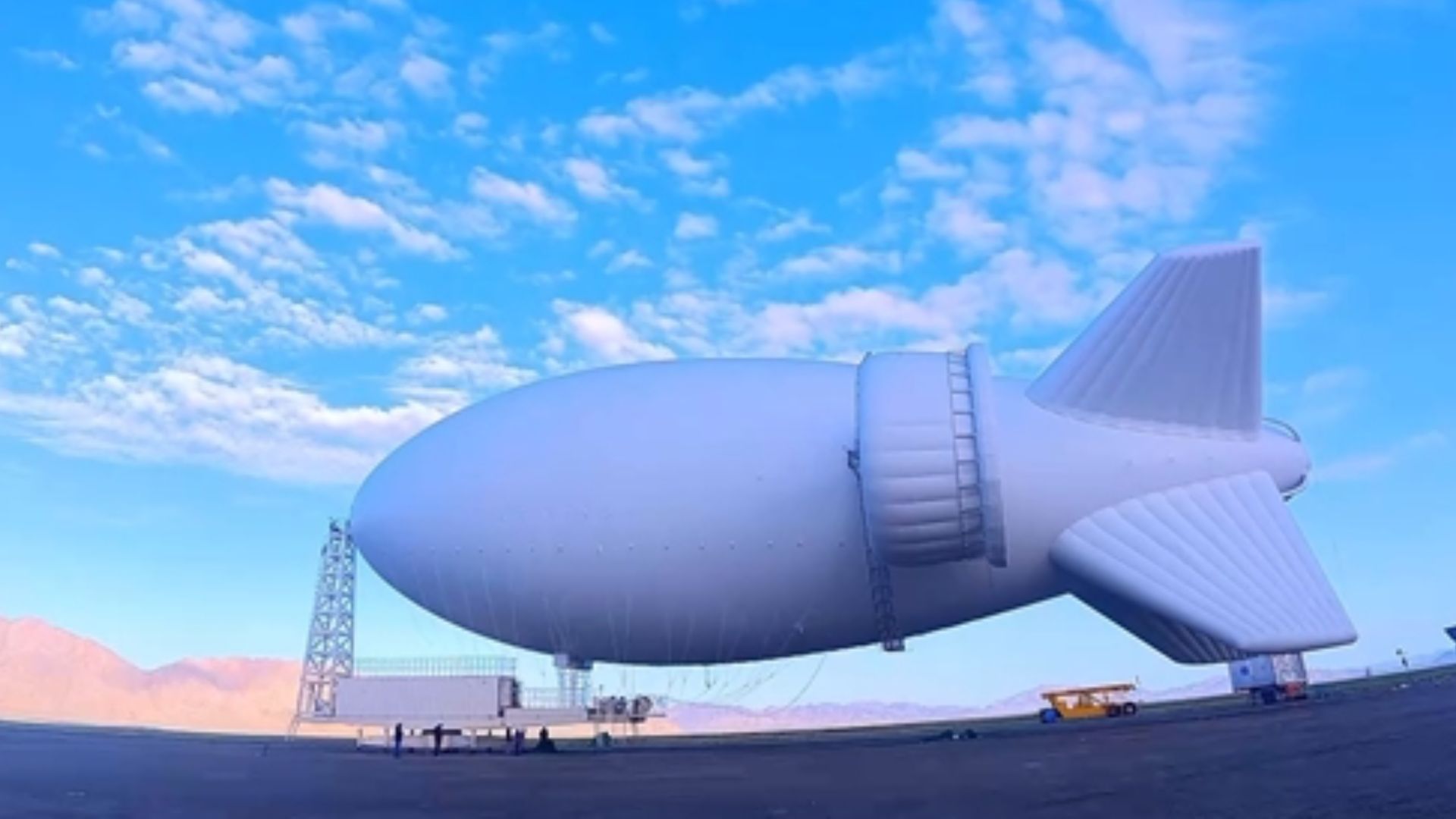
China has completed a full-process flight test of its upgraded S4000 Stratosphere Airborne Wind Energy System (SAWES), marking a new step toward deploying high-altitude wind power for electricity generation. The test was recently conducted at a base in Northwest China, CCTV News reported. The S4000 is designed to capture wind energy at altitudes far above those reached by conventional wind turbines. Its successful test moves the technology closer to engineering applications, according to the report. The system can operate at heights of up to 13,123 feet (4,000 meters), allowing it to reach stronger wind resources above the ground. S4000 completes full flight test The latest trial covered the complete operating process of the airborne system. It included ascent, station-keeping, electricity generation testing, and controlled recovery. All key indicators reportedly met the required standards. The results are expected to support further development of the technology for use in complex high-altitude environments. The S4000 is an upgraded version of the earlier S2000 platform. Its new configuration is designed to improve overall performance while allowing the system to connect directly with mainstream power grids. The platform also has a stated design service life of up to 20 years. This could make long-term operation possible in areas where traditional wind turbines face limitations. An airborne alternative to windmills The system looks more like a floating airship than a conventional wind turbine. It uses a large envelope to remain airborne while carrying a power-generating unit. Conventional wind turbines depend on tall towers to reach higher wind speeds. SAWES instead uses a flying platform that can operate thousands of feet above the ground. The concept is based on accessing wind resources that are stronger and more consistent at higher altitudes. Electricity generated in flight can then be transferred to the ground through a tether. The tether also plays a role in keeping the airborne platform positioned during operation, giving the system a connection to the ground while it remains aloft. S2000 previously generated grid power The S4000 builds on testing carried out with the S2000 earlier this year. In January, the S2000 climbed to about 6,560 feet (2,000 meters) and generated 385 kilowatt-hours of electricity during a real-world test. The electricity was delivered directly to the local grid, marking the first real-world power generation demonstration for the S2000 floating airborne wind energy system. Its developer, Beijing Linyi Yunchuan Energy Technology, described the S2000 as the world’s first megawatt-level airborne wind power system designed for use near urban areas. The system uses a helium-filled aerostat to lift its lightweight wind power equipment into the air. Once airborne, the equipment captures wind energy and converts it into electricity. High-altitude wind moves toward deployment The S4000 test provides a larger platform for developing airborne wind power beyond the earlier S2000 system. Its 13,123-foot operating ceiling also gives it access to wind conditions that conventional turbines cannot easily reach. With the latest full-process validation completed, the technology is moving closer to practical engineering deployment. The next stage could determine how effectively such airborne systems can deliver reliable clean electricity in different regions and operating conditions.Get the latest in engineering, tech, space & science - delivered daily to your inbox.A versatile writer, Sujita has worked with Mashable Middle East and News Daily 24. When she isn't writing, you can find her glued to the latest web series and movies.
China’s megawatt-level S4000 ‘windmill’ airship aces 13,123-foot altitude test
Full Article
Original Source
Read the full article at Interestingengineering →KhanList aggregates and links to publicly available news content. We do not host full articles from third-party sources. Always verify important information with original sources.