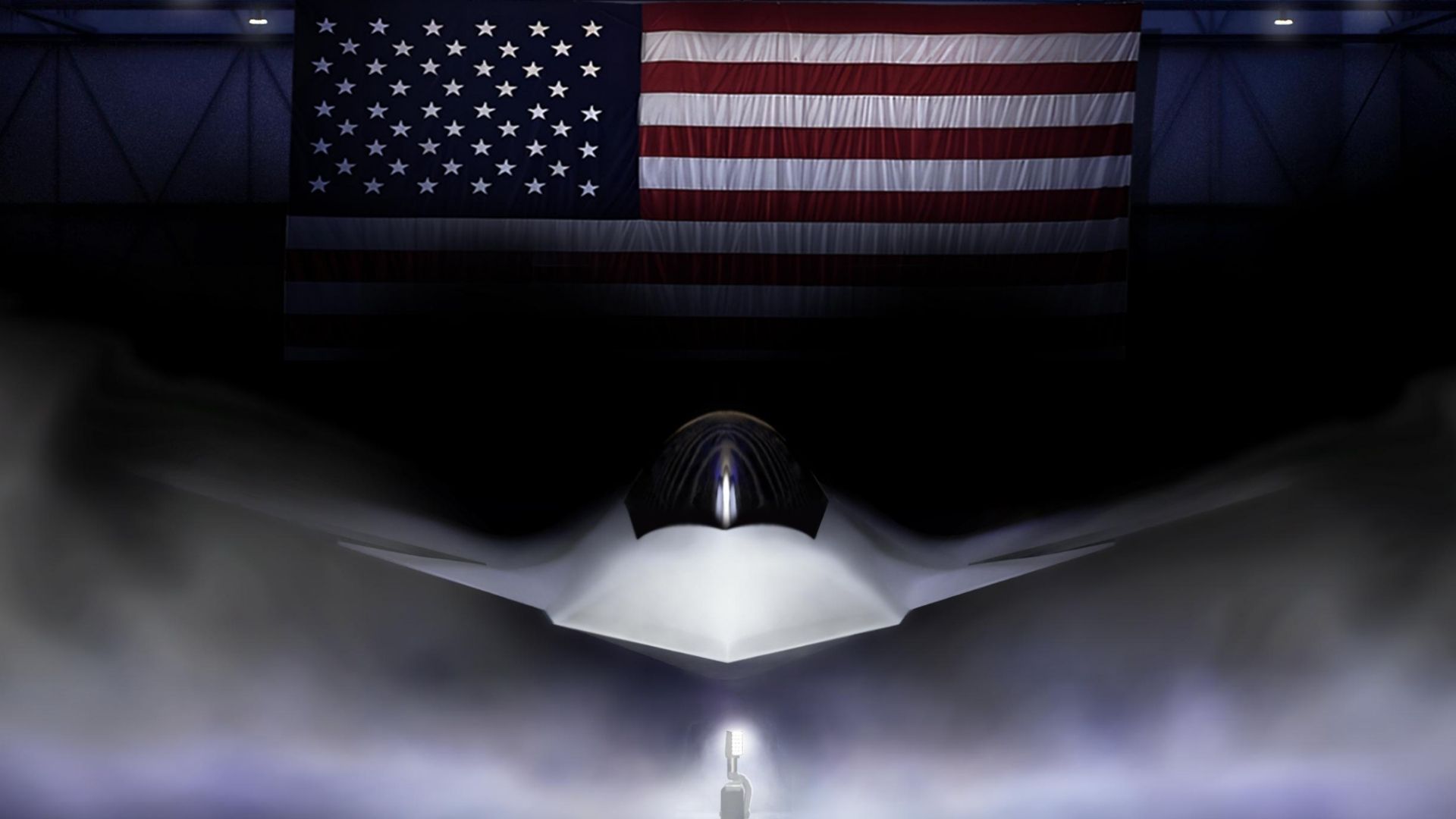
China and the United States are developing two combat aircraft that could reshape aerial warfare, but neither has revealed enough information for a conventional specification-by-specification contest. China’s aircraft, unofficially called the Chengdu J-36 by Western analysts, was first publicly observed in December 2024, while the US Air Force formally awarded Boeing the F-47 development contract in March 2025. Both are commonly placed in the sixth-generation category, but their precise specifications remain secret. A useful comparison must therefore separate what has been observed or officially disclosed from what analysts believe the aircraft might eventually do. Airframe design and stealth The J-36 is the more visible of the two aircraft. Images show a large, tailless design with a broad diamond-shaped wing, three air intakes and no conventional vertical stabilizers, while RUSI describes it as a “very large, tri-engine Chengdu triangular tailless design.” Removing vertical tails can reduce radar reflections, while the aircraft’s aligned edges, blended body and internal weapon compartments indicate that low observability influenced its design. However, its radar cross-section has not been publicly measured. Far less can be concluded from the F-47 image released by the US Air Force. It shows a crewed aircraft with a wide nose and swept wings, but the service identifies it only as an artist’s rendering, not an accurate technical drawing. Propulsion and performance The J-36’s three-engine configuration is one of its most distinctive features and has been visible during flight testing. Its exact engine type, thrust and maximum speed remain undisclosed, making claims about supercruise or manoeuvrability speculative. No engine has been publicly confirmed for the F-47 either. The aircraft is connected to the US Air Force’s Next Generation Adaptive Propulsion effort, but it is not yet publicly known which powerplant will enter production. The clearest official performance target came from a US Air Force infographic released in May 2025. It listed the F-47 with a speed exceeding Mach 2 and “Stealth++,” although neither metric was accompanied by detailed testing data. Range and payload Its broad airframe suggests that the J-36 could accommodate considerable internal fuel and weapon capacity. Observed doors beneath the aircraft have also been interpreted as one central weapons bay accompanied by two smaller bays, although China has not confirmed their dimensions or payload limits. The F-47 has a more concrete range target. The same US Air Force infographic assigned it a combat radius of more than 1,000 nautical miles, equivalent to over 1,852 kilometres. That figure supports its intended penetrating air-dominance role. The J-36’s size may indicate a heavier multirole platform, but no reliable range or payload figures have been released. Sensors and drone teaming The J-36’s wide nose and airframe could provide space for large radar arrays, electronic-warfare equipment and distributed sensors. Nevertheless, its avionics and ability to control uncrewed aircraft remain unconfirmed. Drone cooperation is more firmly established for the F-47. The US Air Force is developing it as the crewed centrepiece of its Next Generation Air Dominance family of systems, supported by autonomous Collaborative Combat Aircraft. This means the F-47 is not intended to fight alone. Its effectiveness will depend partly on how well it exchanges targeting information and assigns missions to accompanying aircraft. Development and intended role The J-36 has already appeared in flight, demonstrating that China possesses at least a functioning experimental aircraft. However, Beijing has not officially confirmed its designation, specifications, production plans or service-entry timetable. The F-47 is in the engineering and manufacturing development phase. Before Boeing received the contract, experimental aircraft supporting the program had accumulated hundreds of flight hours over five years, according to the US Air Force. For now, there is no defensible winner. The J-36 appears optimized around size, internal capacity, and long-range missions, whereas the F-47 has a more clearly defined emphasis on penetrating air superiority and drone teaming. The eventual balance will not be determined by speed or stealth alone. Sensors, missiles, autonomous partners, production numbers, and operational readiness will decide which system delivers the greater advantage. Get the latest in engineering, tech, space & science - delivered daily to your inbox.Atharva is a full-time content writer with a post-graduate degree in media & amp; entertainment and a graduate degree in electronics & telecommunications. He has written in the sports and technology domains respectively. In his leisure time, Atharva loves learning about digital marketing and watching soccer matches. His main goal behind joining Interesting Engineering is to learn more about how the recent technological advancements are helping human beings on both societal and individual levels in their daily lives.
China’s J-36 vs US F-47: 5 key differences between sixth-gen jets
Full Article
Original Source
Read the full article at Interestingengineering →KhanList aggregates and links to publicly available news content. We do not host full articles from third-party sources. Always verify important information with original sources.