
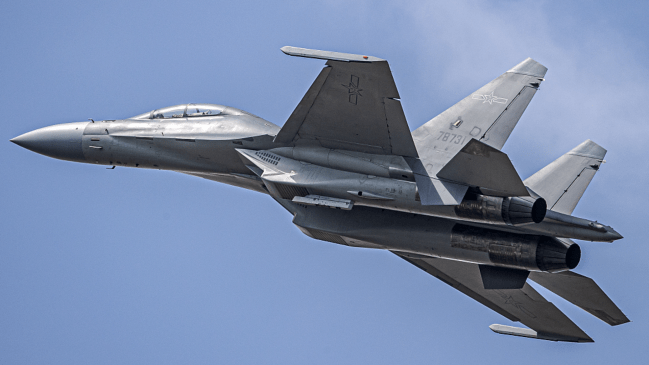
China has deployed its J-16 fighter jets to Africa for the first time, sending the aircraft to Egypt for a joint military exercise that also demonstrates the growing ability of the PLA’s Air Force to move combat aircraft across long distances. The fighters travelled about 3,700 miles to reach Egypt, a journey that took roughly nine hours and included mid-air refuelling. The deployment is part of the Eagles of Civilisation 2026 exercise, the second joint air training event between China and Egypt. The exercise brings together multiple Chinese aircraft types, including fighters, aerial refuelling aircraft, special-mission platforms and helicopters. Beijing says the drills will focus on air combat and air superiority while improving cooperation between the two militaries. J-16 demonstrates long-range deployment capability The J-16 is a twin-seat, twin-engine multirole fighter that forms an important part of China’s modern combat aircraft fleet. The aircraft is regularly used for missions along the country’s eastern coast and around strategic areas including the South China Sea and Taiwan Strait. Although the J-16 has previously participated in international exercises with countries including Russia and Pakistan, its deployment to Egypt marks the first time the aircraft has taken part in military training in Africa. The aircraft also represents a step up from the fighters China sent to Egypt for the countries’ first joint exercise last year. That deployment featured the J-10C, a lighter single-engine multirole fighter, the South China Morning Post reported. This year’s exercise involves a broader mix of aircraft, suggesting that China is testing not only individual platforms but also its ability to deploy and operate different aircraft together far from home. The PLA said the exercise will include air combat tactics and air superiority operations, while the participating forces will also work on improving coordination and interoperability. The journey itself is an important part of the deployment. The fighters covered approximately 3,700 miles, with a Chinese YY-20A aerial refuelling aircraft providing fuel during the flight. Video released by the PLA showed a YY-20A refuelling a J-16 in flight, including footage of the tanker simultaneously supporting two fighters. Testing China’s aerial refuelling and support capabilities Chinese military commentator Song Zhongping described the deployment as an important test for both the pilots and the aircraft, particularly because they were operating far from China’s usual training areas. The exercise also gives the Chinese air force an opportunity to train in unfamiliar airspace and work alongside another country’s military, while also testing the logistical requirements of moving tactical aircraft across continents. Song said such deployments could become more frequent as China seeks to improve its ability to protect overseas interests. Unlike diplomatic and economic influence, military power projection requires aircraft, tankers, support personnel and infrastructure that can operate far from domestic bases. The Egypt deployment therefore highlights China’s growing focus on the infrastructure, logistics and operational experience needed to move and sustain modern combat aircraft overseas. Beyond the J-16 itself, the exercise also shows the importance of aerial refuelling, specialised support aircraft and coordinated operations in enabling Chinese fighters to operate effectively far from their home bases.Get the latest in engineering, tech, space & science - delivered daily to your inbox.Bojan Stojkovski is a freelance journalist based in Skopje, North Macedonia, covering foreign policy and technology for more than a decade. His work has appeared in Foreign Policy, ZDNet, and Nature.
China’s J-16 fighters fly 3,700 miles to make debut in major exercise
Full Article
Original Source
Read the full article at Interestingengineering →KhanList aggregates and links to publicly available news content. We do not host full articles from third-party sources. Always verify important information with original sources.