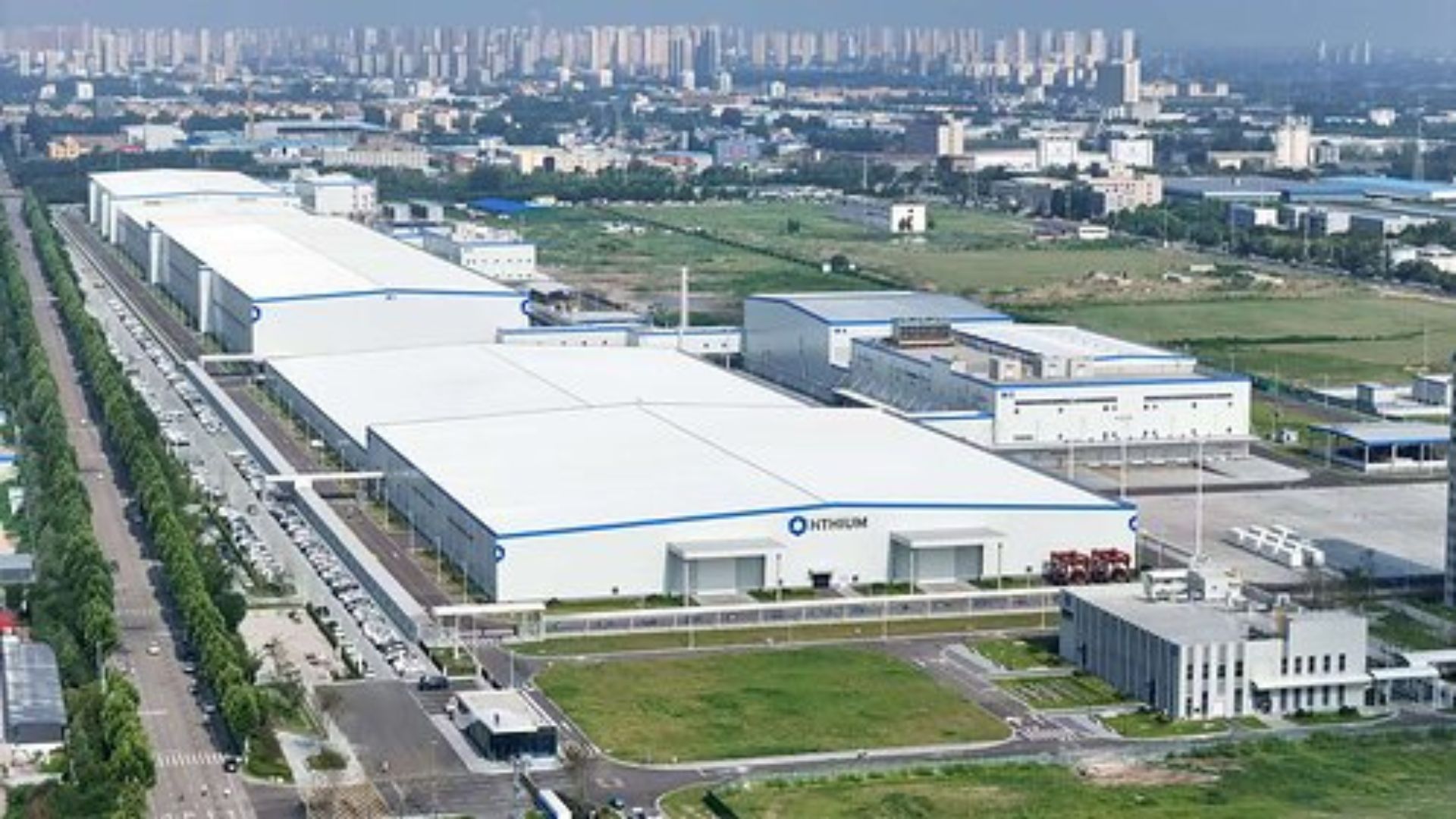
A new industrial complex in China’s Shandong province is beginning production rollout with a specific goal. Manufacturing batteries designed to store electricity for longer periods and support increasingly renewable power grids. HiTHIUM held the production rollout ceremony for its Heze Base on August 7 in Heze Luxi New Area. The company describes the facility as the world’s first integrated industrial park dedicated exclusively to long-duration energy storage (LDES). Unlike conventional battery plants focused primarily on cells, the Heze project brings together battery-cell manufacturing, materials production and energy-storage system integration. The planned facility covers approximately 80 hectares, with total investment across the industrial chain exceeding RMB 13 billion. Why long-duration storage matters Solar and wind power can produce large amounts of electricity when conditions are favorable, but generation does not always coincide with demand. Energy storage allows excess electricity to be stored and released later, helping balance the grid. LDES is intended to extend that capability over longer periods. For example, stored electricity could be released after solar generation falls in the evening or during longer periods of low renewable output. That makes the technology increasingly relevant as power systems add more variable renewable generation. A battery factory built around LDES The Heze Base uses a whole-industry-chain approach, covering LFP battery cells, modules and system integration, new materials and upstream raw-material processing. The facility is also designed around very large-capacity battery products. HiTHIUM says its fifth-generation intelligent manufacturing lines can produce more than 15 GWh per production line, while the company is developing thousand-ampere-hour-class cells for LDES applications. Larger-capacity cells can potentially reduce the number of individual cells and connections needed in a large storage installation, simplifying parts of system construction. HiTHIUM’s earlier LDES products include a 1,175 Ah cell, which the company says entered mass production in 2025. Automating storage production The factory itself is designed as a highly automated manufacturing operation. HiTHIUM says its fifth-generation production lines have an automation rate exceeding 95% and incorporate more than 1,000 quality-control checkpoints, including AI-powered visual inspection. According to the company, the new production system reduces floor space required per GWh by 50%, production manpower by 58%, and manufacturing energy consumption by 13% compared with its previous generation. HiTHIUM also reports a 200% improvement in production efficiency. These figures are company-reported comparisons, but they highlight an important part of the LDES race: reducing costs will depend not only on battery chemistry, but also on manufacturing efficiency. From cells to complete storage systems The Heze Base is intended to take the battery manufacturing process from raw materials all the way through to finished, containerized energy-storage systems. That integrated approach matters because grid-scale storage is more complicated than simply installing large numbers of battery cells. Cells must be assembled into modules and systems, with the finished equipment incorporating the components and controls required for large-scale energy storage. HiTHIUM says the Heze rollout marks a new phase focused on scaled manufacturing and delivery of LDES products. The significance of the project ultimately goes beyond one factory. As renewable generation expands, electricity grids need increasingly capable ways to shift power across time. The growth of dedicated LDES manufacturing suggests battery companies are now preparing for a market where storing electricity for longer periods could become just as important as generating it. Recommended ArticlesGet the latest in engineering, tech, space & science - delivered daily to your inbox.Kaif Shaikh is a journalist and writer passionate about turning complex information into clear, impactful stories. His writing covers technology, sustainability, geopolitics, and occasionally fiction. A graduate in Journalism and Mass Communication, his work has appeared in the Times of India and beyond. After a near-fatal experience, Kaif began seeing both stories and silences differently. Outside work, he juggles far too many projects and passions, but always makes time to read, reflect, and hold onto the thread of wonder.
China’s 80-hectare facility aims to make long-duration energy storage batteries
Full Article
Original Source
Read the full article at Interestingengineering →KhanList aggregates and links to publicly available news content. We do not host full articles from third-party sources. Always verify important information with original sources.