
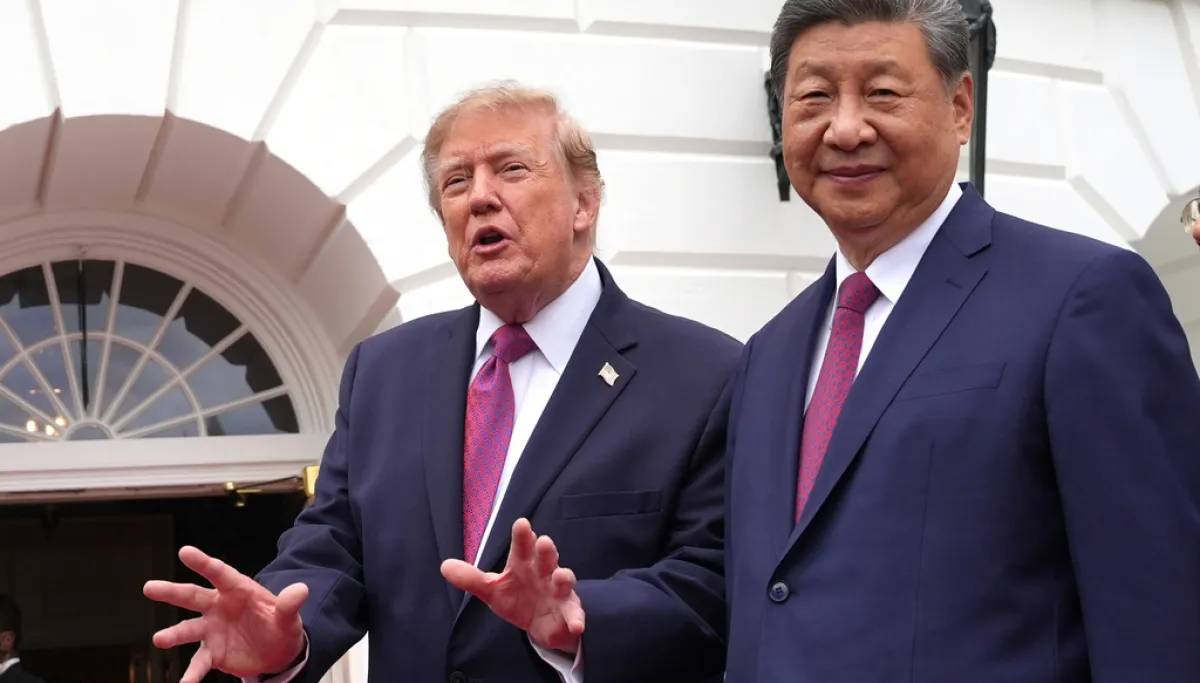
What is the philosophical nature of fence-riding? At bottom, it is opportunism dressed up as pragmatism — a calculated willingness to bend principle when the payoff outweighs the cost of consistency. China and the United States have arrived at this posture by very different roads, and together they reveal some clues about where the world is headed next.For 30 years after 1949, China stood squarely inside the socialist camp, all but sealed off from the capitalist world. That certainty cracked after 1978, when Beijing discovered that ideological purity was bankrupting the country — stagnant growth, empty granaries, a widening technology gap. So China struck a bargain with itself: open the economy to the West, absorb its capital and know-how, while never surrendering the Communist Party’s grip on power.This became known as the “dual-track strategy,” but the idea did not originate with the CCP. Its prototype dates to the Qing dynasty, after the 1840 Opium War, when mandarins first tried to borrow Western guns and machinery (“self-strengthening”) while keeping Confucian orthodoxy intact. Call it what you like — dual-track, or simply fence-riding — the logic is the same: bend just enough to extract benefit from the other side, without ever fully crossing over. The US is improvising too For most of the 20th century, the U.S. did the opposite and held on to its backbone. Washington built its Cold War identity on not fence-riding — on drawing hard lines around democracy, free markets, and human rights, and asking allies to do the same. That posture is now eroding.On Feb. 24, 2025, the U.S. voted against a U.N. General Assembly resolution condemning Russia’s invasion of Ukraine and demanding its withdrawal — joining Russia, North Korea, and Belarus in opposition, while nearly every European ally voted the other way. A year later, the pattern held: the U.S. abstained rather than back Ukraine’s follow-up peace resolution, again breaking from its traditional allies.Then came the pageantry in Washington this September: a Republican administration that routinely denounces communism as a civilizational threat rolled out a Rose Garden military review, a state dinner, and a National Archives tour for the general secretary of a communist party that still claims roughly 99 million members and total political control over 1.4 billion people. Nobody in the White House pretends not to know what the Chinese Communist Party is. They simply decided that, for now, the transaction — soybeans, rare earths, a tariff truce — was worth more than the doctrine.That is fence-riding, American-style. Long-standing principles are not renounced; they are merely shelved when interest calls.Fence-riding, it turns out, is not a permanent condition — it stops the moment a core interest is actually put at risk. Europe learned this the hard way. For two decades, EU governments — Germany above all — rode the fence with Moscow, trading energy dependence and market access for the comforting illusion that commerce could tame geopolitics. That bet collapsed in 2022, and the European Union has spent every year since paying for it: rebuilding energy security, rearming, and relearning a rigidity it had let atrophy.There is a catch So, is fence-riding good or bad? It depends entirely on who is doing it and why. The uncomfortable truth is that it tends to erode principles and embolden opportunists.To some, fence-riding is compromise; to others, it’s flexibility. If your underlying doctrine is sound and genuinely advanced, riding the fence means diluting an asset — trading away moral and strategic clarity for a short-term gain. But if your doctrine is flawed, coercive, or simply indefensible, fence-riding can function as a hedge, a way to borrow legitimacy and resources from the very system you claim to oppose, softening the costs your own model would otherwise impose on you.OPINION: TRUMP CALLED IT A ‘TERRIBLE DEAL.’ NOW, HE MUST SAVE DIEGO GARCIA FROM CHINAApplied to today’s U.S.-China dynamic, this cuts in an uncomfortable direction. When Washington rides the fence, it is spending down something real: the credibility of “principled alliance politics” that took eight decades to build, and that allies from Kyiv to Taipei are watching erode in real time. When Beijing rides the fence, it is doing what it has done since the Qing self-strengtheners — importing exactly enough capital, technology, and market access to keep an otherwise closed system solvent, without paying the political price of actually opening it.And if the world’s two largest powers are now both playing this game at once, the resulting order will be something messier: two giants each chasing narrow, transactional advantage, while the rest of the world loses its bearings on which track to follow and is quietly pressured into the same transactional, fence-riding patterns. To borrow a weather metaphor: for those who still long for clear skies and sunshine, what’s coming is an extended, even wearying, stretch of overcast, in-between gray.David W. Wang (@DavidWWang203) is a senior international business executive, geopolitical affairs consultant, analyst, and writer based in the Washington, D.C., metro area.
China uses capitalism to save communism. What’s Washington’s excuse?
Full Article
Original Source
Read the full article at Washingtonexaminer →KhanList aggregates and links to publicly available news content. We do not host full articles from third-party sources. Always verify important information with original sources.