
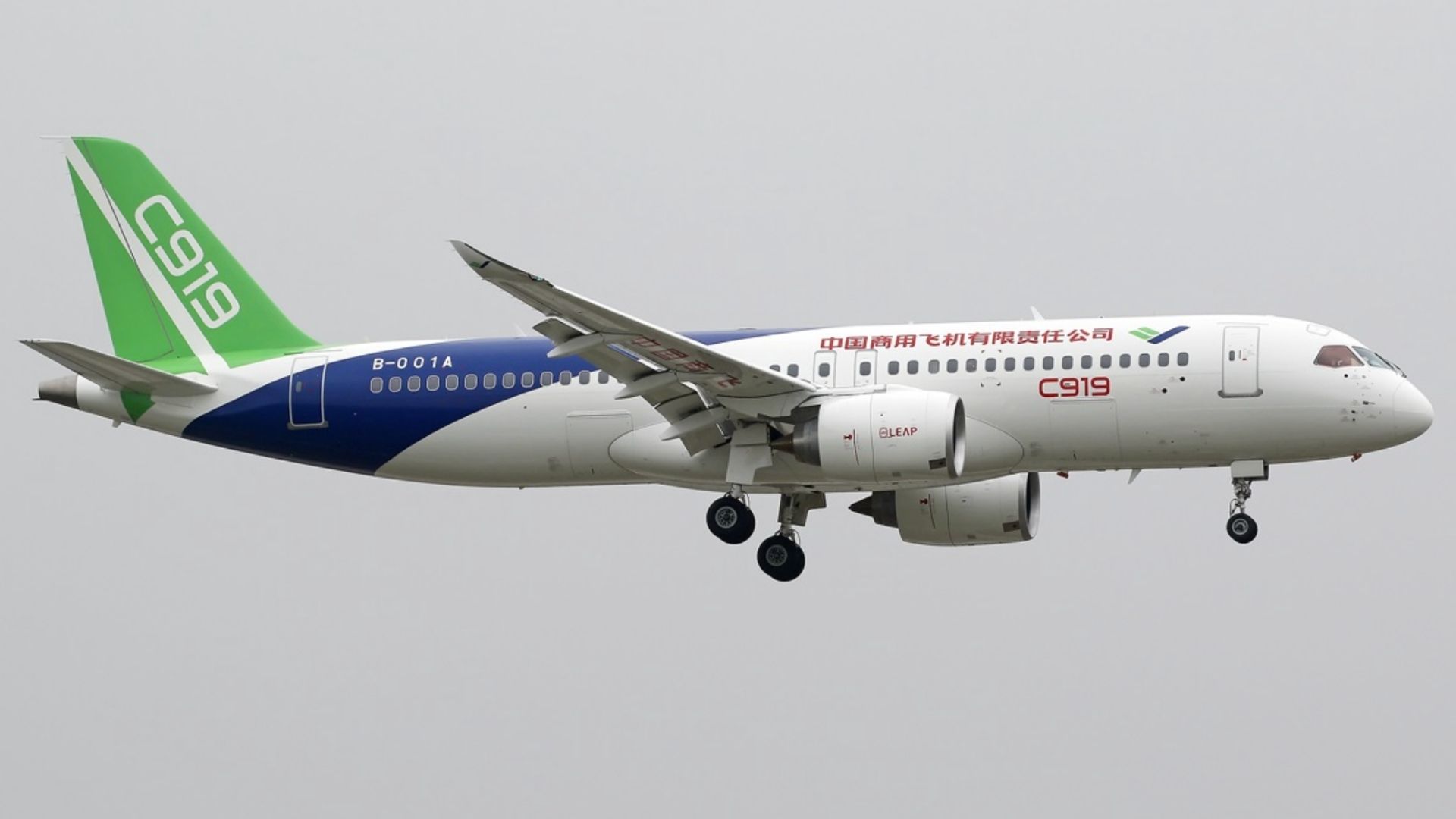
China is widening its aircraft localisation campaign beyond engines, with domestic suppliers now developing alternatives to Western-made sealants, rubber, paints, bolts and cleaning agents used in commercial jets. Zhang Xiaoyan, a chief engineer at the Aero Engine Corporation of China’s Beijing Institute of Aeronautical Materials, detailed the effort at an aviation forum in Guangzhou. The strategy is intended to reduce exposure to foreign supply disruptions and geopolitical tensions, although replacing established Western products is expected to take years. Domestic parts enter aircraft trials “Other than the engine, we are also looking at sealants, rubber, paints, bolts and even cleaning agents from the West that could be replaced,” Zhang said. Some domestically produced materials are already being tested on the C919, while others are being assessed by its state-owned manufacturer, the Commercial Aircraft Corporation of China, or Comac. The narrowbody aircraft entered commercial service in May 2023. Comac had delivered 42 C919s to Chinese customers by July, as the country works to establish a home-grown alternative to aircraft produced by Boeing and Airbus. One local product, the HM1176 polythioether sealant, has been used on the C919 and China’s CJ-1000 engine series since 2025. It provides structural sealing and corrosion protection. The CJ-1000 remains under development by the Aero Engine Corporation of China. It is intended to eventually serve as a domestic alternative to the Leap-1C, which is currently the only engine available for the C919. Leap-1C engines are produced by CFM International, a joint venture between US-based GE Aerospace and France’s Safran. Western manufacturers retain an advantage Despite the localisation effort, US and European companies continue to supply many of the advanced functional and composite materials used throughout the aircraft. “Their products are reliable and have truly stood the test of time,” Zhang said. She cited US-based PPG Industries, a major Comac supplier and a large producer of aerospace coatings, sealants and cockpit transparencies. Specialised cleaning agents imported from Western suppliers are also reportedly required for some engine-maintenance operations. China may use technology and manufacturing experience developed for military aviation to close these gaps. Zhang said anticorrosive coatings, adhesives and chemical buffering agents made for military aircraft could be adapted for civilian programs, including the C919 and the C929 widebody aircraft under development. Localisation and European certification The transition to Chinese components has raised questions about whether design changes could affect the C919’s effort to obtain safety certification from the European Union Aviation Safety Agency. Zhang rejected that possibility, saying Comac had already considered the matter. “It will not create any adverse impact. We are simply providing an additional safeguard with the option of domestic products,” she said. European test pilots completed in-flight assessments of the aircraft in Shanghai in July, according to the South China Morning Post. Certification, however, is not expected soon because regulators must still analyse flight data and complete further technical work. Zhang also pointed to existing international acceptance of some Chinese aviation products. Specialised protective seals made in China have reportedly received Airbus approval for use on engines powering A330 aircraft operating in the country. The broader localisation campaign is therefore intended to create backup sources rather than immediately remove every overseas supplier. Western components remain embedded throughout the aircraft, but China is gradually building domestic alternatives for materials that receive far less attention than engines while remaining essential to aircraft production and maintenance. Get the latest in engineering, tech, space & science - delivered daily to your inbox.Atharva is a full-time content writer with a post-graduate degree in media & amp; entertainment and a graduate degree in electronics & telecommunications. He has written in the sports and technology domains respectively. In his leisure time, Atharva loves learning about digital marketing and watching soccer matches. His main goal behind joining Interesting Engineering is to learn more about how the recent technological advancements are helping human beings on both societal and individual levels in their daily lives.
China seeks local alternatives to 5 components used in its narrow body C919 aircraft
Full Article
Original Source
Read the full article at Interestingengineering →KhanList aggregates and links to publicly available news content. We do not host full articles from third-party sources. Always verify important information with original sources.