
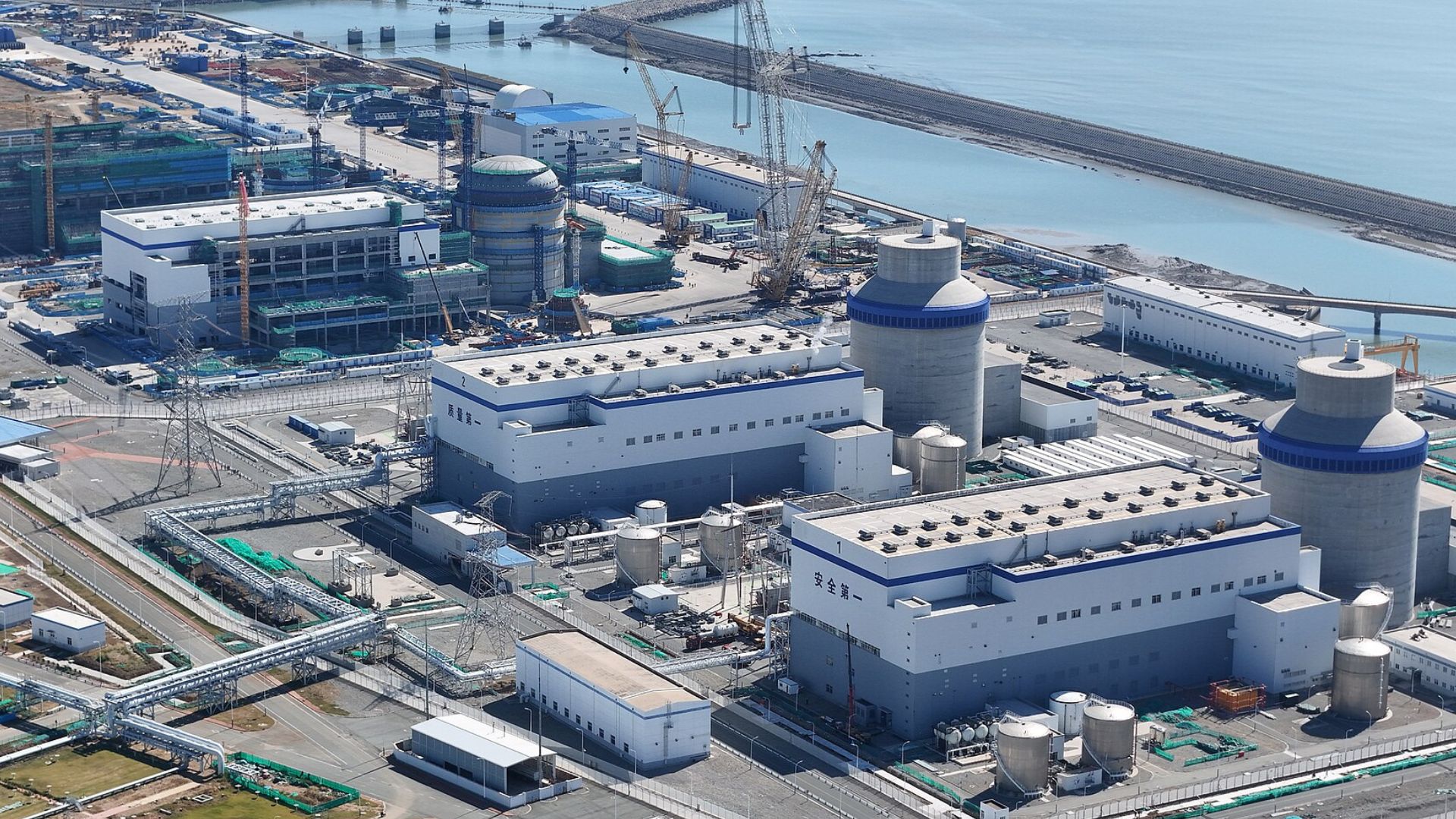
Engineers in eastern China have begun pouring concrete for a new reactor at the Haiyang Nuclear Power Plant. The work on Unit 5 marks the start of the project’s third construction phase in Shandong province, according to the state-run developer SPIC. The milestone comes just weeks after the plant cleared a separate technical hurdle. On 13 August, teams at the newly completed Unit 3 wrapped up intensive hot functional tests. Contractors ran the primary coolant loop through 11 temperature stages without using real uranium fuel. By pushing the systems to normal operational heat and pressure, engineers verified the mechanical integrity and thermal stability of the circuits before commercial power generation begins later this year. Constructing the plant’s nuclear island Attention on site has now shifted to the heavy civil engineering required for Unit 5. Crews are constructing the plant’s nuclear island, which houses the reactor core and main containment barriers. Workers must place thousands of tonnes of concrete in an unbroken pour lasting dozens of hours. This single thick raft slab anchors the entire primary structure, protecting it against ground shifts and potential seismic shocks. Units 5 and 6 form the final stage of an ambitious regional energy hub. Once all six reactors enter service, Haiyang will rank as the world’s largest operational nuclear complex powered entirely by passive pressurized water reactors. These Generation III systems rely on fundamental physical properties such as gravity and natural convection to keep the core cool during emergencies, eliminating the need for external backup power. Recent design revisions have lifted the electrical rating of the newest units to 1.3 million kilowatts each, project director Liu Fei told state media. At full capacity, the entire six-unit site will generate nearly 61 billion kilowatt-hours of electricity every year. That volume can cover the annual power consumption of around 54 million residents. “Building on modern know-how and experience, we have optimized the design to raise each unit’s rated electrical output to 1.3 million kilowatts, and the plant can provide clean heating for five county-level cities,” said Liu, as reported by Global Times. Unprecedented national buildout Beyond electricity, the coastal plant functions as a major municipal heat source. The expanded plant will supply district heating to five county-level cities and is eventually scheduled to heat 150 million square meters of residential and commercial property across 25 county-level cities. Utility managers estimate the full installation will save roughly 18.5 million tonnes of standard coal each year, avoiding over 48 million tonnes of carbon dioxide emissions. The expansion forms part of an unprecedented national buildout. China operates 64 nuclear reactors, second only to the United States. However, with another 56 units either actively under construction or fully permitted, China dominates the global pipeline and is projected to lead worldwide operational capacity before 2030. State planners want nuclear capacity to climb to 200 million kilowatts by 2040, ultimately providing 18 percent of the country’s electricity supply by 2060 to support its carbon neutrality pledges. Get the latest in engineering, tech, space & science - delivered daily to your inbox.An active and versatile journalist and news editor. He has covered regular and breaking news for several leading publications and news media, including The Hindu, Economic Times, Tomorrow Makers, and many more. Aman holds expertise in politics, travel, and tech news, especially in AI, advanced algorithms, and blockchain, with a strong curiosity about all things that fall under science and tech.
China adds nuclear reactor at 61 billion kWh mega-plant to help power 54 million residents
Full Article
Original Source
Read the full article at Interestingengineering →KhanList aggregates and links to publicly available news content. We do not host full articles from third-party sources. Always verify important information with original sources.