
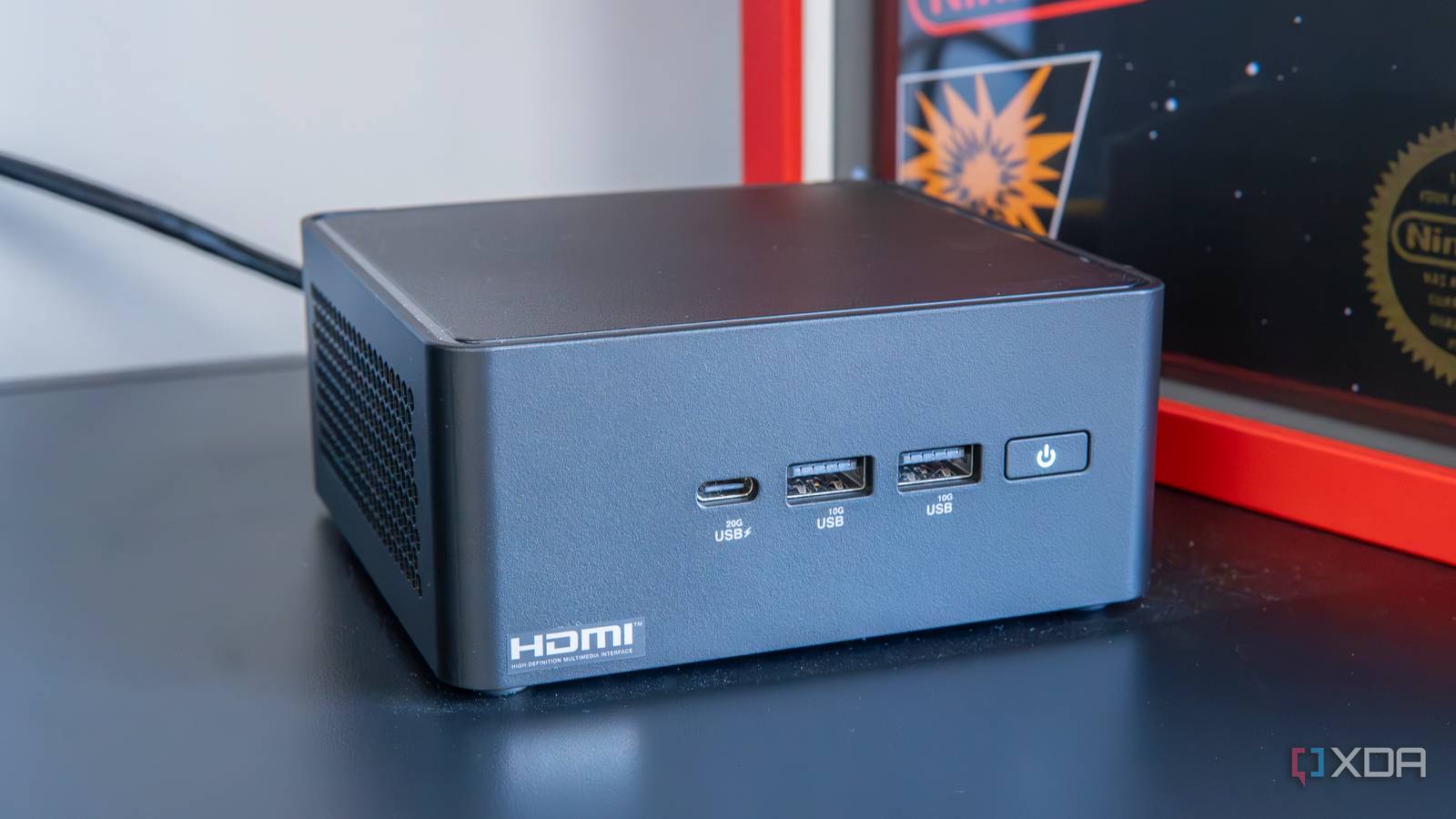
Published Aug 25, 2026, 2:30 PM EDT Abid covers consumer hardware, gaming, and platform updates with an emphasis on accuracy, clarity, and reader-first context. He holds a BSc in Computer Science and Engineering, and his work can be found in multiple publications, including Notebookcheck. Outside of work, he enjoys exploring new gaming hardware, testing system performance, and keeping up with developments across the broader tech landscape. Mini PCs powered by the Intel N100 seem like a decent starting point for almost everyone looking to build cheap NAS setups, and there’s a good reason for it. They tick a handful of crucial boxes, including excellent power efficiency and solid NAS performance. Of course, all of this only holds true when the PC is paired with the right software. However, even with the right software, an Intel N100 mini PC can’t stand as a proper replacement for a NAS. Even if these PCs seem like good budget-friendly options, the differences become harder to ignore when you look beyond CPU performance. The Intel N100 is a great CPU for an affordable NAS, but that’s not all that counts It’s not the CPU that’s the limiting factor A handful of well-performing Network Attached Storage (NAS) devices are powered by the Intel N100, and while it may not seem like it, this low-end processor is capable of handling NAS workloads with ease. To be specific, it can comfortably tackle lightweight containers, file sharing, backups, and even media serving when configured correctly. The low-power nature of the CPU makes it even more appealing for a NAS setup, but a mini PC with it just isn’t an ideal option. Factors like storage support, connectivity, drive expansion, and proper cooling matter more. An N100 mini PC isn’t built around storage One or two SSD slots and a few USB ports aren’t enough A big problem with using a cheap N100 mini PC as a NAS is where it stores files. Most of these PCs are designed to be compact, and the small size limits them to one or two SSD slots. Some can store a 2.5-inch drive, but that’s pretty much it. Of course, a single-drive or two-drive system can be perfect for a tiny home server, but it becomes a limitation when the end goal is a proper NAS with enough storage headroom. Purpose-built storage systems are designed around storage from the very beginning. You may be able to connect additional drives to an N100 mini PC through the USB ports, but that doesn’t provide the storage architecture an ideal NAS requires. USB storage adds compromises External drives are just another point of failure Limited internal storage support can be addressed with USB drives, but they add another layer between the system and storage. USB storage comes with its own controller, firmware, power delivery, and other components that can potentially fail under load. That said, these additional factors don’t make USB storage unreliable. In fact, it can work perfectly fine for media libraries, backups, and other relatively simple storage needs. However, USB drives will eventually become a less attractive foundation when the external drives are expected to form the primary storage pool. Affordable N100 mini NAS doesn’t stay cheap for long Building around a mini PC can add up quickly It goes without saying that the upfront cost for a NAS built around an Intel N100-powered mini PC is low. With deals, you can buy these PCs for less than half the price of a decent two-bay NAS. However, when you factor in the cost of the complete storage system, the low upfront cost doesn’t seem worth it. USB enclosures, reliable USB cables, and potentially an additional power supply add to the total, and together they can raise the cost considerably. In such cases, the cheap N100 mini PC no longer stands as a budget-friendly pick for a NAS setup. UGREEN NAS DXP2800 $370 $440 Save $70 CPU Intel N100 Memory 8GB DDR5 RAM Drive Bays 2-bay Expansion 2X M.2 NVMe Slots Powered by the Intel N100, the Ugreen DXP2800 is a two-bay NAS with two internal SSD slots. The rated total storage capacity is 80 TB. A proper NAS is easier to live with Reliability and serviceability matter too There are plenty of other advantages of getting a purpose-built NAS. For instance, a proper NAS will come with an enclosure that’s designed around the number of drives it supports, optimal cooling, and the right interfaces. With an N100 mini PC, many of those hardware decisions fall to the user. Serviceability is another factor where a proper NAS has a clear advantage. Replacing a failed drive isn’t always easy on a mini PC used as a home server. Depending on the setup, you may need to worry about the cables, the enclosure, or even dismantle a part of the system just to replace a drive. An N100 mini PC NAS setup makes sense for some It can be a great option for users with modest storage needs While a mini PC with an Intel N100 can’t fully replace a NAS, it’s still a solid choice for non-power users. It makes sense for users who need a low-power machine with one or two drives for backups, media serving, or handling lightweight services. A purpose-built NAS, on the other hand, gives proper storage expandability, better drive connectivity, optimal cooling, serviceability, and convenience. It will also ship with a platform that’s designed to keep your data easily accessible.
Cheap Intel N100 mini PCs make terrible NAS setups, and it has nothing to do with the CPU
Full Article
Original Source
Read the full article at Xda-developers →KhanList aggregates and links to publicly available news content. We do not host full articles from third-party sources. Always verify important information with original sources.