
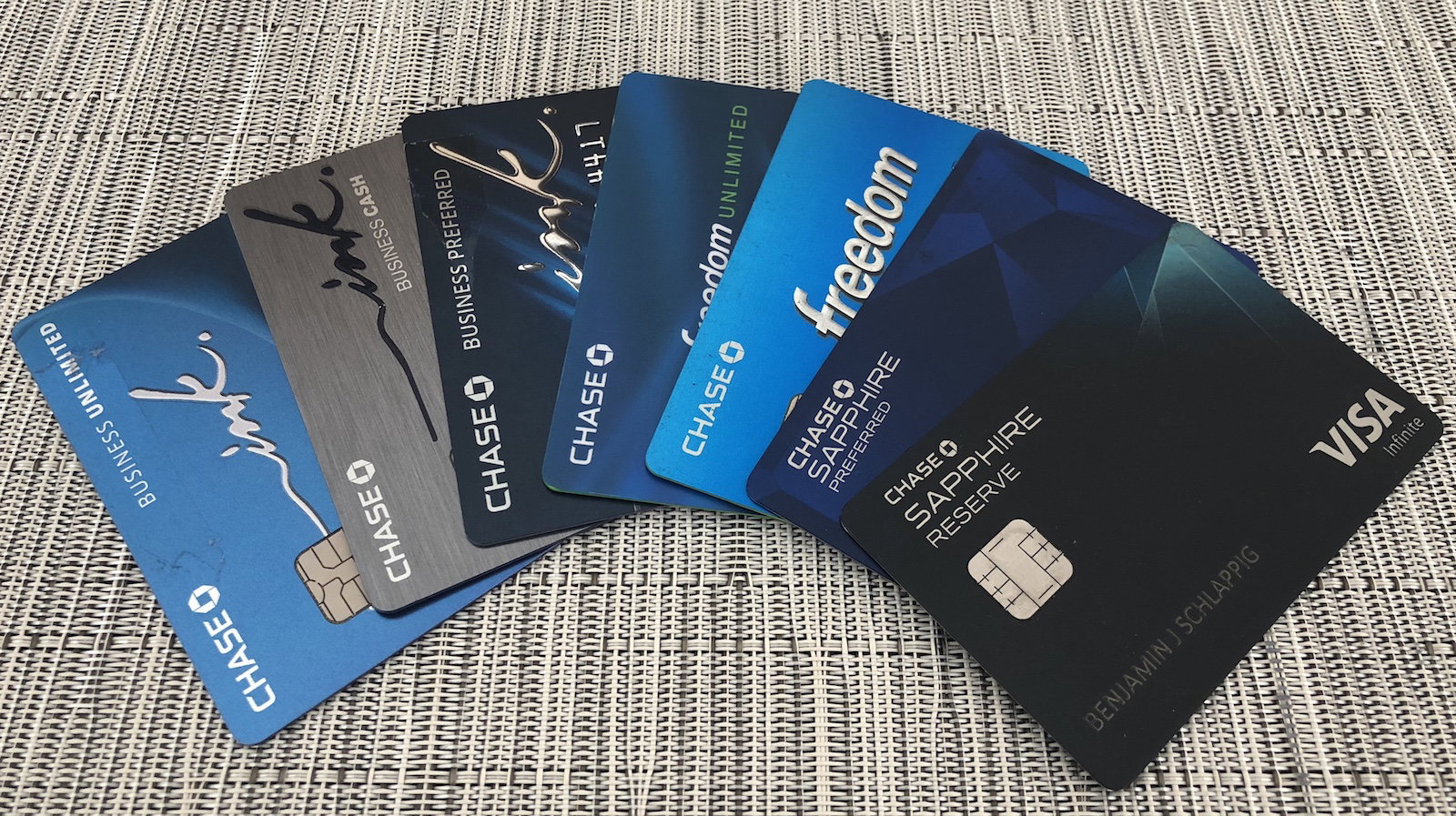
For those with good credit, credit cards can be the best way to rack up travel rewards, and get outsized value. Chase has among the best travel rewards cards out there, but the issuer’s cards can also be among the hardest to get approved for. One of the key restrictions from Chase is known as the 5/24 rule, whereby you may not be approved for a card if you’ve opened five or more new card accounts in the past 24 months. As you’d expect, there is some nuance to this, which I’d like to address in this post. After all, the major banks have all kinds of rules when it comes to approving people for credit cards, and at times it can take a bit of work to understand that. So let’s talk about the Chase 5/24 rule — what is it, how does it work, how can you check your “status,” and is it still enforced consistently? This is the single most important thing to understand before applying for a Chase card. What is the Chase 5/24 rule, and why does it exist?Which cards count toward the Chase 5/24 rule?Which cards are subject to the Chase 5/24 rule?Are business cards subject to the Chase 5/24 rule?When exactly does the Chase 5/24 rule limit reset?Is the Chase 5/24 rule still consistently enforced?Are there ways to avoid the Chase 5/24 rule?How do you check your Chase 5/24 status?What other Chase application rules are worth understanding?What is the best Chase application strategy in light of 5/24?Apply for Chase cards before other cardsApply for Chase business cards before personal cardsApply for “hub” Chase cards firstChase 5/24 rule FAQsBottom line What is the Chase 5/24 rule, and why does it exist? The Chase 5/24 rule limits your ability to be approved for Chase credit cards, based on how many other cards you’ve opened in the past two years. With the 5/24 rule, you typically won’t be approved for a Chase credit card if you’ve opened five or more new card accounts in the past 24 months. Let me mention that not all cards count toward this limit, and on top of that, it seems that enforcement is no longer 100% consistent. Furthermore, the 5/24 rule limits your ability to apply outright for a card, and not to be added as an authorized user — you can still be added as an authorized user if you’re over the limit. Why would Chase create such a seemingly arbitrary rule? All credit card issuers have rules in place to attract new cardmembers. Given how generous sign-up bonuses are on many cards, they create certain rules and restrictions intended to encourage profitable consumer behavior (while welcome offers are a great incentive to apply for a card, the goal is for people to keep them in the long run). While Chase has never publicly explained this, my assumption is that customers are more likely to be profitable if they fall under the 5/24 limit. Then again, Chase isn’t 100% consistent with this, so clearly there’s a little more to this. Which cards count toward the Chase 5/24 rule? There’s sometimes confusion about exactly which cards count toward the Chase 5/24 limit, so that’s worth clarifying. As a general rule of thumb, the following cards count toward the Chase 5/24 limit: All personal cards that have been opened within the past 24 months, regardless of the bank; this includes charge cards and hybrid cards (which are cards with no preset spending limit), as well as store cards (assuming they’re credit cards, and not debit cards or loyalty cards) All personal cards on which you’ve been added as an authorized user in the past 24 months, regardless of the bank Select small business cards, including those opened with Discover, TD Bank, and certain Capital One business cards, including the Capital One Venture X Business (learn more) and Capital One Spark Cash Plus (learn more); generally other business cards, including those issued by Amex, Chase, Citi, etc., don’t count toward the 5/24 limit The basic idea is that if you open a credit card and the account opening shows on your credit report (rather than just showing an inquiry), then it will count toward the Chase 5/24 limit. Just to be clear on a few more points: Mortgages, student loans, car loans, etc., don’t count toward the Chase 5/24 limit If you’re rejected for a card, that doesn’t count as a further card toward the limit Closing a card that you’ve opened within the past 24 months doesn’t lower your 5/24 total, since it’s based on the cards you opened, regardless of whether or not they’ve been closed since Product changing to another credit card generally shouldn’t count as an additional card toward that limit, unless the product change involves a hard pull, or requires a change in card numbers Which cards are subject to the Chase 5/24 rule? The Chase 5/24 rule generally applies to all cards issued by Chase, whether personal or business. So this isn’t specific to Chase Ultimate Rewards cards, but instead, it applies to co-branded Chase cards as well. Some of Chase’s most popular personal credit cards (which are subject to this rule) include the following: Chase Sapphire Reserve® (learn more) Chase Sapphire Preferred® Card (learn more) Chase Freedom Unlimited® (learn more) Chase Freedom Flex® (learn more) British Airways Visa Signature® Card (learn more) Aer Lingus Visa Signature® Card (learn more) Iberia Visa Signature® Card (learn more) Southwest Rapid Rewards® Priority Credit Card (learn more) United Club℠ Card (learn more) United Quest℠ Card (learn more) United℠ Explorer Card (learn more) United Gateway℠ Card (learn more) World of Hyatt Credit Card (learn more) The New IHG One Rewards Credit Card (learn more) The New IHG One Rewards Premier Credit Card (learn more) The Brand New IHG One Rewards Premier Select Credit Card (learn more) Marriott Bonvoy Boundless® Credit Card (learn more) Chase Air Canada Aeroplan® Credit Card (learn more) Some of Chase’s most popular business credit cards (which are subject to this rule) include the following: Sapphire Reserve for Business℠ (learn more) Ink Business Preferred® Credit Card (learn more) Ink Business Cash® Credit Card (learn more) Ink Business Unlimited® Credit Card (learn more) Ink Business Premier® Credit Card (learn more) Southwest® Rapid Rewards® Performance Business Credit Card (learn more) Southwest® Rapid Rewards® Premier Business Credit Card (learn more) United℠ Business Card (learn more) World of Hyatt Business Credit Card (learn more) The New IHG One Rewards Business Credit Card (learn more) Are business cards subject to the Chase 5/24 rule? This is a point that confuses people. As you hopefully understand by now, Chase’s 5/24 rule means that you may not be approved for a Chase card if you’ve opened five or more new card accounts in the past 24 months. As noted above, the exception is that most business cards don’t count toward the 5/24 limit. Why? Because business accounts opened with most issuers typically don’t show on your personal credit report. However, if you want to be approved for a Chase business card, you’ll still need to be below the 5/24 limit, based on what’s counted. To summarize: Chase business cards are subjected to the 5/24 rule, meaning that you may not be approved for them if five or more new card accounts show on your personal credit report in the past 24 months When you do apply for a Chase business card, it won’t count as an additional card toward that limit (because it won’t show on your personal credit report) In case that’s still confusing, let me give an example: If you’re at 4/24 (based on four cards showing on your personal credit report in the past 24 months) and you apply for a Chase business card, you’ll still be at 4/24 You could then apply for another Chase business card, and even if you’re approved for that, you’ll still be at 4/24 If you then apply for a Chase personal card, you’ll be at 5/24 (since the personal card shows on your personal credit report) When exactly does the Chase 5/24 rule limit reset? Most people understand that with the Chase 5/24 rule, you can’t be approved for a Chase card if you’ve opened five or more new card accounts in the past 24 months. That being said, when you fall under the 5/24 limit, when should you apply for a new card? Is it fine to apply exactly one day after 24 months, or what? Personally, I recommend waiting until the beginning of the following month after you fall under the 5/24 limit before applying for a card. In other words, you’d want to wait until the first day of the 25th month after which you applied for the card that puts you over the 5/24 limit. As an example, if your fifth most recent card application was on October 16, 2026, then 24 months from then would be October 16, 2028. However, I’d wait until November 1, 2028, to apply for a card, since often falling underneath the limit isn’t instant. Some report being able to get approved for cards sooner, but if you can wait I’d recommend doing so, just to be on the safe side. Is the Chase 5/24 rule still consistently enforced? For a vast majority of people, the Chase 5/24 rule does seem to still be fully enforced, so don’t expect you’ll be able to get around it. However, in the past year or so we have seen an increasing number of reputable data points of people being approved for cards despite being over the 5/24 limit. There seems to be no obvious rhyme or reason to this, so I can’t speak to what’s going on. The approach I would take is that I’d assume that you’re subjected to the 5/24 rule, unless you have reason to think that you’re not. And that brings me to the next point… Are there ways to avoid the Chase 5/24 rule? Generally speaking, there aren’t really ways to get around the Chase 5/24 limit, with a few caveats: Chase will sometimes target people for cards despite being over the 5/24 limit, and if you’re eligible, you should see this in the “Just for you” section of your Chase account In some situations, people have had success calling the reconsideration line and asking that their authorized user accounts not count toward the limit, but that doesn’t work consistently The easiest way to get a card if you’re over the 5/24 limit is to simply product change an existing card to it; however, that’s only possible if you’ve had a card for at least 12 months, and you don’t earn the welcome bonus on a card if you acquire it through a product change So there’s no way to force your way into getting approved for a card despite being over the 5/24 limit, but some people do have luck. For some people it can be tough to determine if you’ve opened five or more new card accounts in the past 24 months. Furthermore, it’s not like Chase can tell you if you’re at the limit or not, given that the limit is based on your applications with all card issuers. The simplest answer, of course, is to just try to keep track of how many cards you open. I think it makes a lot of sense to keep a spreadsheet listing the cards you’ve applied for, the dates on which you’ve applied, etc. However, if you haven’t done that, what’s the best way you can determine if you’ve surpassed the Chase 5/24 limit or not? Unfortunately over time, the best methods do change. For example, back in the day, the Experian app would make it easy to check that, but that’s not the case anymore. Nowadays, the most reliable way to check your Chase 5/24 “status” is using Credit Karma. This isn’t terribly straightforward, but it still works, and it doesn’t require downloading an app. To start, you’ll need to register for Credit Karma for free, which is an easy process. Once you’ve registered and are logged into your Credit Karma account and are on the main page, take a look at the green half circles at the top of your account page, which show your credit score. Click on either of those circles. Using Credit Karma to check 5/24 status On the next page, you’ll see more details about a variety of your credit factors. Click on the “Credit age” section. Using Credit Karma to check 5/24 status There you’ll see all your cards listed that are currently open. They’ll generally be sorted starting with the oldest cards… Using Credit Karma to check 5/24 status …to the newest cards. For example, as you can see below, I have five cards that I’ve opened in the past two years, which show on my personal credit report, and I won’t be in the “clear” for another eight months or so. Bleh! Using Credit Karma to check 5/24 status There’s one more catch — this only shows the accounts you’ve opened that continue to be open. If you’ve closed an account, it won’t show on this page. If you haven’t opened and closed accounts in the past 24 months, then this is a non-issue. Fortunately figuring out cards that have been both opened and closed in the past 24 months isn’t too tough either. On the same page, go to the “View another credit factor” section, and click on “Total accounts.” Using Credit Karma to check 5/24 status On the next page, click on “View all accounts” button. Using Credit Karma to check 5/24 status At the bottom of the page you’ll see a “Show closed accounts” button, so click that. That will show you all your closed cards, and if you click on the individual cards, you can see exactly when they were opened and closed. Using Credit Karma to check 5/24 status Just add in any accounts that have been both opened and closed in the past 24 months, and you’ll have your 5/24 total. It is worth noting that it can sometimes take a while for recent applications to show on your credit report, so if you’ve applied for a card in the past few weeks, it may not be on there yet. What other Chase application rules are worth understanding? While the 5/24 rule is the Chase application rule that gets the most attention, it’s certainly not the only rule. One other major rule is that Chase will typically approve consumers for at most two personal cards in a 30-day period, and at most one business card in a 30-day period. Chase is an issuer where I highly recommend going “slow and steady” with applications, to avoid any scrutiny. After all, if you apply for a lot of cards in a short period, you’re more likely to get a financial review. Each card also has its own rules when it comes to bonus eligibility. Some cards have “family” rules for eligibility, others have a 24-month rule for bonus eligibility, and others have a “once in a lifetime” rule. So check the application terms before applying. Fortunately Chase has pop-ups nowadays, which will typically tell you if you’re not eligible for a bonus, after you submit your application, but before you have a hard pull on your credit. Also, to state the obvious, the above restrictions are just some of the factors that impact whether or not someone is eligible for a Chase card. There are all kinds of other things that are factored in, including credit score, income, history with the bank, existing debt, etc. What is the best Chase application strategy in light of 5/24? With most questions about the Chase 5/24 rule (hopefully) answered, I’d like to provide some advice for the best approach to take when applying for Chase cards, in light of the 5/24 rule. Apply for Chase cards before other cards While all major card issuers have application restrictions, Chase’s restrictions are the strictest when it comes to considering the cards you’ve applied for with other card issuers. As a result, I’d recommend applying for Chase credit cards early on in your credit journey. In other words, if you’re interested in cards from Amex, Capital One, Chase, and Citi, generally pick up the Chase cards first. Apply for Chase business cards before personal cards If you’re interested in applying for both personal and business Chase cards, make sure you apply for business cards first. As explained above, while both personal and business Chase cards are subjected to the 5/24 rule, applying for a Chase business card doesn’t count as a further card toward that limit. That’s because a Chase business card won’t show on your personal credit report in the same way as a personal card. So get the Ink Business Preferred before you get the Chase Sapphire Preferred, and get the Sapphire Reserve Business before you get the Chase Sapphire Reserve. Apply for “hub” Chase cards first There are so many great Chase cards, so it can be tough to choose which card to apply for first. You’ll want to be sure you get the “key” cards first, which can help you maximize the value of other cards, especially within the Ultimate Rewards ecosystem. If you’re looking for a personal credit card strategy: I’d recommend starting with the Chase Sapphire Reserve or Chase Sapphire Preferred (see my comparison) I’d then recommend supplementing that with the Chase Freedom Flex and/or Chase Freedom Unlimited (see my comparison) If you’re looking for a business credit card strategy: I’d recommend starting with the Ink Business Preferred or Sapphire Reserve Business I’d then recommend supplementing that with the Ink Business Cash and/or Ink Business Unlimited (see my comparison) Chase has some of the best card duos out there. Chase 5/24 rule FAQs What is the Chase 5/24 rule? The Chase 5/24 rule means you typically won’t be approved for a Chase credit card if you’ve opened five or more new card accounts, from any issuer, in the past 24 months. However, some business cards don’t count toward this limit. Is the Chase 5/24 rule still enforced? The Chase 5/24 rule is enforced for most people, but not 100% consistently. Some applicants over the limit get approved, while others are denied, and there’s no clear pattern. For a vast majority of people, it does still seem to apply. Does the 5/24 rule apply to the Chase Sapphire Preferred and Sapphire Reserve? Yes, the Chase 5/24 rule is tied to the applicant, not the card, so it can apply to virtually all Chase cards, including the Sapphire Preferred, Sapphire Reserve, Freedom Unlimited, Freedom Flex, and co-branded airline and hotel cards. Which Chase cards are subject to the 5/24 rule? Both personal and business Chase cards are subject to the Chase 5/24 rule. This even includes co-brand airline and hotel cars, so that includes Chase’s entire portfolio. Do business credit cards count toward 5/24? Most business cards don’t count toward the Chase 5/24 limit. Specifically, cards from Amex, Bank of America, Barclays, Chase, and Citi, don’t appear on your personal credit report, so they don’t add to your 5/24 count. Business cards that do report to your personal credit file would count. Can I get a Chase business card if I’m over 5/24? Typically you can’t get a Chase business card if you’re over the 5/24 limit. Applying for a business card won’t raise your count, though, which is why it’s smart to apply for them before personal cards. How do I check my Chase 5/24 status for free? The easiest way to know your Chase 5/24 status is to just record when you open for new cards. However, if you don’t do that, your best bet is to use Credit Karma, which makes it easiest to count up all your new card applications. How long does a card count toward 5/24? A card counts toward the Chase 5/24 limit for 24 months from the date it was opened. Closing it doesn’t remove it, because it stays on your credit report. Rejected applications don’t count, since no new account is opened. What is the best order to apply for Chase cards? Apply for Chase cards before cards from other issuers, since Chase is the strictest about your other applications. Get Chase business cards before personal ones, and start with “hub” cards like the Sapphire Preferred or Reserve (personal) or the Ink Business Preferred (business). Does being an authorized user on a card count toward the Chase 5/24 limit? If you are added as an authorized user on someone else’s credit card and have to provide your social security number, then yes, that typically counts as a further card toward the 5/24 limit. Bottom line Chase has a lot of great travel rewards credit cards that are worth acquiring for anyone looking to maximize their credit card strategy. When it comes to being approved, the 5/24 rule is the most important restriction to understand. With this, you typically won’t be approved for Chase cards if you’ve opened five or more new card accounts in the past 24 months. Most business cards don’t count toward that limit, so it can pay to apply for those. Meanwhile the 5/24 rule should also impact the order in which you apply for cards, to maximize your odds of getting approved for as many cards as possible. Hopefully the above answers any of the questions you may have about this rule, so that you can get the best Chase cards possible. What has your experience been with the Chase 5/24 rule? Do you have any questions about the rule that I haven’t answered?
Chase 5/24 Rule: How It Works, How To Check Your Status, & Whether It’s Still Enforced
Full Article
Original Source
Read the full article at Onemileatatime →KhanList aggregates and links to publicly available news content. We do not host full articles from third-party sources. Always verify important information with original sources.