
Key events54s agoHow heavy users of gas could end up paying more26m agoBreaking: UK to end standing charges on household gas bills26m agoIntroduction: City investors hope fot a quiet budgetHow heavy users of gas could end up paying moreAbolishing the standing charge doesn’t mean that every gas user will save money.Because the cost is shifting onto the unit rate of gas, a household that consumes a lot of gas might end up paying more overall.Currently, regulator Ofgem has capped gas bills at 7.97 pence per kWh, plus the 29.68p daily standing charge.Consumer advice website MoneySavingExpert has estimated that today’s move could add around 1p to each kWh of gas used.Based on their estimations, using current energy prices, this would see the typical gas unit rate rise from 7.97p/kWh to 9.11p/kWh, they say here.The Treasury argues that households who don’t benefit from an automatic saving will still have better control over their bills without the worry of affording the standing charge.It aso says the government will set out “targeted mitigation for a small number of households” in the future.Abolishing the standing charge will help households control how much they spend on gas, explains energy secretary Miatta Fahnbulleh: double quotation mark“Too many families face unfair charges, so we’re making it easier for people to take control of their energy bills. “By removing one of the nation’s bugbears - taking standing charges off gas bills, with extra support for those who need it - we’ll give millions of people breathing space. “Tackling affordability is my number one priority, and I will keep doing everything I can to protect people from unaffordable bills.” Breaking: UK to end standing charges on household gas billsJohn Healey has pledged to provide households with “breathing space” from the rising cost of living pressures.And the Treasury has just announced a new measure to help – the government is removing standing charges from household gas bills in the UK.These fixed daily fees – £108 a year for the typical household on average – cover the costs of connecting to a supply, are controversial as housholds pay them even if they only use little energy.Healey will ask regulator Oftem to end this “unfair and outdated practice” in 2027 or as soon as possible afterwards.The plan is to shift the cost of standing charges into the unit rate of energy instead.The Treasury says this could save 60% of account-holding households around an average of £45 off their annual bill.Healey says: double quotation mark“Gas standing charges are unfair and outdated so I am scrapping them to give millions of households a bit of breathing space. “My Budget will draw a line in the sand on an energy policy that has failed British billpayers for years, letting extra costs on bills pile high and leaving households even more exposed to global shocks.” Introduction: City investors hope fot a quiet budgetGood morning, and welcome to our rolling coverage of business, the financial markets and the world economy.It’s budget day! And City investors are expecting that chancellor John Healey avoids any bold spending pledges or tax hikes in his first fiscal statement.Investors anticipate a cautious budget from the chancellor, reasoning that he will prioritise stability in the bond market at a time when borrowing costs are close to their highest levels in around two decades.With memories of Liz Truss’s budget disaster yet to fade in the City, traders will be alert to any signs that Healey is wavering on the government’s fiscal rules - but the mood music from the Treasury is that fiscal stability is still in vogue.Last night, the chancellor warned that the world is “a highly uncertain place.”In a video released before the budget, he said: double quotation mark“Conflicts abroad are pushing up energy prices, and the cost of living here at home – piling pressure on the families, on businesses and on our public finances.” One key question for the City is how much fiscal headroom the chancellor has chosen to maintain. That buffer - which measures the safety margin the government enjoys to hit its fiscal rules - will have shrunk as UK borrowing costs rose this year. Back in March, the headroom was a comfy £23.6bn.Economists predict it will have fallen to between £15bn and £20bn - a figure below £15bn might spook the City.Morgan Stanley reported on Tuesday that investors they’ve spoken to largely expect a low-key, low-volatility event today.They told clients: double quotation mark“No investor we spoke to contemplated a risk of the fiscal headroom coming in at below £15 billion, and most we spoke to said that even £15 billion (our base case) would be a disappointment, with consensus in recent days shifting towards between £15 billion and £20 billion.” Bank stocks could be hit by the budget too - we’re expecting new taxes on the banks, but we don’t yet know if Healey will simply reverse the Tory-era cut to the bank surcharge, or raise it by more.The agenda 12.30pm GMT: The budget statement begins 1.30pm GMT: Office for Budget Responsibility releases its latest economic and fiscal outlook 2.30pm GMT: Office for Budget Responsibility press conference
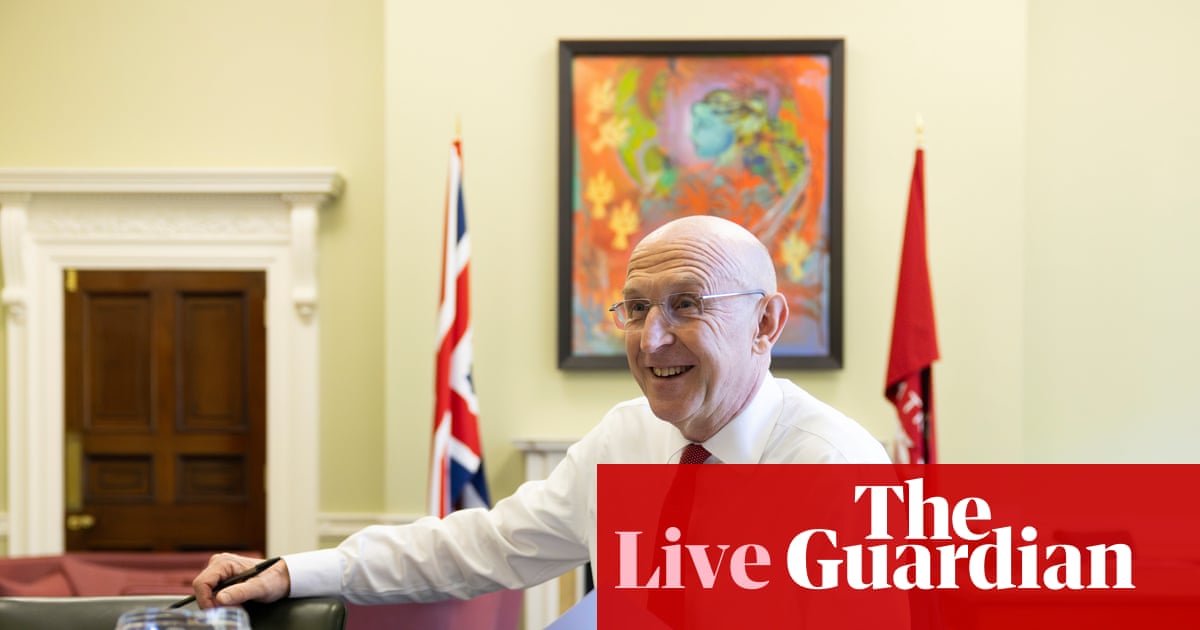
Chancellor John Healey to end standing charges on household gas bills, as City expects a quiet budget – business live
Full Article
Original Source
Read the full article at Theguardian →KhanList aggregates and links to publicly available news content. We do not host full articles from third-party sources. Always verify important information with original sources.