
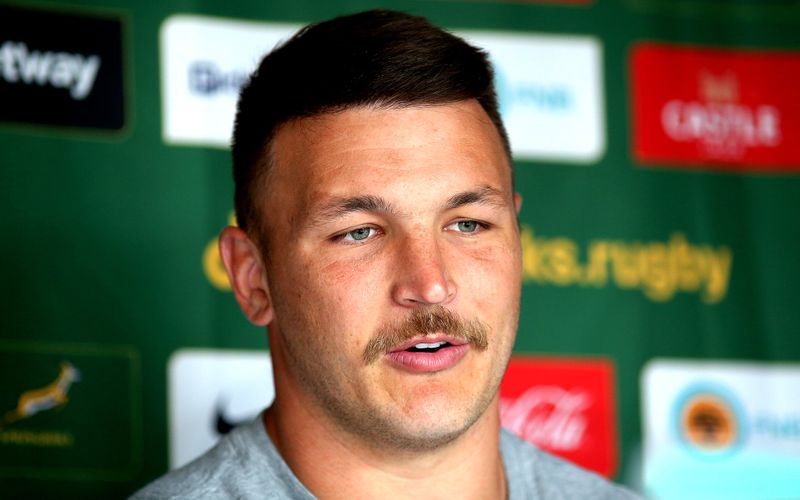
South Africa’s past is an extremely dark one, shaped by British colonialism and later the racially divisive apartheid system that lost its relevance when the country held its first democratic elections in April 1994. Despite the perfectly painted picture of unity that has been forged since those historic elections, it is also a fact that race relations continue to play a pivotal part in how South Africans interact with each other. On one hand, some white people still hold attitudes of superiority over the other demographics with whom they share South Africa. On the other hand, some black people still view white people as the enemy who displaced them and oppressed them for decades on their own continent. These minorities from both sides remind us that South Africa is still not the rainbow that the country’s first democratic president, Nelson Mandela, envisioned. It may never truly be beyond surface-level tolerance. André Esterhuizen captaincy furoreThis aspect of South African society once again bubbled to the surface on the back of André Esterhuizen becoming the 68th man to captain the Springboks recently. Esterhuizen’s special moment was soured by the Boks’ 42-38 loss to Australia in Perth. However, in the lead-up to the fixture, Esterhuizen was already under pressure and scrutiny for reasons other than his present leadership qualities and his ability as a rugby player, following reports from 2012 about him calling a black rival coach, Thabo Molete, a “f**cking k*ffir”.André Esterhuizen (centre) is one of South Africa’s best rugby players and is a reliable member of the Springboks. (Photo: Antony Dickson / Gallo Images) At the time Molete was coach of Potchefstroom Gymnasium, while Esterhuizen was an 18-year-old playing for Hoërskool Klerksdorp. Esterhuizen denied the allegation. However, an investigation found him guilty and he was subsequently banned from rugby for a year (with six months suspended). He missed Craven Week as a result and was also mandated to complete a life skills programme. Assistant coach Mzwandile Stick (left) and captain Andre Esterhuizen at a press conference in Perth. (Photo: Antony Dickson / Gallo Images) When he was installed by Springbok boss Rassie Erasmus as captain for the clash against Australia, the incident resurfaced in the public domain. In the lead-up to the match, News24 sports journalist Khanyiso Tshwaku asked Esterhuizen directly about the incident, providing the 32-year-old an opportunity to address it once and for all. But Tshwaku was quickly shut down by Springboks media department, who said the matter would not be addressed. The Springboks and apartheidThere are already South Africans who refuse to back the Springboks, despite them being the country’s most successful national team.This is because at the peak of apartheid rugby was one of the strongest vehicles for the advancement of Afrikaner nationalism. The sport was viewed as the physical manifestation of Afrikaner strength, discipline and divine right. To this day, there are South Africans who support the All Blacks because they refuse to be associated with the Springboks’ past.Of course, just as is true for South Africa as a country, the Boks have undergone major transformation since those years. There is representation that is relatively close to mirroring the population demographic of the nation, and a first black captain in the form of Siya Kolisi. Late President Nelson Mandela hands Francois Pienaar the Rugby World Cup trophy after the Springboks beat New Zealand at Ellis Park in Johannesburg on 24 June 1995. (Photo: Wessel Oosthuizen / Gallo Images) When Mandela donned Francois Pienaar’s No 6 jersey during the 1995 Rugby World Cup celebration, it was also a calculated political gesture. Mandela sought to reassure white South Africans that they had a place in the new democracy while asking black South Africans to embrace a symbol that had historically represented their oppression. Bok coach Erasmus is usually open and honest when speaking about such topics, hence the level of transformation within the team that has taken place under his watch and guidance. Even though at grassroots level the sport continues to be viewed as a “white” sport and talented black rugby players fall through the cracks. Esterhuizen the leaderHowever, even Erasmus chose to focus on Esterhuizen’s current version, and as he knows him, when speaking about why he would be skipper against the Aussies. Springbok coach Rassie Erasmus explained that handing André Esterhuizen the captaincy for the Wallabies clash was meant to expand the team’s leadership pool. Siya Kolisi remains captain. (Photo: Richard Huggard / Gallo Images) “André’s been the Sharks’ captain. He’s been one of the players that whenever you ask something from him, whether it’s being a hybrid player or playing behind Damian de Allende and Damian Willemse, and then accepting to play as a forward and a backline player, he always puts the team first,” Erasmus said.“The way André carried himself while being the Sharks’ captain when they went through a tough time was impressive. I really thought he sort of pulled them together with JP (Pietersen – coach) and the whole set-up there,” the Bok boss added.“What he has meant to us, serving the team a helluva lot and accepting his role as flanker or centre or playing off the bench, that’s the kind of players we enjoy in the team.”SA Rugby foulWhile it is true that Esterhuizen is one of the best rugby players in the country at the moment, the Springboks missed a major opportunity to control the narrative around him in a positive way. They should have allowed the centre to directly address the incident and lay it to rest for good. For him to speak of the lessons learnt and whether he had atoned to Molete for the slur. Through its censorship SA Rugby has ensured that critics will have more ammunition to attack the team as a past symbol of apartheid, as opposed to being the national pride of a rainbow nation under construction.But for those critics, it is also worth remembering that no one on Earth has ever lived a perfect life. Everyone has made mistakes and many people have learnt from their mistakes to become better human beings. Certainly, it is difficult to imagine someone who is a raging racist being part of the Springbok set-up under the prevailing conditions and even being made captain. DM
CENTRE OF THE STORM: Esterhuizen captaincy furore shows South Africa needs honesty about race and rugby’s past
Full Article
Original Source
Read the full article at Dailymaverick →KhanList aggregates and links to publicly available news content. We do not host full articles from third-party sources. Always verify important information with original sources.