
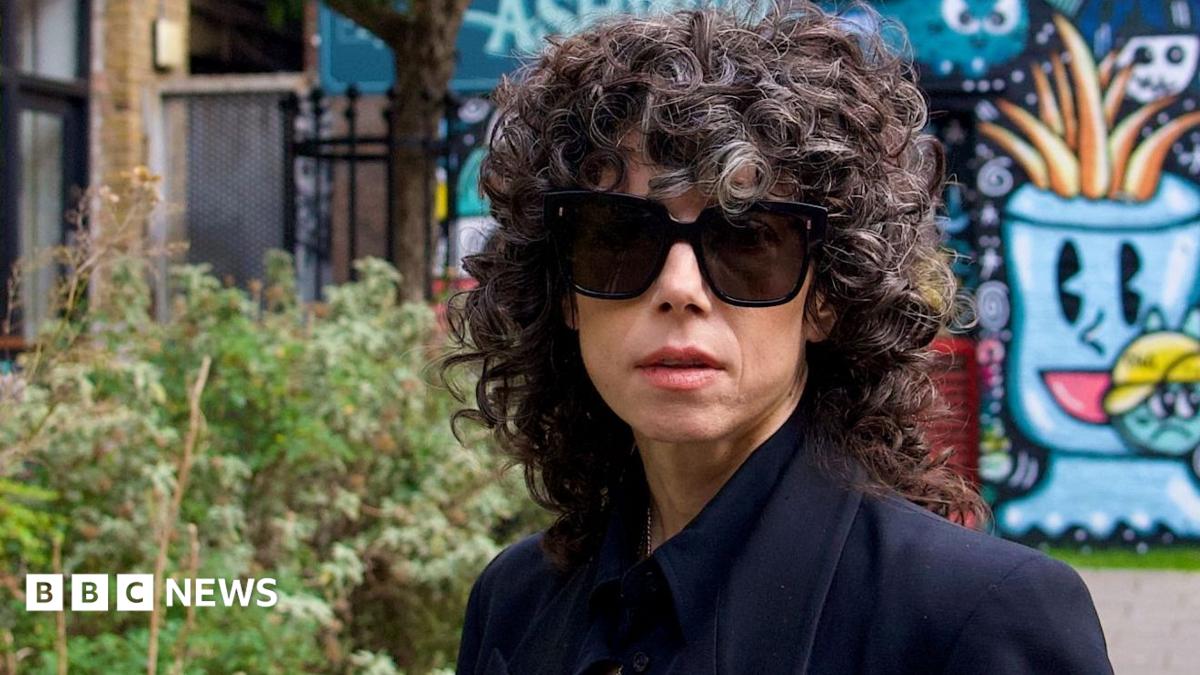
Image source, Alvaro Alvarez/ BBCImage caption, Meredith Whittaker believes science doesn't support the idea that AI will turn against humansByMegha MohanGender and identity correspondentWarning: This article contains strong language.Meredith Whittaker has little patience for the AI doom that dominates headlines - she thinks warnings of AI turning on humanity is a fear "not anchored in science"."The risk is very real," says the boss of the Signal Foundation, which runs the encrypted messaging app of the same name, "but it's not the shiny ghost stories the wild-eyed boys are talking about".Instead, she believes the more immediate danger is the technology being used carelessly. She cites an alleged incident, reported by CNN, in which a chatbot used by US intelligence invented information about a Chinese vessel carrying nuclear material, reportedly leading the US to prepare a military response."We almost went to war with China," she tells BBC Global Women."A system that produces faulty intelligence and almost gets us into a war with China should not be considered super-intelligent by any standards."Signal has an estimated 40-70 million users - a drop in the ocean next to WhatsApp, which has billions.But it is renowned for its tough stance on protecting users' privacy - it hides who is sending a message from its own servers, limiting the data available to outside observers or hackers.Project Maven protestTime magazine named Whittaker one of the most powerful people in AI. She moves through the rooms where its future is discussed, from Silicon Valley boardrooms to Downing Street, Davos and the Vatican.She studied literature at university and joined Google in 2006 as an entry-level temp with no computer science degree.In late 2017, she made her name when a colleague told her about Project Maven, a secret Google contract with the US Department of Defense to build AI for drone targeting.She understood what it meant to "compress the kill chain": to shrink the time between a machine flagging a target and someone deciding to fire, reducing deliberation. With thousands of colleagues, she pushed back."This is going to launder bad intelligence and bad data," she remembers arguing publicly.The following year Whittaker helped organise a walkout, in which some 20,000 staff protested against the company's handling of several issues, including what they felt was the rushed introduction of new technology. Google dropped the contract and Palantir picked it up.Image source, Alvaro Alvarez/ BBCImage caption, Whittaker criticises venture capitalists' lack of support for startups led by womenShe draws a direct line from Maven to the US missile attack on a school in Iran this year, which she says relied on the system and on outdated intelligence that identified the school as a military target."This is exactly what we were warning about in 2017," she says.In response, Palantir told Global Women there was "no evidence that Palantir's software was at fault in this terrible tragedy". It added that "Palantir is not responsible for the underlying data nor identifying intelligence deficiencies". And earlier this year it's UK and Europe boss, Louis Mosley told the BBC that "there's always a human in the loop, so there is always a human that makes the ultimate decision". The US military has yet to release the findings of its investigation into the Minab strike, but Defense Secretary Pete Hegseth has said it would "never target civilian targets".'I have a backbone'Governments, including the UK's, argue for more access to conversations on messaging apps. They say this is to protect women and children.At London Tech Week 2026, then Prime Minister Keir Starmer said technology companies would be expected to detect and block nude images on children's devices, or face legislation. Whittaker argues children would be able to circumvent any such measures, calling the government's approach "an unprecedented regime of communication and information controls".The Department for Science, Innovation and Technology told the BBC it is preparing legislation.Would Signal leave any country, the UK included, that forced it to weaken its encryption?"Yes! My God, I have a backbone," she says. "It doesn't change based on mood. It doesn't change based on consultants."Faced with exposing people "who rely on us, sometimes in the context of life or death, to surveillance that could be weaponised against them", she says, "we would leave the market".The app is fully or partially blocked in Russia, China and Iran.Image source, Alvaro Alvarez/ BBCImage caption, Whittaker advises women in tech to stand up to bulliesRani Govender, Head of Child Safety Online at the National Society for Prevention of Cruelty to Children, told the BBC it hears from children who have been groomed and moved on to end-to-end encrypted platforms, where they are coerced into creating child sexual abuse material."Tech companies are responsible for the design choices they make, and they cannot ignore the risks those choices can create for children."But Signal does have support from some women's groups, often those from the Global South who use the app themselves."In a time of state surveillance and cyber-attacks, Signal is a tool for survival," says Hera Hussain, founder of the gender abuse charity Chayn, which is active throughout South Asia. "With any platform, it can be used by bad actors too, and we have to hold that truth too."'What do we do about the kitchens?'I put to Whittaker a case from Canada, where police officers shared racist and misogynistic messages in a Signal group which leaked only when one of them passed it on to the media. A lawyer for one officer said the men believed Signal was as private and safe as their own home."If they had that conversation in the kitchen and their bro snitched, would it be: 'What are we doing about kitchens?'" she asks. "It has to work for everyone or it works for no-one. This is the principle of fundamental rights. They apply even to assholes."She points to a US woman jailed after Meta handed over messages showing she helped her daughter access abortion in a state where it had been criminalised. Private communication, she says, protects people from many kinds of harm - "an abusive spouse, a misogynist law enforcement officer with access to a database, or an authoritarian government that doesn't think women should get educated".What would she want to say to a woman who wants to enter the tech field but is intimidated by the gendered aspect of the profession?"Do you love it?" she says."Do you sit down at a terminal and feel a rush of energy? Do you enjoy playing with and defining AI systems?"Then she pauses and says: "Are you able to navigate interesting and gnarly environments where not everyone is going to be chill? Because there's nothing more dangerous than being a coward in front of a bully."I ask her if these environments are full of bullies.Her colleague says, "I think that's 2pm" - the time we agreed to end the interview.Meredith smiles. "I'd say don't be a simp," she says, using a term for someone who shows extreme deference to authority figures. "It's not going to help you. Don't laugh at the joke if you don't think it's funny."Additional reporting by Katie RobertsThis is part of the Global Women series from the BBC World Service, sharing untold and important stories from around the globe
'Careless use of AI is the real threat - not the ghost stories'
Full Article
Original Source
Read the full article at Bbc →KhanList aggregates and links to publicly available news content. We do not host full articles from third-party sources. Always verify important information with original sources.