
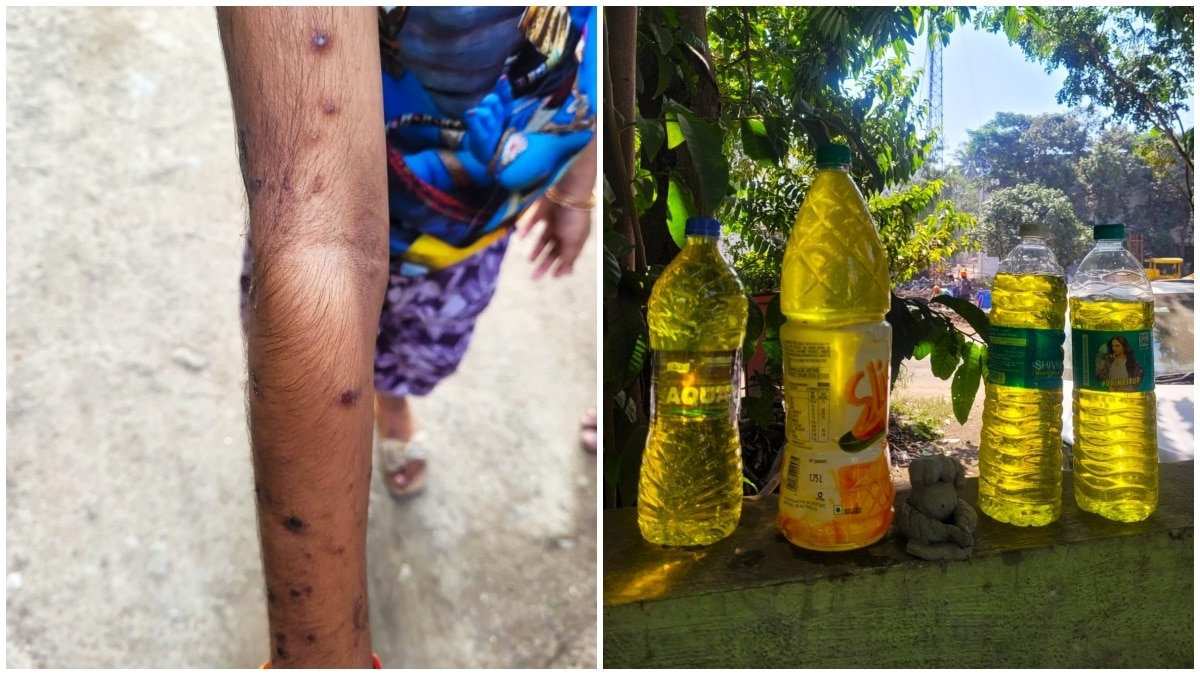
A report has found very high levels of hexavalent chromium in groundwater in Nashik's Ambad area. The findings have raised concerns over public health, industrial pollution and possible risks to the Godavari before the Kumbh Mela.Children with blisters following baths in the polluted water (Photo: Parineeta Dandekar)New Delhi,Oct 12, 2026 15:32 ISTGroundwater in Ambad, an industrial area of Nashik in Maharashtra, has been found to contain extremely high levels of cancer-linked hexavalent chromium, raising concerns about public health and possible contamination of the Godavari river ahead of the upcoming Kumbh Mela.SANDRP is an informal network working on issues related to rivers, communities and large-scale water infrastructure like dams.Laboratory testing commissioned by the South Asia Network on Dams, Rivers and People (SANDRP) found hexavalent chromium concentrations of 50.3 milligrams per litre (mg/L) in a groundwater sample, compared with the Bureau of Indian Standards' allowable drinking-water limit of 0.05 mg/L.The reported concentration is more than 1,000 times the limit, according to the network's statement issued on October 8. The sample was collected from the Ambad area, where residents have reported yellow-coloured borewell water. Borewell Water being used for washing clothes, utensils and bathing. (Photo: Parineeta Dandekar) SANDRP said the contamination could be linked to industrial activity in the Ambad Maharashtra Industrial Development Corporation (MIDC) zone, including electroplating, metal finishing and paint manufacturing. The source of the contamination, however, requires confirmation through an official investigation.WHAT IS HEXAVALENT CHROMIUM? Hexavalent chromium, or chromium-6, is a toxic chemical form of the metal chromium. It is used in several industrial processes, including metal plating and surface treatment, and can enter the environment through inadequately treated industrial wastewater.The International Agency for Research on Cancer classifies chromium-6 compounds as carcinogenic to humans, based on evidence that exposure, particularly through inhalation, can cause cancer.The risks from exposure depend on the route, concentration and duration. The World Health Organisation notes that evidence on cancer in humans from chromium exposure through drinking water remains limited, although studies in animals have found tumours following oral exposure.Exposure to chromium compounds can also cause skin irritation and other health effects. SANDRP reported that residents, including children, had developed rashes, blisters and painful skin ulcers after contact with the contaminated water.It also cited reports of swollen lymph nodes, chronic illnesses and two miscarriages among women in the settlement. These health complaints and any possible links to chromium exposure require independent medical assessment.POSSIBLE THREAT TO THE GODAVARISANDRP alleged that contaminated water is entering the Godavari through a local drain, raising concerns because the river and its ghats are associated with the upcoming Kumbh Mela in Nashik.The network said the contamination could pose a risk to residents and pilgrims if the affected water reaches areas used for bathing.The network also criticised the regulatory response, saying the Maharashtra Pollution Control Board issued a show-cause notice to one company on September 30 but did not publicly share its water-testing data.The report has prompted calls for immediate alternative water supplies, health camps, public disclosure of test results and inspections of industrial units in Ambad. SANDRP has also demanded testing of the affected drain and the Godavari downstream.The immediate priority is to establish the extent of contamination, identify its source and ensure that residents have access to safe water. With the Kumbh Mela approaching, transparent testing and timely action will be essential to assess and limit any potential risk.- Ends
Cancer toxins found in water near Maharashtra's Kumbh Mela site: Report
Full Article
Original Source
Read the full article at Indiatoday →KhanList aggregates and links to publicly available news content. We do not host full articles from third-party sources. Always verify important information with original sources.