
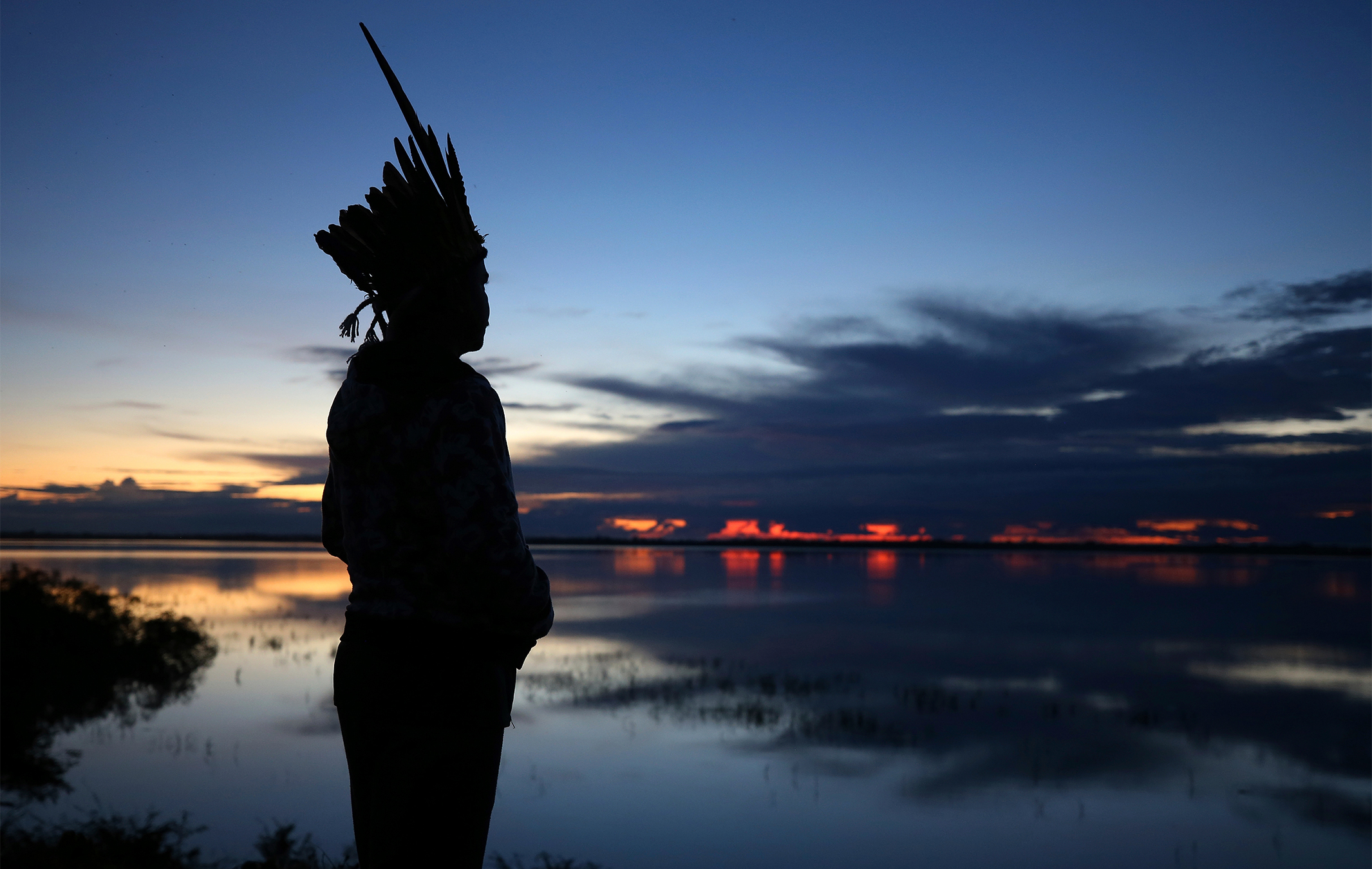
Construction of an access road for the controversial Potássio Autazes potash project in Brazil’s northwestern Amazonas state has caused springs used by the Mura Indigenous people to dry up, threatening a fish spawning ground and access to food and water, residents say.The company says it carried out an inspection on Oct. 8 but found no signs of the springs drying up or of road construction affecting its water flow.Residents say the springs’ disappearance threatens the Mura’s spiritual connection to their territory, as the waterway is home to ancestral spirits that flee when disrupted.Expert assessments commissioned by the Federal Public Prosecutor’s Office found the project’s environmental studies to be “incomplete and flawed”, while federal prosecutors told Mongabay that lawsuits challenging the project’s environmental licenses are still pending. The construction of an access road for a potash mining project in Autazes, in Brazil’s Amazonas state, has caused at least two sacred springs to dry up, according to the Indigenous Mura people. It is the latest in a series of controversies spanning a decade that has plagued the Potássio Autazes project. “There is a profound sense of loss,” Filipe Mura, chief of the affected Lago do Soares village, told Mongabay via WhatsApp. “We realize we may be losing what belongs to us — our territory, our culture, and, above all, the very life that exists in this place.” In Mura traditional cosmology, all springs, rivers, lakes and forests have a guardian, or owner, who must be treated with respect, residents tell Mongabay. “If a spring dries up, it means its keeper has departed — and when the keeper leaves, they take with them the animals, the fertility of the soil, and all the blessings of that region,” Willian Rodrigues Filgueira, a professor from the Mura Baixo Madeira Indigenous territory, which neighbors the affected Lago do Soares/Urucurituba territory, and member of the Organization of Mura Indigenous Leaders of Careiro da Várzea (OLIMCV), told Mongabay via WhatsApp. The loss of a spring, therefore, disrupts the spiritual balance that sustains life in the territory. Residents also said that the company behind the project has begun to clear-cut the area — the process of cutting down all trees in a section of forest at the same time — where it intends to build the project. The company, Potássio do Brasil, says it is aware of the reports and carried out a technical inspection on Oct. 8, 2026. During this inspection, and based on the available records, “no signs of the mentioned spring drying up were observed,” and it did not observe any evidence that the construction of the internal access road could have allowed an alteration in its flow. It told Mongabay in an email that it will monitor the situation and conduct further verifications. Indigenous leader Filipe Gabriel Mura shows an exploratory well for future drilling of potash in the Lago do Soares village, February 2025. Image by AP Photo/Edmar Barros. In April 2024, state agency the Amazonas Environmental Protection Institute (IPAAM) granted installation licenses to Potássio do Brasil, a Brazilian subsidiary of Brazil Potash Corp., headquartered in Canada. This gave the company the green light to begin the construction of its mine, processing plant and port in Autazes. The licenses were issued after a February 2024 decision by Brazil’s Federal Regional Court of the 1st Region (TRF1) allowed state-level licensing to proceed, despite earlier court orders suspending the project. The planned underground potash mine could eventually supply around 20% of Brazil’s potash demand, according to the company, reducing the country’s reliance on imported fertilizers. This project is attractive to the country’s powerful agribusiness lobby, which is seeking to reduce its dependency on foreign suppliers like Russia, which accounted for 45% of its potash imports in 2025. The Federal Public Prosecutor’s Office (MPF) filed a lawsuit against the licenses issued by IPAAM in May 2024. It argued that the project threatened the rights of Mura Indigenous people, lacked adequate prior consultation and involved irregularities in the state licensing process. Brazil’s Indigenous Affairs Agency, Funai, also requested that IPAAM and Potássio do Brasil suspend the project’s environmental licensing, which it says is riddled with irregularities and overlaps with Indigenous lands, including territories still in the process of being officially demarcated. As the demarcation advances, mineral exploration in the area will be subject to even stricter limitations, an MPF spokesperson told Mongabay in an email. The Amazonas Environmental Protection Institute (IPAAM) did not respond to Mongabay’s request for comment by the time of publication. An aerial view of forest clearing near the planned Potássio Autazes mine in the Brazilian Amazon. Image by Filipe Gabriel Mura. An aerial view shows a large area of cleared forest near the planned Potássio Autazes mining complex in Brazil’s Amazonas state. Image by Filipe Gabriel Mura. Construction proceeds The installation licenses issued by IPAAM included permission to construct a 13.7-kilometer (8.5-mile) access road and to clear vegetation. More than two years later, Mura leaders say the road is now complete and the company has begun to clear-cut the area where it intends to build the mine. To construct the road, sacred springs were filled with earth, cutting the flow of water to an area where fish spawn during the dry season, Mura leader Milena Mura, president and coordinator of the Mura Indigenous Women’s Organization (OMIM), told Mongabay. According to Milena, many fish, which are the primary source of food for the Mura people, have died. “The water is linked to our food, the fish, the animals, and our daily activities. It is also a place we have known since long before these construction projects arrived,” chief Filipe said. “That is why, when the spring changes, we are not just losing water — we are seeing a part of our relationship with that place being affected.” The project directly overlaps with the Mura’s Lago do Soares/Urucurituba territory and affects the lands of the nearby Jauary and Paracahuba Indigenous peoples who live between three and six kilometers (1.8 and 3.7 miles) away. Several prosecutors closely involved in the case told Mongabay in a joint response via email that their appeals against the licenses are still pending. They said expert assessments commissioned by the Federal Public Prosecutor’s Office (MPF) indicate that the environmental studies submitted for the licensing process of the Potássio Autazes project are “incomplete and flawed — meaning that serious risks have been overlooked.” The prosecutors raised concerns about the project’s potential environmental and social impacts, including groundwater and surface-water salinization from mining waste, deforestation, company personnel entering Indigenous territories, pressure on community leaders, and increased crime and child and adolescent prostitution, which are frequently associated with large-scale projects in Indigenous and traditional territories. “According to the MPF’s expert assessments, none of these factors were adequately addressed during the licensing process conducted by the state agency, IPAAM,” they wrote in the email. “Moreover, the free, prior, informed, and good-faith consultation — as mandated by ILO Convention 169 — never took place; the primary Indigenous community affected (the Soares community) was not involved in any consultation or decision-making process regarding the project, yet they are already experiencing its impacts.” An aerial view shows a newly cleared dirt road cutting through the Amazon rainforest near the Potássio Autazes project in Autazes, Amazonas state. Image by Filipe Gabriel Mura. Spiritual impacts For the Mura, the destruction of the springs endangers the spiritual relationships that connect their people to their territory. The waters hold ancestral stories, memories and teachings, and are home to encantados or spiritual beings that the Mura believe protect the waters and forests. “A spring embodies the presence of our ancestral spirits — our encantados — and holds the history of that specific place,” Milena said. The damage also affects how the Mura see themselves as a people, sources say. “When we see both the forest and the water suffering the impacts of human greed, we, as a people, feel a sense of sickness,” Milena said. “We feel as though we are dying — as a people, as a spiritual collective, and in our connection to the encantados — because we are losing life there.” The destruction also threatens the transmission of ancestral knowledge and traditions to future generations, Milena added, including the ability to bury elders in forests where their spirits remain. “Our territory is our body; our territory is our home,” she said. “When it is destroyed, our own bodies are, in a sense, destroyed as well.” Banner image: Robson Mura, of the Mura Indigenous community, watches the sunrise at the Moyray village in Autazes, Amazonas state, February 2025. Image by AP Photo/Edmar Barros. Brazil’s mining agency under fire over corruption and omission probes Credits Topics
Canadian-backed potash mine in Brazil has dried up sacred Amazon springs, say residents
Full Article
Original Source
Read the full article at News →KhanList aggregates and links to publicly available news content. We do not host full articles from third-party sources. Always verify important information with original sources.