
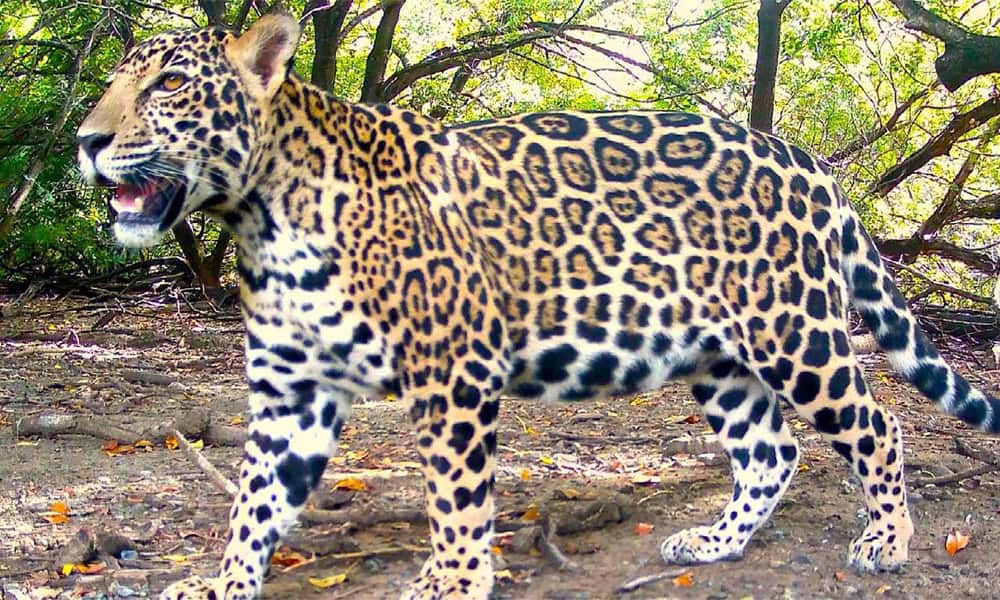
Camera traps installed along Costa Rica’s Caribbean coast have identified 11 individual jaguars in and around Tortuguero National Park, offering researchers a closer look at how the largest wild cat moves through one of its most important wildlife areas. The monitoring is being carried out by the conservation organization Turtle Love, which has been studying wildlife in Tortuguero and nearby Playa Tres, close to Barra de Parismina, since 2023. Researchers currently operate 12 camera-trap stations inside Tortuguero National Park and another seven at Playa Tres. The cameras use motion and heat sensors to record animals as they move through the forest without requiring researchers to capture or physically handle them. So far, the images have allowed researchers to distinguish 11 individual jaguars within the study area and gather information about their movements and behavior. The figure should not be interpreted as the total jaguar population in Tortuguero. It represents the animals that researchers have been able to individually identify through the monitoring project. For conservationists, the cameras provide valuable information about an animal that is difficult to study directly. Jaguars occupy large territories and often move through dense forest at night, making traditional observation challenging. Their coat patterns are unique, allowing researchers to identify individual animals from camera-trap photographs. Tortuguero is particularly important for jaguar research because the cats share the area with one of the Caribbean’s most significant sea turtle nesting populations. Jaguars are known to prey on adult sea turtles that come ashore to nest. The behavior was first recorded in Costa Rica decades ago and has become an important area of research in Tortuguero. Turtle Love researchers are studying the relationship between the two species, including how jaguar movements and feeding patterns change during sea turtle nesting season. The organization has also collected biological samples and worked with researchers to better understand the diet and health of the area’s wild cats. The monitoring forms part of a broader conservation program involving park officials, local communities and academic institutions. Costa Rica’s Tortuguero Conservation Area has previously highlighted Turtle Love’s research into terrestrial wildlife, sea turtles and freshwater species in the southern portion of the protected area. Camera traps have documented other wildlife as well, including pumas and several species that form part of the jaguar’s natural prey base. The research is particularly useful because jaguars play an important ecological role as top predators. By controlling populations of other animals, they help influence the balance of the wider forest ecosystem. Researchers are also interested in understanding how jaguars interact with communities surrounding Tortuguero. Some animals have been documented near populated areas, where encounters with domestic dogs and other animals can create challenges for both residents and wildlife conservation. Continued monitoring could help researchers determine where individual jaguars travel, how frequently they use particular areas and whether their behavior changes as food availability shifts throughout the year. For now, the identification of 11 individual animals provides another piece of information about a species that often moves largely unseen through Costa Rica’s Caribbean forests.
Camera Traps Track Jaguars in Costa Rica’s Tortuguero
Full Article
Original Source
Read the full article at Ticotimes →KhanList aggregates and links to publicly available news content. We do not host full articles from third-party sources. Always verify important information with original sources.